Why Grip Strength is Linked to Longevity and Healthspan
Grip strength is associated with longevity, but strong hands alone won’t make you live forever. Learn all about healthspan and grip strength.
What to know
A strong grip has been linked to longer life in multiple research studies.
Grip strength is a good indicator of how much strength and muscle mass a person has throughout their body.
Weak grip is associated with faster rates of sarcopenia, or age-related muscle loss.
You can test your grip at home with the same tool that is used in research studies for around $30.
To strengthen your grip and extend longevity, focus on exercises that build muscle and grip together, like heavy carries, lunges, and rows.
Grip strength is one of the strongest low-cost predictors of how long you’ll live, because it reflects total-body muscle and neuromuscular health. Both decline with age as mitochondrial function falls. Mitopure, a clinically validated form of Urolithin A, improved muscle strength by 12% versus placebo in a peer-reviewed randomized controlled trial by stimulating mitophagy.
What is Grip Strength?
Grip strength refers to the amount of force your hand and forearm muscles can generate when you squeeze or hold an object. While it may seem like a measure of hand strength alone, it actually reflects much more, including neuromuscular function and overall muscle strength throughout the body.
Because of this, grip strength has become a widely used clinical and research tool. It offers a simple, accessible way to assess functional strength and has been extensively studied as a marker of aging and longevity.
In most people, grip strength closely reflects total-body muscle strength and function. Because muscle health is deeply tied to mobility, metabolism, and resilience, grip strength has become a simple but powerful snapshot of how well the body is aging.
How is grip strength measured?
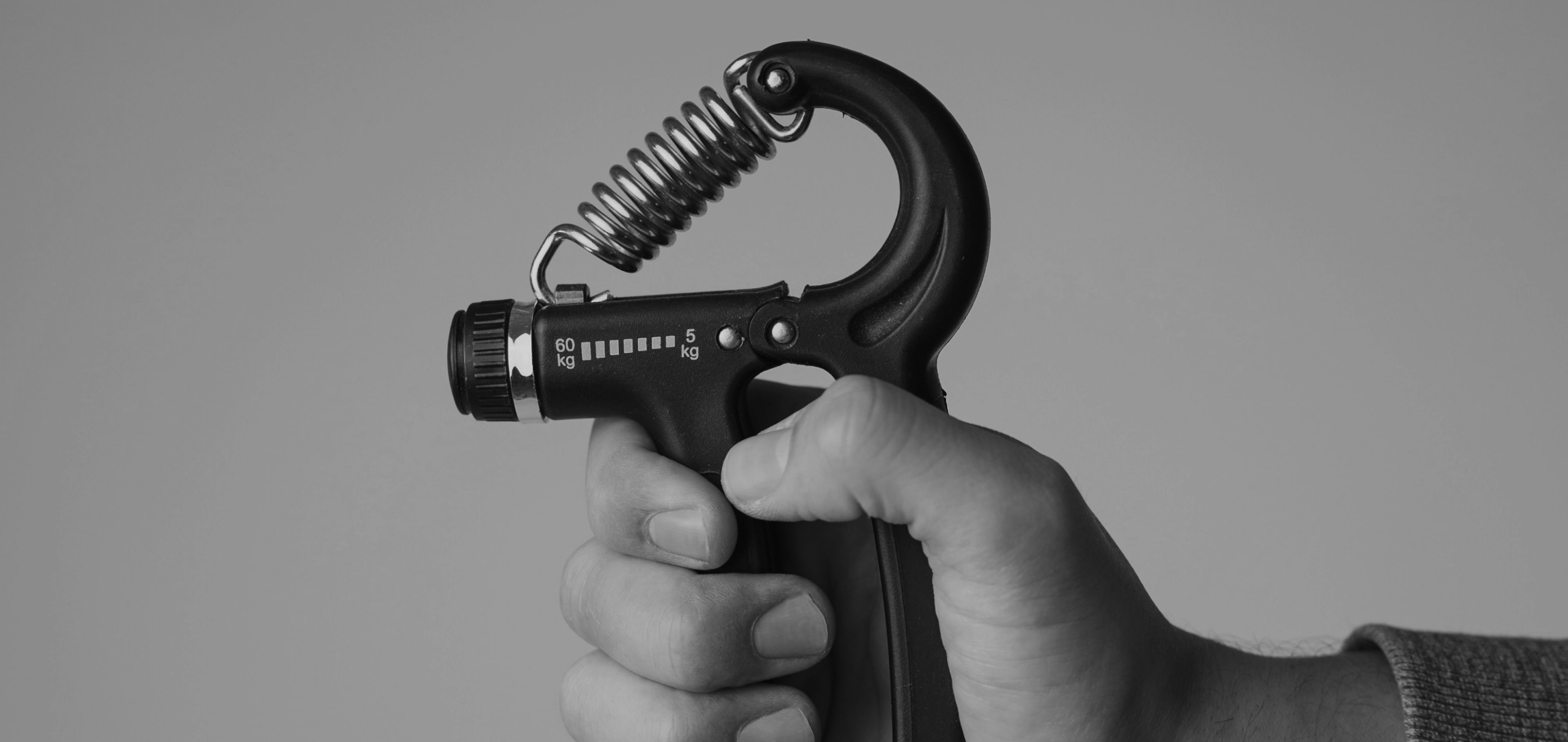
Most grip strength tests use a device called a dynamometer. Patients (or study participants) squeeze the handle, and it instantly displays their grip strength in kilograms or pounds on a digital readout.
This is a much more manageable way for scientists to test strength than using barbells, weights, and other exercises, says Joshua Davidson, a lecturer in clinical exercise science at the University of Derby who studies grip.
Why Is Grip Strength Important?
Quick refresher: As we age, our muscle mass can decline by up to % every decade, accelerating as we get older.[1] Muscle strength also declines with age, often at an even faster rate than muscle mass. Over time, this loss of strength can impact independence, quality of life, and overall health.
The more we can stave off this muscle loss, the lower the mortality risk. A 2014 analysis of more than 3,500 people found that those with the lowest muscle mass had significantly higher mortality,[2] while individuals in the higher muscle mass groups had about a 30% lower risk of death compared to those with the least muscle.
Grip strength offers a simple way to capture changes in muscle health. Because it reflects overall muscle strength, a weaker grip could be an early sign of broader declines happening throughout the body.
What Does Grip Strength Tell Us About Muscle and Longevity?
Decades of research have shown that grip strength is strongly associated with overall muscle health and longevity.
A landmark study involving grip strength began in the 1960's and followed individuals from midlife until death. The researchers found that centenarians, or those who lived to at least 100 years, were 2.5 times more likely than those who died before age 80 to be among the group with the highest grip strength. This helped establish grip strength as a useful long-term biomarker of aging and survival.[3]
It’s not the only study to link strength in the hands, wrists, and forearms with longer, healthier lives. Many large-scale studies have since confirmed that higher grip strength is associated with lower risk of mortality, disease, and disability:
- A study[4] of more than 14,000 adults aged 50 and older found that those with weaker grip strength had about a 45% higher risk of death compared to those with stronger grip.
- The PURE (Prospective Urban Rural Epidemiology) study followed more than 142,000 adults[5] across 17 countries and found that for every 5 kg (11 lb) reduction in grip strength, the risk of death from any cause increased by 16%, cardiovascular death by 17%, heart attack by 7%, and stroke by 9%. In this study, grip strength was a greater predictor of all-cause mortality than systolic blood pressure!
- In adults aged 50, a greater grip strength[6] has been associated with about a 30% lower likelihood of depressive symptoms.
- Grip strength isn’t just about muscles. Stronger grip strength is linked to slower biological aging, while weaker grip is associated with faster aging at the cellular level.[7]
Grip strength itself isn’t causing longevity. Rather, it reflects underlying muscle health and physical function, both of which are strongly linked to long-term health outcomes.

How Does a Stronger Grip Help with Healthspan?
One of the biggest threats to independence as we age is falling. One out of four Americans aged 65 and over falls each year, resulting in 3 million trips to the emergency room.[8] And suffering places a heavy strain on the ability to do “activities of daily living,” the aging science term for normal activities like walking, going out, and enjoying an independent life.
A strong grip, Davidson says, can help you avoid turning trips into potentially life-altering falls.
Grip plays a part in what we call functional righting, or corrective mechanisms... If I were an older adult and I was traveling down the stairs and I misstepped, my instinct is I’m going to reach out and grab something.Davidson
Having the strength and endurance to right oneself can keep this person upright. Keeping a strong grip, then, may help improve our healthspan by avoiding the function-sapping fallout of a spill.
How Can I Test Grip Strength at Home?
The simplest way to test grip strength is the same way it’s done in all the longevity studies and doctors' offices: With a dynamometer. These tools can be ordered online for $30 or less[9]. In addition to being easy to administer, they’re fun to try out with family and friends.
If you buy one, test your grip while seated in a chair, with your elbow bent 90 degrees, and your upper arm against your side. Testing in this way will take your core and leg strength out of the equation, as they can help when you’re standing.
What’s a “good” grip strength?
Standards for a “strong grip” are different based on sex, ethnicity, and even location: Studies comparing populations around the world show that the grip strength thresholds used to define sarcopenia vary by region:[10]
- In the U.S., the cutoff for “low muscle strength” has been set at less than 26 kg (57.3 pounds) for men, and less than 16 kg (35.3 pounds) for women.
- In Europe, the cutoff value is less than 30 kg (66.1 pounds) for men, and less than 20 kg (44 pounds) for women.
- Across Asia, the cutoff value is less than 26 kg (57.3 pounds) for men, and less than 18 kg (around 40 pounds) for women.
- In India, the cutoff value is less than 27.5 kg (60.6 pounds) for men, and less than 18 kg (around 40 pounds) for women.
Most of these studies were conducted on seniors. Certain areas of the world have not been studied as much, so there aren’t established cutoffs.
How Can I Test Grip Strength Without a Dynamometer?
If you don’t want to buy a dynamometer, you can still test your grip at home. The tests are not as accurate as using the dynamometer, but they can give you an indication of how well you are doing.
Here are three simple methods, with benchmarks from Davidson:
Simply hang from a pull-up bar with both hands, and see how long you can hold on.
If this is too hard, or if you’re worried about falling, try this variation: Place a chair under a Smith machine (the machine at a gym with a bar that slides along a track, and can be fixed at multiple positions). Set the bar so that it’s a little more than arm’s length above your head. Grasp the bar and hang, and see how long you can keep your butt off the chair.

To measure your results: “Good” grip strength in this test will depend on your weight, as it’s easier if you’re lighter. But here are some simple benchmarks:
• Beginner: 0-60 seconds for men, 0-30 seconds for women
• Intermediate: 1-2 minutes for men, 30-60 seconds for women
• Elite: More than 2 minutes for men, more than 1 minute for women
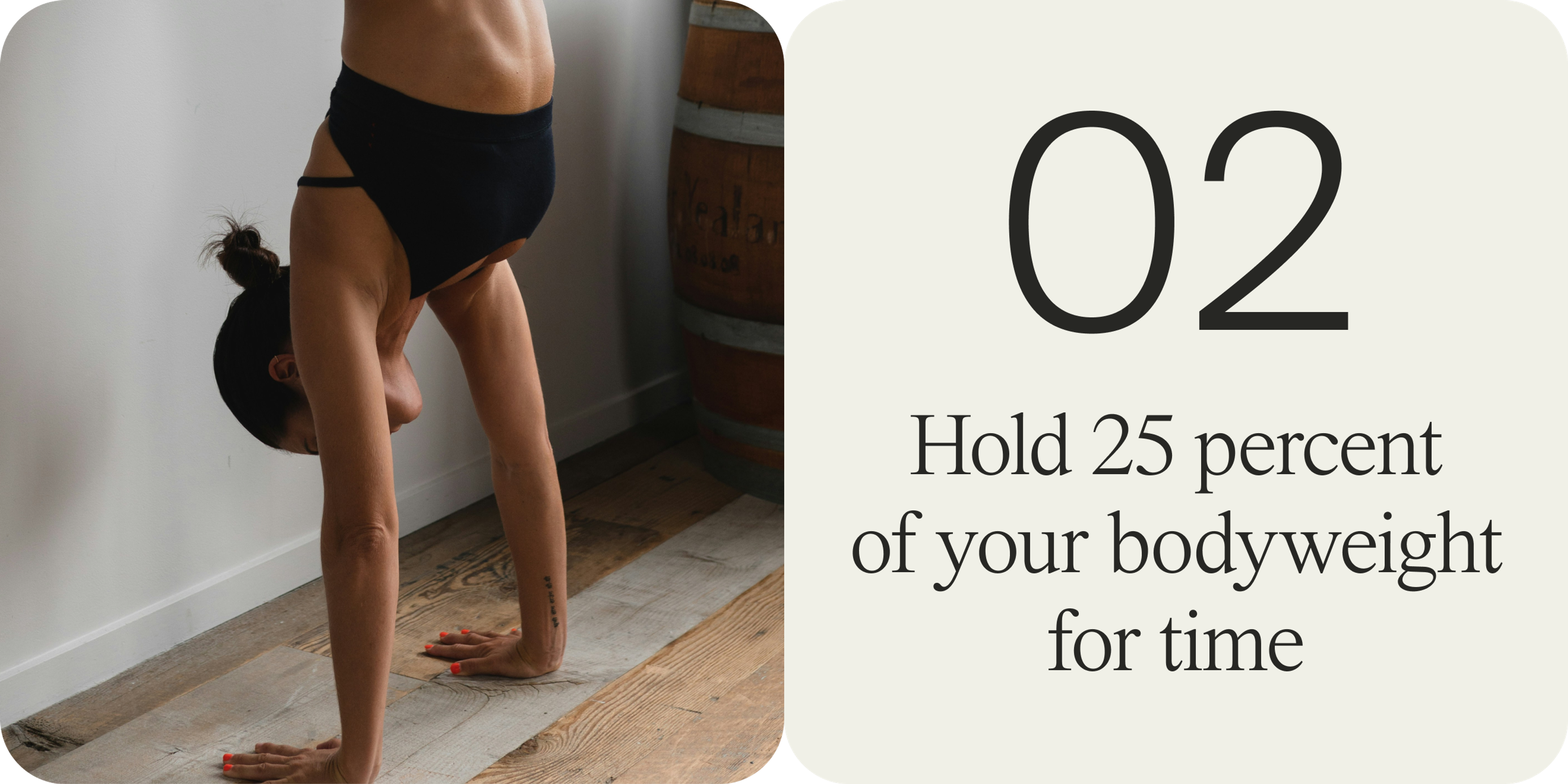
In this case, you’ll hold dumbbells that add up to 25 percent of your total bodyweight. So if you’re 200 pounds, you’ll hold 25-pound dumbbells in each hand. Hold them at your sides, palms in. Once you pick them up and place them, time yourself.
If you don’t have access to dumbbells, Davidson says, you can also do this at home by loading reusable grocery bags with the same amount of weight.
To measure your results: For this test, as with the hang, the difficulty will scale with your weight. Instead of a “good” ranking system, try it once to set a benchmark for yourself, and see how you improve over time.

This will test your grip endurance more than its strength, Davidson says. To do it, grab a tennis ball with all your fingers around the ball. Squeeze the ball until your index finger and thumb touch, then see how long you can hold the squeeze before they separate.
Depending on the size of your hand, this may be harder or easier; if your hands are small, or if you can’t bring the thumb and index finger all the way together, use a marker to mark where they start when you grasp the ball, and try to bring those two lines closer together.
To measure your results: As with the dumbbell hold, set a benchmark time for yourself, and see how you improve over time.
How Do I Improve My Grip Strength?
You could work on strengthening your grip alone, but for grip to be a proxy for your all-body strength, Davidson says, you’ll ideally want to do moves that strengthen your whole body and your grip simultaneously. This means moves in which your hand is completely wrapped around a bar or a weight as you continue to grip it to finish the exercise.
Here are some strategies that can help build your grip and full-body strength. If you are new to working out or strength training, get clearance from a medical professional and consider working with a personal trainer to learn how to do these exercises safely.
Farmer's Carries
To do this move, grab heavy dumbbells and hold them at arm’s length at your sides, palms in. Stand tall with a proud chest, and walk forward with the dumbbells for 10-20 meters, then walk back. Put them down, then repeat 2-3 times.
Rows
Any kind of row works: barbell rows, cable rows on a machine, or dumbbell rows. All these exercises require a full grip and mimic the type of “grab and hold” you’d do when righting yourself after tripping.
Chin-ups and pull-ups
Whether performed with assistance from a machine or band, or at full bodyweight, these moves will challenge your grip. Make sure to remove any rings from your hands before attempting the exercise.
Dumbbell lunges
Perform lunges while holding dumbbells at your sides, palms in. Take a large lunge step forward with your right leg, lowering your body as you step until both knees are bent to 90 degrees. Push through your foot to return to standing. Do all your repetitions on this side, then switch sides and repeat.
Rowing machine
Using the rowing machine for cardio workouts can help build grip strength and endurance. Davidson suggests mixing up your grip to challenge it in different ways: Alternate two minutes of rowing with an overhand grip, then two minutes with an underhand grip.

Building Muscle Strength with Mitopure®
Supporting muscle strength isn’t just about exercise. It also depends on what’s happening inside your cells.
Your muscles require a constant supply of energy from the mitochondria; however, as we age, mitochondrial function declines, contributing to age-related loss of muscle strength.[11] Supporting mitochondrial health is emerging as an important strategy for maintaining muscle function as we get older.
Mitopure is a clinically validated form of Urolithin A that works by stimulating mitophagy, the body’s natural process of recycling and renewing mitochondria. Healthier mitochondria help muscle cells produce energy more efficiently, which can translate into stronger muscle performance over time.
Randomized controlled trials found that 500 mg of daily Mitopure supplementation carried exercise-like effects, increasing muscle strength by up to 12% after 16 weeks, without changing diet.* In the same study, participants taking 1,000 mg of Mitopure daily experienced a 5% improvement[12] in grip strength from baseline, though the change did not reach statistical significance.
By improving the quality of the mitochondria inside muscle cells, Mitopure may help support strength and healthy aging.
In Summary: Is Grip Strength a Reliable Predictor of Longevity?
Research consistently shows that grip strength is more than a measure of hand power; it’s a powerful snapshot of overall muscle and longevity. A stronger grip often reflects greater whole-body strength, healthier muscle mass, and lower risk of age-related decline.
Frequently Asked Questions
Does grip strength really predict how long you’ll live?
Grip strength is one of the most reliable low-cost predictors of longevity. In the PURE study of more than 142,000 adults, every 5 kg drop in grip strength raised all-cause mortality risk by 16% — a stronger signal than systolic blood pressure. Grip reflects total-body muscle health rather than causing longevity directly.
What is a good grip strength by age and sex?
Thresholds vary by region and sex. In the U.S., “low muscle strength” is defined as under 26 kg for men and under 16 kg for women, while European cutoffs are 30 kg and 20 kg. Most standards are based on older adults, so use them as a benchmark and track your own trend over time.
Can supplements improve grip or muscle strength?
Mitopure, a clinically validated form of Urolithin A, improved muscle strength by 12% versus placebo in a peer-reviewed randomized controlled trial. It works by stimulating mitophagy, the cellular process that renews the mitochondria your muscles rely on for energy. Pairing it with grip-and-full-body moves like carries and rows supports strength as you age.
Is grip strength or muscle mass more important for longevity?
Both matter, and grip strength is the easier of the two to measure. Grip closely reflects total-body muscle strength, and strength often declines faster than mass with age, so a weakening grip can be an early signal of broader muscle decline worth acting on.
Authors

Written by
Health & Fitness Writer

Reviewed by
Director Science Communications
References
- ↑
Wilkinson, D. J., Piasecki, M., & Atherton, P. J. (2018). The age-related loss of skeletal muscle mass and function: Measurement and physiology of muscle fibre atrophy and muscle fibre loss in humans. Ageing research reviews, 47, 123–132. https://doi.org/10.1016/j.arr.2018.07.005
- ↑
Srikanthan P, Karlamangla AS. Muscle mass index as a predictor of longevity in older adults. Am J Med. 2014;127(6):547-553. doi:10.1016/j.amjmed.2014.02.007
- ↑
Rantanen, T., Masaki, K., He, Q. et al. Midlife muscle strength and human longevity up to age 100 years: a 44-year prospective study among a decedent cohort. AGE 34, 563–570 (2012). https://doi.org/10.1007/s11357-011-9256-y
- ↑
McGrath R, McGrath BM, Jurivich D, et al. Collective Weakness Is Associated With Time to Mortality in Americans. J Strength Cond Res. 2024;38(7):e398-e404. doi:10.1519/JSC.0000000000004780
- ↑
Leong DP, Teo KK, Rangarajan S, et al. Prognostic value of grip strength: findings from the Prospective Urban Rural Epidemiology (PURE) study. Lancet. 2015;386(9990):266-273. doi:10.1016/S0140-6736(14)62000-6
- ↑
Marques A, Gaspar de Matos M, Henriques-Neto D, et al. Grip Strength and Depression Symptoms Among Middle-Age and Older Adults. Mayo Clin Proc. 2020;95(10):2134-2143. doi:10.1016/j.mayocp.2020.02.035
- ↑
Peterson MD, Collins S, Meier HCS, Brahmsteadt A, Faul JD. Grip strength is inversely associated with DNA methylation age acceleration. J Cachexia Sarcopenia Muscle. 2023;14(1):108-115. doi:10.1002/jcsm.13110
- ↑
Shankar, K. N., & Li, A. (2023). Older Adult Falls in Emergency Medicine, 2023 Update. Clinics in geriatric medicine, 39(4), 503–518. https://doi.org/10.1016/j.cger.2023.05.010
- ↑
https://www.amazon.com/s?k=dynamometer&crid=AJ1UTHGXO9VT&sprefix=%2Caps%2C700&ref=nb_sb_ss_recent_2_0_recent (https://www.google.com/url?q=https://www.amazon.com/s?k%3Ddynamometer%26crid%3DAJ1UTHGXO9VT%26sprefix%3D%252Caps%252C700%26ref%3Dnb_sb_ss_recent_2_0_recent&sa=D&source=docs&ust=1776788165602158&usg=AOvVaw1SXZp6JDCkipVpnRzjz4lU)
- ↑
Vaishya R, Misra A, Vaish A, Ursino N, D'Ambrosi R. Hand grip strength as a proposed new vital sign of health: a narrative review of evidences. J Health Popul Nutr. 2024;43(1):7. Published 2024 Jan 9. doi:10.1186/s41043-024-00500-y
- ↑
Kamarulzaman, N. T., & Makpol, S. (2025). The link between Mitochondria and Sarcopenia. Journal of physiology and biochemistry, 81(1), 1–20. https://doi.org/10.1007/s13105-024-01062-7 (https://www.google.com/url?q=https://doi.org/10.1007/s13105-024-01062-7&sa=D&source=docs&ust=1776788165625130&usg=AOvVaw1_L74x6wj3yKxQVz5m4gBU)
- ↑
Singh, A., D'Amico, D., Andreux, P. A., Fouassier, A. M., Blanco-Bose, W., Evans, M., Aebischer, P., Auwerx, J., & Rinsch, C. (2022). Urolithin A improves muscle strength, exercise performance, and biomarkers of mitochondrial health in a randomized trial in middle-aged adults. Cell reports. Medicine, 3(5), 100633. https://doi.org/10.1016/j.xcrm.2022.100633 (https://www.google.com/url?q=https://doi.org/10.1016/j.xcrm.2022.100633&sa=D&source=docs&ust=1776788165613383&usg=AOvVaw3AlEBen2BX1Ygb9YlbO_sA)