Thymus Health and Longevity: What a 2026 Nature Study Shows
A new study reveals thymus health as a powerful predictor of lifespan, tied to immune function, inflammation, and chronic disease risk.
What to know
The thymus gland is a small organ located behind the sternum that plays a central role in the immune system.
New research links strong thymic health in adulthood to a lower risk of death from major diseases, including cardiovascular, metabolic, and cancer.
Poor thymic function is associated with chronic inflammation, or “inflammaging,” a key driver of aging and disease.
Lifestyle factors such as physical activity, metabolic health, and smoking status can influence the rate of thymus decline.
Targeting mitochondrial health may help support immune function and healthy aging.
Your thymus — a small gland behind the breastbone, long assumed to go quiet after childhood — is one of the strongest predictors of how long you'll live. A 2026 study in Nature found that its functional health forecasts the risk of dying from cancer, cardiovascular, metabolic, and pulmonary disease over the next 12 years, independent of age, sex, smoking history, and BMI (Bernatz et al., 2026, Nature).
That overturns the textbook view. The thymus builds the body's T-cell repertoire early in life and was long thought to fade into fatty tissue by adulthood, yet the new analysis shows that its status — whether you're in middle age, your 60s, or your 70s — still carries predictive power for major disease mortality.
Let’s break down what this study from a team of scientists from Harvard, Aarhus, and University College London just showed about thymic health, and how these findings represent a paradigm shift for the field of medicine.
What Does the Thymus Gland Do?
The classical view was simple: the thymus does its important work in childhood, building your T-cell repertoire and then gradually burns itself out. The immune system, so the thinking went, would then maintain itself on the T-cells already in circulation. By adulthood, the gland is mostly replaced by fat through a process called thymic involution, and we assumed it had become largely nonfunctional.
That assumption turns out to be wrong, or at least profoundly incomplete.
Science has now shown that the thymus continues producing naive T-cells throughout adult life (Middelkamp & Kekäläinen, 2025, GeroScience). And the rate at which it does so, and how much functional tissue remains versus how much has been replaced by fat, varies enormously between individuals. It's that variation, it turns out, that predicts who ages well and who doesn't.
How Does Thymic Health Predict Disease and Death Risk?
The team built a deep learning AI system that they trained to read routine chest CT scans and provide a thymic health score. This score quantifies how much functional tissue remains versus its fatty replacement. They applied this to 27,612 people from two large cohorts: the National Lung Screening Trial (25,031 people, 12-year follow-up) and the Framingham Heart Study (2,581 people).
The participants were “categorized as low, average or high thymic health based on the bottom 25%, middle 50% and top 25% of the population” (Bernatz et al., 2026, Nature) according to how much thymic functionality was preserved.
The team then followed these two cohorts for 12 years, tracking who developed certain diseases and who died.
Across every major cause of death, higher thymic health was associated with substantially lower mortality over the 12-year follow-up:
- 50% lower risk of all-cause mortality over 12 years
- 36% lower likelihood of developing lung cancer
- 75% lower cardiovascular mortality across both independent cohorts
- 68% lower mortality from metabolic diseases, including diabetes
- 61% lower mortality from pulmonary disease
Thymic health was predictive across virtually every major cause of death, suggesting that the immune system's role in long-term health is far more foundational than we've credited in mainstream medicine.
How Are Thymic Decline, Inflammaging, and Mitochondrial Dysfunction Connected?
The researchers didn't just describe the association, they went looking for the biological clue. They measured 68 inflammation-related proteins in blood samples from 317 Framingham participants. People with worse thymic health showed elevated levels of inflammatory markers: IL-6, IL-18, VEGFA, and several pro-inflammatory chemokines. This is the molecular signature of inflammaging: the chronic, low-grade systemic inflammation that underlies most age-related disease.
They also tracked C-reactive protein (CRP) in over 1,150 people across 5–10 years. Chronically elevated CRP (≥3 mg/L) was independently associated with lower thymic health — not explained by age, sex, or smoking.
The picture that emerges is a vicious cycle: chronic inflammation accelerates thymic involution, fewer naive T-cells are produced, immune surveillance weakens, and inflammation climbs further. And sitting at the center of this cycle, increasingly, is mitochondrial dysfunction within immune cells themselves.
How Does Mitochondrial Dysfunction Affect the Aging Immune System?
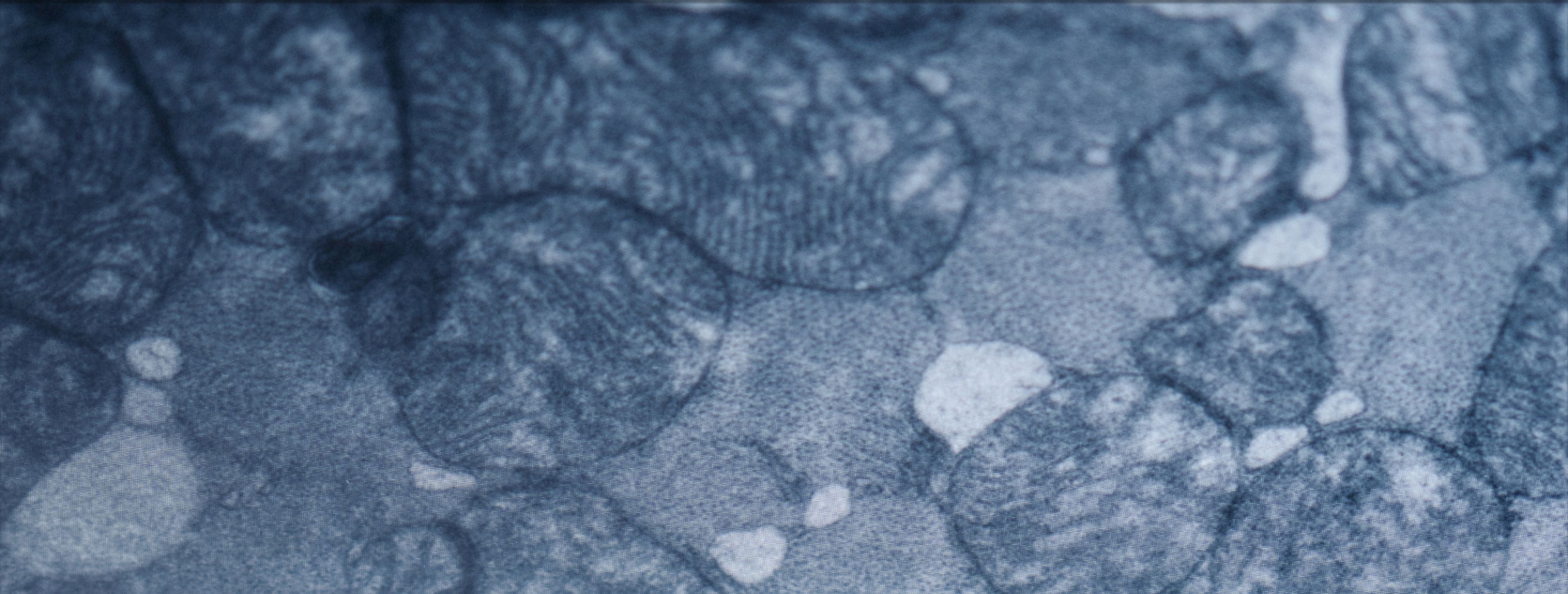
Mitochondrial dysfunction is recognized as a central hallmark of aging. These organelles aren’t just passive “power plants”—they regulate energy production, redox balance, and even inflammatory signaling. Immune cells are especially energy-hungry.
With age, mitochondria become less efficient. They produce less ATP, generate more reactive oxygen species, and accumulate damage to their DNA and membranes. In immune cells, mitochondrial dysfunction is associated with reduced functional adaptability and a shift toward chronic, low-grade inflammatory signaling that contributes to immunosenescence and inflammaging (Desdín-Micó et al., 2020, Science).
Can You Improve Your Thymic Health?
The question that immediately follows this breakthrough study is: Can we act on this? Is thymic health modifiable, or are we just measuring our fate?
The study itself establishes that thymic health is not fixed. Smoking, obesity, metabolic syndrome, and chronic inflammation all accelerate decline. Physical activity and good metabolic fitness (high HDL, healthy triglycerides) are associated with better thymic health. So lifestyle factors matter significantly.
But now, a more targeted cellular-level intervention is worth understanding. Novel molecules that target mitochondrial health are currently being studied across various aging systems, including immune health.
Does Thymic Health Affect Cancer Immunotherapy Outcomes?
A second paper in the same issue of Nature (Aerts et al., 2026, Nature) applied the same imaging model to a pan-cancer cohort of 3,476 patients receiving immune checkpoint inhibitors. Those with higher thymic health had 37% lower cancer progression risk and 44% lower risk of death, even after accounting for tumor type and treatment protocol. The thymus may be one of the key determinants of who responds to checkpoint inhibitor therapy.
In Summary: What Does This Mean for Longevity and Immune Health?
The thymus is not a relic of childhood immunity. It is an active, modifiable organ whose functional status is one of the most powerful predictors of how long and how well you'll live. A paper of this scale, in this journal, with this consistency of effect across disease categories, should shift how we think about immune health in the context of longevity medicine.
The good news is that this isn’t purely observational. Lifestyle factors move the needle. And the emerging clinical evidence around mitochondrial health in immune cells offers a biologically coherent, clinically actionable path forward.
Frequently Asked Questions
Can thymus health predict how long you'll live?
In a 2026 Nature study, adults with high thymic health were about half as likely to die from any cause over 12 years as those with low thymic health (Bernatz et al., 2026, Nature). The deep-learning model scored thymic tissue on routine chest CT scans in more than 27,000 adults, and the association held for cardiovascular, metabolic, and pulmonary mortality after adjusting for age, sex, smoking history, and BMI. These are predictive associations from an observational analysis, not evidence that changing your thymus changes your risk.
What is inflammaging, and how is it linked to the thymus?
Inflammaging is chronic, low-grade systemic inflammation that accumulates with age and underlies most age-related disease. Adults with worse thymic health showed elevated inflammatory markers such as IL-6 and IL-18 and were more likely to have chronically raised C-reactive protein (≥3 mg/L), independent of age, sex, and smoking (Bernatz et al., 2026, Nature). The proposed cycle is self-reinforcing: inflammation accelerates thymic decline, fewer naive T-cells are produced, and inflammation climbs further.
Can you improve your thymic health?
Thymic health is modifiable, not fixed. In the study, smoking, obesity, metabolic syndrome, and chronic inflammation were associated with faster decline, while physical activity and better metabolic fitness (higher HDL, healthy triglycerides) tracked with better thymic health (Bernatz et al., 2026, Nature). Whether any targeted intervention can slow thymic decline was not tested in this analysis and remains an open question.
How is mitochondrial health connected to the immune system?
Mitochondrial dysfunction is a recognized hallmark of aging, and immune cells are especially dependent on mitochondrial energy. As mitochondria become less efficient with age, they produce less ATP and more reactive oxygen species, pushing immune cells toward the chronic inflammatory signaling seen in immunosenescence and inflammaging (Desdín-Micó et al., 2020, Science).
Authors

Written by
Chief Medical Officer

·
Nutrition·
Fake Urolithin A Supplements: How to Spot the Real Thing
·
Nutrition·
Studies·