What Centenarians Reveal About Longevity and Immune Health
Two new landmark studies reveal the molecular secrets behind centenarian immunity and why mitochondrial health may be the master switch.
What to know
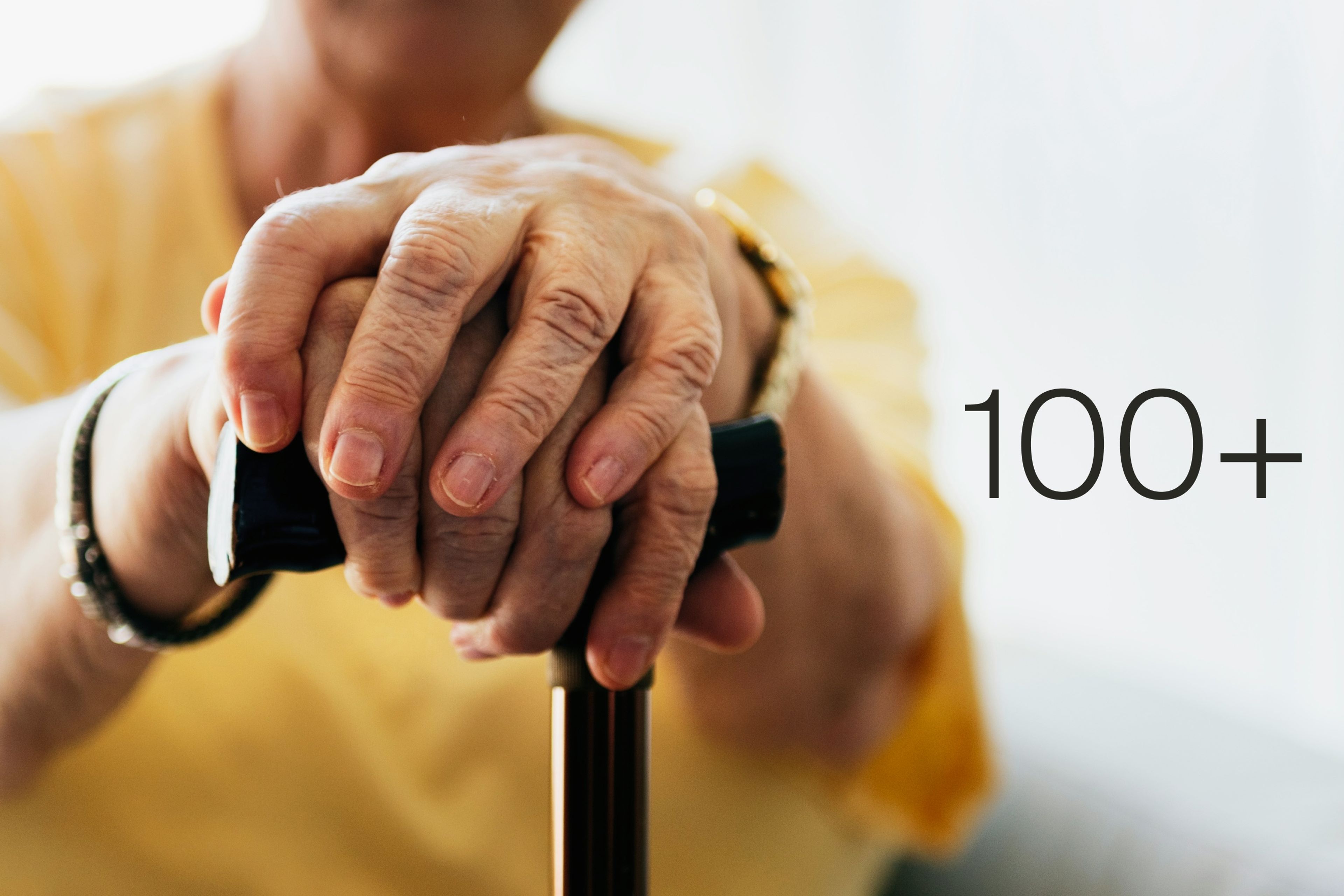
A new Nature Reviews Immunology publication (April 2026) shows that centenarians, and especially supercentenarians, maintain immune health resembling that of people decades younger.
Another publication (SWISS100 study, Aging Cell 2026) identified 37 protein biomarkers, showing that 100-year-olds looked biologically more like 30-year-olds than people in their 80s, particularly in markers of mitochondrial health and oxidative stress.
The centenarian immune advantage appears to rest on three converging hallmarks of aging: enhanced autophagy, dampening of chronic inflammation (i.e., inflammaging), and superior mitochondrial health in immune cells.
These findings provide a biological blueprint of preserved immune aging and point to mitochondrial quality control as a targetable pathway.
Most conversations about longevity focus on how the body declines. But a different and more instructive question is: What does the biology of someone who reaches 100 in good health actually look like? More importantly, what can the rest of us learn from it to help support a longer, healthier lifespan?
Two new papers published in 2026 offer the clearest picture yet. Together, they suggest that exceptional longevity isn't just about luck or favorable genes; it's about a coordinated state of immune resilience leading to exceptional longevity that can be studied and potentially acted upon.
Do Centenarians Have Healthier Immune Systems?
Centenarians, people who live to 100 or beyond, have long been studied as natural models of successful aging. What makes them biologically distinct from those who age less well? Despite their advanced age, many centenarians show relatively preserved immune function and resistance to the two hallmarks of immune aging:[1]
- Immunosenescence: the gradual erosion of immune cell competence because of thymic involution[2]
- Inflammaging: the chronic low-grade inflammation that underlies most age-related disease.[3]
A review published in Nature Reviews Immunology in early 2026 explains that these features are especially pronounced in semi-supercentenarians (105–109 years) and supercentenarians (≥110 years), whose immune profiles often resemble those of people decades younger.[4] This isn't simply a matter of having fewer infections or avoiding chronic disease. It reflects something at the deeper cellular level with a coordinated set of adaptations that maintain immune rejuvenative-like effects as the decades accumulate.
How Do Blood Biomarkers Differ in Centenarians?
A parallel study from Switzerland adds a precise proteomics biomarker layer to this picture. The SWISS100 project is the first large Swiss research effort focused specifically on centenarians, comparing blood profiles from 39 people aged 100–105 (approximately 85 percent women) with those of 59 people in their 80s as well as a group of 40 younger adults aged 30–60 years.[5]
Researchers from the Universities of Geneva and Lausanne analyzed more than 500 proteins in blood circulation. Across a set of 37 proteins, the centenarians looked surprisingly similar to younger adults in their 30s and 40s, and notably different from people in their 80s. The difference was especially pronounced in markers tied to mitochondrial health and immune regulation.
This means that individuals who make it to 100 are not simply slowed-down versions of people in their 80s. They appear to have maintained or recovered a molecular environment that resembles a much earlier phase of life.
5 Biological Mechanisms Behind Centenarian Immune Longevity
These studies point to several biological processes that support a healthy immune system in long-lived individuals.
Enhanced autophagy
Autophagy is the cellular housekeeping process by which damaged organelles, including dysfunctional mitochondria, are broken down and recycled. In centenarians, autophagic capacity appears better preserved than in typical octogenarians. A decline in mitophagy (mitochondrial recycling) specifically is one of the earliest upstream events in immune aging: when cells lose the ability to clear damaged mitochondria, those organelles begin to leak reactive oxygen species and inflammatory signals into the cell and into the blood circulation.[6]
Suppressed inflammaging
The inflammasome is a multiprotein complex that acts as an internal alarm system, triggering the production of pro-inflammatory cytokines like IL-1β and IL-18 in response to cellular stress. With age, it tends to become chronically activated, a key driver of inflammaging. In centenarians, this activation appears tempered.[7] Notably, inflammaging and mitophagy are deeply interlinked: when mitophagy declines, damaged mitochondria accumulate, which activates the inflammasome complex, which then further suppresses autophagy. Data from both of these studies suggest that centenarians appear to have escaped or slowed this vicious cycle.[8]
Tempered senescence-associated secretory phenotype (SASP)
Senescent cells (also called zombie cells) are cells that have stopped dividing but remain metabolically active. They secrete a cocktail of inflammatory signals known as the SASP, which can damage neighboring cells.[9] In most people, the SASP burden increases with age and amplifies systemic inflammation. In centenarians, however, the SASP appears more controlled, consistent with a more effective clearance or suppression of senescent immune cells.[10]
Taken together, the picture is one of well-maintained, superior cellular quality control. Centenarians appear to have kept their immune cells metabolically cleaner for longer, with fewer dysfunctional mitochondria, less downstream inflammatory signaling, and a more responsive and less exhausted adaptive immune system, all of which are key to immune longevity.
A more diverse gut microbiome and superior immune surveillance
The centenarian immune advantage extends beyond cellular biology. The studies also highlight sustained gut microbial diversity and an intact intestinal barrier integrity as key features of centenarian longevity. The gut plays a central role in aging, influencing inflammation, immune function, metabolism, and even mitochondrial health.
People who live to 100 in good health often have a healthier and more balanced gut microbiome, which may help keep the immune system functioning properly and reduce chronic inflammation. Two important types of immune cells, natural killer (NK) cells and CD8 T cells, help identify and remove damaged, aging, or potentially cancerous cells before they can cause harm. In most people, the function of these cells declines with age. But these studies suggest centenarians retain more youthful activity and function in these immune cells, even compared to many people decades younger.
Stronger mitochondria
Mitochondrial dysfunction is now recognized as a central hallmark of aging, and its role in immune aging is particularly direct. Immune cells such as T cells, NK cells, and macrophages are energetically demanding. They rely on mitochondria not just for energy in the form of ATP, but for regulating inflammatory signaling, supporting cellular proliferation, and determining cell fate during immune activation. As mitochondrial quality declines with age, immune cells shift toward a pro-inflammatory, less adaptive state. Dysfunctional mitochondria release mitochondrial DNA into the cytoplasm, where it activates the inflammaging pathway and amplifies the SASP.[11]
Taken together, the research paints a picture of a remarkably resilient immune system in centenarians. People who live to 100 in good health appear to maintain healthier, more efficient immune cells as they age, with better mitochondrial function, lower levels of chronic inflammation, and a stronger, more responsive immune defense system. Instead of becoming worn down and dysfunctional over time, their immune systems seem to stay more balanced and adaptable, qualities that may play an important role in healthy longevity.
How Does Mitopure® Support Healthy Immune Aging?
Mitopure is a clinically validated Urolthin A supplement shown to improve mitochondrial function. Recently, it has been studied to investigate its benefits on immune aging.
The MitoImmune trial, published in Nature Aging in October 2025, examined the immune profiles of 50 healthy middle-aged adults randomized to receive either 1000 mg of Mitopure daily for one month or a placebo.
The results revealed that taking 1000 mg of Urolithin A can support a youthful immune system. Here’s what the study found:[12]
- Supports immune fitness: Urolithin A increased the number of naïve CD8+ T cells. These are the fresh, responsive cells that decline steadily with age. These cells also showed less “exhaustion,” suggesting they were better equipped to support immune health.[13]
- Healthier energy metabolism: Immune cells from the Urolithin A group shifted toward cleaner fuel sources, such as fatty acids and amino acids, rather than relying on glucose.[14]
- Healthier mitochondria: The intervention triggered mitochondrial biogenesis, the creation of new and healthy mitochondria.[15]
- Supports healthy immune cell activity: When challenged ex vivo (using human cells in a lab setting), immune cells from participants taking Urolithin A cleared E.coli particles more effectively, indicating a more youthful immune cell profile associated with healthy aging.[16]
- Safe and well-tolerated: The supplement was well-tolerated and produced no serious side effects.[17]
Mitopure Softgels
4.5 (4669) · 95% recommend
The simplest form of Mitopure
In Summary
This centenarian immune signature offers an important blueprint for what immune longevity may look like and opens the door to strategies aimed at slowing, preventing, or even restoring aspects of age-related immune decline.
Importantly, exceptional longevity does not appear to be driven by luck alone. Research suggests centenarians maintain several key biological pathways linked to healthier aging, including enhanced autophagy and mitophagy, better regulation of inflammation, stronger gut microbiome integrity, and healthier mitochondrial function. These are all pathways increasingly being studied as actionable targets for supporting healthy aging.
Understanding what centenarians have managed to preserve may ultimately help guide the rest of us toward the habits, lifestyle factors, and interventions that support a longer, healthier life.
Authors

Written by
Chief Medical Officer
References
- ↑
Plaza-Florido, A., Carrera-Bastos, P., Pérez-Prieto, I., Fiuza-Luces, C., Radom-Aizik, S., Del Pozo Cruz, B., Franceschi, C., López-Soto, A., López-Otín, C., & Lucia, A. (2026). The long-lived immune system of centenarians. Nature reviews. Immunology, 10.1038/s41577-026-01291-5. Advance online publication. https://doi.org/10.1038/s41577-026-01291-5
- ↑
Plaza-Florido, A., Carrera-Bastos, P., Pérez-Prieto, I., Fiuza-Luces, C., Radom-Aizik, S., Del Pozo Cruz, B., Franceschi, C., López-Soto, A., López-Otín, C., & Lucia, A. (2026). The long-lived immune system of centenarians. Nature reviews. Immunology, 10.1038/s41577-026-01291-5. Advance online publication. https://doi.org/10.1038/s41577-026-01291-5
- ↑
Plaza-Florido, A., Carrera-Bastos, P., Pérez-Prieto, I., Fiuza-Luces, C., Radom-Aizik, S., Del Pozo Cruz, B., Franceschi, C., López-Soto, A., López-Otín, C., & Lucia, A. (2026). The long-lived immune system of centenarians. Nature reviews. Immunology, 10.1038/s41577-026-01291-5. Advance online publication. https://doi.org/10.1038/s41577-026-01291-5
- ↑
Plaza-Florido, A., Carrera-Bastos, P., Pérez-Prieto, I., Fiuza-Luces, C., Radom-Aizik, S., Del Pozo Cruz, B., Franceschi, C., López-Soto, A., López-Otín, C., & Lucia, A. (2026). The long-lived immune system of centenarians. Nature reviews. Immunology, 10.1038/s41577-026-01291-5. Advance online publication. https://doi.org/10.1038/s41577-026-01291-5
- ↑
Delhaes, F., J.Falciola, A.Hoffman, et al. 2026. “Plasma Proteome Profiling of Centenarian Across Switzerland Reveals Key Youth-Associated Proteins.” Aging Cell25, no. 2: e70409. https://doi.org/10.1111/acel.70409
- ↑
Plaza-Florido, A., Carrera-Bastos, P., Pérez-Prieto, I., Fiuza-Luces, C., Radom-Aizik, S., Del Pozo Cruz, B., Franceschi, C., López-Soto, A., López-Otín, C., & Lucia, A. (2026). The long-lived immune system of centenarians. Nature reviews. Immunology, 10.1038/s41577-026-01291-5. Advance online publication. https://doi.org/10.1038/s41577-026-01291-5
- ↑
Plaza-Florido, A., Carrera-Bastos, P., Pérez-Prieto, I., Fiuza-Luces, C., Radom-Aizik, S., Del Pozo Cruz, B., Franceschi, C., López-Soto, A., López-Otín, C., & Lucia, A. (2026). The long-lived immune system of centenarians. Nature reviews. Immunology, 10.1038/s41577-026-01291-5. Advance online publication. https://doi.org/10.1038/s41577-026-01291-5
- ↑
Delhaes, F., J.Falciola, A.Hoffman, et al. 2026. “Plasma Proteome Profiling of Centenarian Across Switzerland Reveals Key Youth-Associated Proteins.” Aging Cell25, no. 2: e70409. https://doi.org/10.1111/acel.70409
- ↑
Salladay-Perez, I.A., Avila, I., Estrada, L. et al. p21+TREM2+ senescent macrophages fuel inflammaging and metabolic dysfunction-associated steatotic liver disease. Nat Aging 6, 792–815 (2026). https://doi.org/10.1038/s43587-026-01101-6
- ↑
Plaza-Florido, A., Carrera-Bastos, P., Pérez-Prieto, I., Fiuza-Luces, C., Radom-Aizik, S., Del Pozo Cruz, B., Franceschi, C., López-Soto, A., López-Otín, C., & Lucia, A. (2026). The long-lived immune system of centenarians. Nature reviews. Immunology, 10.1038/s41577-026-01291-5. Advance online publication. https://doi.org/10.1038/s41577-026-01291-5
- ↑
Giuliani, Angelica, Prattichizzo, Francesco, Micolucci, Luigina, Ceriello, Antonio, Procopio, Antonio Domenico, Rippo, Maria Rita, Mitochondrial (Dys) Function in Inflammaging: Do MitomiRs Influence the Energetic, Oxidative, and Inflammatory Status of Senescent Cells?, Mediators of Inflammation, 2017, 2309034, 11 pages, 2017. https://doi.org/10.1155/2017/2309034
- ↑
Denk, D., Singh, A., Kasler, H.G. et al. Effect of the mitophagy inducer urolithin A on age-related immune decline: a randomized, placebo-controlled trial. Nat Aging 5, 2309–2322 (2025). https://doi.org/10.1038/s43587-025-00996-x
- ↑
Denk, D., Singh, A., Kasler, H.G. et al. Effect of the mitophagy inducer urolithin A on age-related immune decline: a randomized, placebo-controlled trial. Nat Aging 5, 2309–2322 (2025). https://doi.org/10.1038/s43587-025-00996-x
- ↑
Denk, D., Singh, A., Kasler, H.G. et al. Effect of the mitophagy inducer urolithin A on age-related immune decline: a randomized, placebo-controlled trial. Nat Aging 5, 2309–2322 (2025). https://doi.org/10.1038/s43587-025-00996-x
- ↑
Denk, D., Singh, A., Kasler, H.G. et al. Effect of the mitophagy inducer urolithin A on age-related immune decline: a randomized, placebo-controlled trial. Nat Aging 5, 2309–2322 (2025). https://doi.org/10.1038/s43587-025-00996-x
- ↑
Denk, D., Singh, A., Kasler, H.G. et al. Effect of the mitophagy inducer urolithin A on age-related immune decline: a randomized, placebo-controlled trial. Nat Aging 5, 2309–2322 (2025). https://doi.org/10.1038/s43587-025-00996-x
- ↑
Denk, D., Singh, A., Kasler, H.G. et al. Effect of the mitophagy inducer urolithin A on age-related immune decline: a randomized, placebo-controlled trial. Nat Aging 5, 2309–2322 (2025). https://doi.org/10.1038/s43587-025-00996-x

·
Nutrition·
Fake Urolithin A Supplements: How to Spot the Real Thing

·
Nutrition·
Studies·