Urolithin A and Heart Health: What New Preclinical Data Says
Can Urolithin A support heart health? Explore the mitochondria and heart failure connection and what preclinical studies show so far.
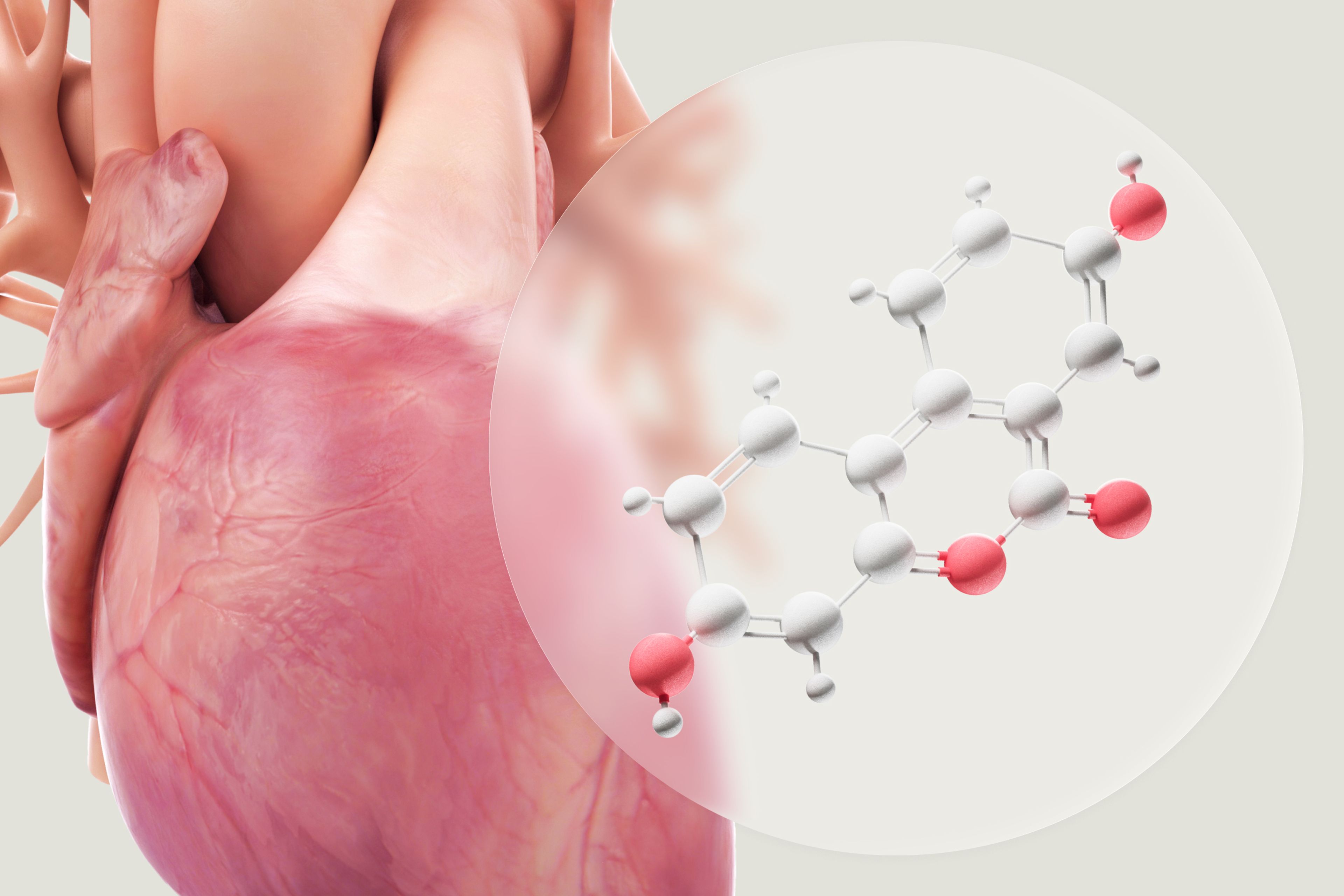
What to know
A new preclinical heart study found that Urolithin A improved heart muscle relaxation and reduced harmful structural changes in mice with a common type of heart failure.
Urolithin A also improved how quickly laboratory-grown human heart tissue contracted and relaxed, suggesting potential cardiovascular benefits.
A small 2024 clinical trial in 10 people with a different type of heart failure found no significant improvement in heart function after four weeks of urolithin A compared with placebo.
More human clinical trials are needed to confirm whether urolithin A supplements can improve heart function.
What Does New Research Show About Urolithin A and Heart Failure?
A new preclinical study involving mice and lab-grown human heart tissue found that urolithin A, a compound made when gut bacteria break down certain plant foods, improved heart relaxation in an experimental model of a common type of heart failure.[1]
Here's what the research shows about the mitochondria and heart failure connection, why it matters, and what it could mean.
What is the Link Between Mitochondria and Heart Failure?
Healthy mitochondria are essential for keeping the heart functioning properly. These tiny structures inside our cells produce more than 95% of the energy needed for the heart muscle to contract and pump blood throughout the body.[2]
Urolithin A, the active postbiotic compound in Mitopure, has been shown to clear out damaged mitochondria and directly activate mitophagy, which can help maintain more steady energy.
This mitochondrial-health-supporting compound is also naturally produced when certain gut bacteria break down nutrients found in foods like pomegranates, berries, and walnuts. However, an estimated 60% of people are non-producers or low producers of Urolithin A via this pathway.[3] This is one reason why Mitopure can be particularly helpful to provide a direct dose that bypasses this pathway.**
A 2025 analysis of a placebo-controlled trial study in healthy older adults found that taking 1000mg of Urolithin A daily for four months significantly lowered levels of certain plasma ceramides, a family of waxy fats.[4] These results highlight why supporting mitochondrial health is an important area of cardiovascular research.
In preclinical models of aging and heart failure, Urolithin A restored mitophagy and improved mitochondrial structure in heart cells.[5] The most recent preclinical study found that Urolithin A may help the heart relax and fill with blood more efficiently in mouse models for those with a particular type of heart failure.[6]
What Did the Urolithin A Preclinical Study on Heart Failure Actually Test?
This recent preclinical study explored whether Urolithin A could improve heart function in a type of heart failure, heart failure with preserved ejection fraction (HFpEF), which makes up about half of all heart failure cases.[7] In this condition, the heart muscle becomes stiff and has trouble relaxing between beats, making it harder for the heart to fill with blood.[8]
Researchers wanted to understand whether Urolithin A could target a specific biological pathway involved in heart muscle relaxation and potentially support cardiovascular health.
The study combined three approaches: a mouse model of HFpEF, lab tests of how urolithin A acts on one heart protein, and lab-grown human heart tissue.[9]
- Experimental heart failure models: Researchers used an animal model designed to mimic multiple health conditions associated with HFpEF, such as high blood pressure and a high-fat diet. They administered Urolithin A for seven days and evaluated its effects on heart function and structural changes in the heart muscle.
- Heart-protective mechanisms: Researchers investigated whether Urolithin A could activate a protein called PKGIα, which plays an important role in helping the heart muscle and blood vessels relax.[10]
- Human heart tissue testing: To further explore its effects, researchers also tested Urolithin A in human heart tissue engineered in a laboratory.[11] They measured how quickly the heart muscle contracted and relaxed to better understand its potential effects on heart function.
Together, these experiments allowed researchers to investigate how Urolithin A interacts with the heart, providing a foundation for future research into its potential cardiovascular benefits.
What Did the Urolithin A Heart Study Find?
The researchers found early signs that Urolithin A may help improve heart function and protect against some of the changes associated with heart failure with preserved ejection fraction. Specifically, the study showed several benefits in experimental animal models and laboratory-grown human heart tissue, including:
- Improved heart muscle relaxation: Mice treated with Urolithin A showed improvements in the heart's ability to relax and fill with blood between beats, an important function that is often impaired in HFpEF.[12]
- Reduced harmful changes in heart structure: Urolithin A helped reduce heart muscle thickening and fibrosis (scar tissue buildup), which can make the heart stiffer and less efficient at doing its job.[13]
- Better exercise capacity: Treated mice also ran farther than untreated mice.[14]
- Faster heart muscle contraction and relaxation: In laboratory-grown human heart tissue, Urolithin A improved how quickly the heart muscle contracted and relaxed, suggesting potential benefits for healthy heart function.[15]
- New mechanism of action, not tied to mitophagy: This study did not investigate mitophagy activation. Instead, the scientists discovered that Urolithin A appears to activate PKGIα, a heart-relaxation protein.

What Does This Mean for Heart Health?
These early findings suggest that Urolithin A may support heart health by helping the heart muscle relax more effectively and protecting against harmful structural changes. While the results are encouraging, it's important to remember that this was a preclinical study involving mice and laboratory-grown human heart tissue, not a clinical trial in people. The study also used only male mice, treated for seven days, and results in animals often don’t carry over to humans.[16]
Human research is needed to determine whether Urolithin A supplementation can provide similar benefits for heart health and to clarify the mitophagy heart connection.
Has Urolithin A Been Studied in Humans for Heart Health?
So far, there are limited human studies on Urolithin A and heart health, as most research has been conducted in animals or in engineered human tissue.[17] This tissue mimics key features of human heart muscle, though it is less mature than adult heart tissue.[18] However, human clinical trials are still needed to confirm whether these benefits occur in people taking Urolithin A supplements.
What we do know is that Urolithin A has demonstrated a favorable safety profile in human studies.[19] To date, over 25 human clinical trials of urolithin A investigating its benefits for muscle health*, mitochondrial function, immune health, skin, and healthy aging have generally found it to be well tolerated, with no major safety concerns identified.[20] These findings provide reassurance about Urolithin A's safety in human populations studied. More research is needed to determine whether its promising heart health benefits translate to humans.
What’s Next for Urolithin A and Heart Health Research?
The next step would be human clinical trials that build on these early findings and explore several important questions such as:
- Does Urolithin A improve heart function in humans? Researchers need to determine whether supplementation can improve the heart's ability to relax and fill with blood, particularly in people with HFpEF.
- What dose and duration are most effective? Future studies should further explore how much Urolithin A is needed and how long it must be taken to produce meaningful cardiovascular benefits.
- Who might benefit most? Research involving both men and women, particularly older adults and those with heart health concerns, could help identify which populations may benefit the most.
Overall, the discovery of Urolithin A's effects on the heart-protective protein PKGIα opens an exciting new avenue for cardiovascular research and provides a strong foundation for future clinical trials.
Frequently Asked Questions About Urolithin A and Heart Health
1. How can I improve my heart health?
You can improve your heart health by eating a balanced diet, staying physically active, getting enough sleep, managing stress, avoiding nicotine, maintaining healthy blood pressure and cholesterol levels.[21] Research consistently shows that a Mediterranean-style diet rich in fruits, vegetables, whole grains, nuts, and healthy fats can help lower the risk of cardiovascular disease.
2. What are the benefits of Urolithin A?
Mitopure, the only pure and patented urolithin A supplement, supports healthy aging by helping your body clear out damaged mitochondria through a process called mitophagy.†
In a randomized, placebo-controlled trial of 88 middle-aged adults, Mitopure increased muscle strength* by up to 12% after 16 weeks.[22] At 1,000 mg daily, Mitopure has also been shown to increase muscle endurance‡ in older adults and to support immune fitness§ in healthy, middle-aged adults.[23]
3. What is the difference between preclinical and clinical trials?
Preclinical studies are conducted in laboratory settings using cells, tissues, or animals to test the potential benefits of a compound. Clinical trials test the intervention in people to evaluate its safety and effectiveness.[24]
4. Can Urolithin A supplements help support heart health?
There isn't enough evidence at this time to conclude Urolithin A supplements support heart health. Early laboratory and animal research suggests that Urolithin A may benefit heart function through mechanisms involving heart muscle relaxation and cellular health.[25] For now, this is best viewed as an emerging area of heart health research.
†These statements have not been evaluated by the Food and Drug Administration. This product is not intended to diagnose, treat, cure, or prevent any disease.
‡Our clinical studies showed that sedentary adults aged 65–90 improved muscle endurance, measured as leg and hand repetitions to fatigue, after daily supplementation with 1,000 mg Mitopure®.
§Our randomized, placebo-controlled clinical study showed that supplementation with Mitopure® 1,000mg for 4 weeks was associated with improvements in mitochondrial health of immune cells, favorable shifts in T-cell populations (including naïve cells), and markers of healthy immune function in healthy, middle-aged adults.
Authors

Dietitian-Nutritionist, and Health Content Writer
References
- ↑
Su, J., Zhao, Y., Coleman, P., et al. (2026). Targeting PKGIα Cys42 attenuates cardiac dysfunction in heart failure with preserved ejection fraction. Science Advances, 12(34), eaec8088. https://doi.org/10.1126/sciadv.aec8088 (PMID: 42616901)
Tomás-Barberán, F. A., González-Sarrías, A., García-Villalba, R., et al. (2017). Urolithins, the rescue of “old” metabolites to understand a “new” concept: Metabotypes as a nexus among phenolic metabolism, microbiota dysbiosis, and host health status. Molecular Nutrition & Food Research, 61(1), 1500901. https://doi.org/10.1002/mnfr.201500901
Redfield, M. M., & Borlaug, B. A. (2023). Heart failure with preserved ejection fraction: A review. JAMA, 329(10), 827–838. https://doi.org/10.1001/jama.2023.2020 (PMID: 36917048)
- ↑
Doenst, T., Nguyen, T. D., & Abel, E. D. (2013). Cardiac metabolism in heart failure: Implications beyond ATP production. Circulation Research, 113(6), 709–724. https://doi.org/10.1161/CIRCRESAHA.113.300376 (PMID: 23989714)
- ↑
Kuerec AH, Lim XK, Khoo ALY, et al. Targeting aging with urolithin A in humans: A systematic review. Ageing Research Reviews. 2024;100:102406. doi:10.1016/j.arr.2024.102406
- ↑
Laaksonen, R., Ekroos, K., Sysi-Aho, M., et al. (2016). Plasma ceramides predict cardiovascular death in patients with stable coronary artery disease and acute coronary syndromes beyond LDL-cholesterol. European Heart Journal, 37(25), 1967–1976. https://doi.org/10.1093/eurheartj/ehw148
Liu, S., Faitg, J., Tissot, C., et al. (2025). Urolithin A provides cardioprotection and mitochondrial quality enhancement preclinically and improves human cardiovascular health biomarkers. iScience, 28(2), 111814. https://doi.org/10.1016/j.isci.2025.111814 (PMID: 40034121)
- ↑
Liu, S., Faitg, J., Tissot, C., et al. (2025). Urolithin A provides cardioprotection and mitochondrial quality enhancement preclinically and improves human cardiovascular health biomarkers. iScience, 28(2), 111814. https://doi.org/10.1016/j.isci.2025.111814 (PMID: 40034121)
- ↑
Su, J., Zhao, Y., Coleman, P., et al. (2026). Targeting PKGIα Cys42 attenuates cardiac dysfunction in heart failure with preserved ejection fraction. Science Advances, 12(34), eaec8088. https://doi.org/10.1126/sciadv.aec8088 (PMID: 42616901)
- ↑
Redfield, M. M., & Borlaug, B. A. (2023). Heart failure with preserved ejection fraction: A review. JAMA, 329(10), 827–838. https://doi.org/10.1001/jama.2023.2020 (PMID: 36917048)
Su, J., Zhao, Y., Coleman, P., et al. (2026). Targeting PKGIα Cys42 attenuates cardiac dysfunction in heart failure with preserved ejection fraction. Science Advances, 12(34), eaec8088. https://doi.org/10.1126/sciadv.aec8088 (PMID: 42616901)
- ↑
Shah SJ, Borlaug BA, Kitzman DW, et al. Research Priorities for Heart Failure With Preserved Ejection Fraction. Circulation. 2020;141(12):1001-1026. doi:10.1161/circulationaha.119.041886
- ↑
Su, J., Zhao, Y., Coleman, P., et al. (2026). Targeting PKGIα Cys42 attenuates cardiac dysfunction in heart failure with preserved ejection fraction. Science Advances, 12(34), eaec8088. https://doi.org/10.1126/sciadv.aec8088 (PMID: 42616901)
- ↑
Su, J., Zhao, Y., Coleman, P., et al. (2026). Targeting PKGIα Cys42 attenuates cardiac dysfunction in heart failure with preserved ejection fraction. Science Advances, 12(34), eaec8088. https://doi.org/10.1126/sciadv.aec8088 (PMID: 42616901)
Burgoyne, J. R., Madhani, M., Cuello, F., et al. (2007). Cysteine redox sensor in PKGIα enables oxidant-induced activation. Science, 317(5843), 1393–1397. https://doi.org/10.1126/science.1144318
- ↑
Su, J., Zhao, Y., Coleman, P., et al. (2026). Targeting PKGIα Cys42 attenuates cardiac dysfunction in heart failure with preserved ejection fraction. Science Advances, 12(34), eaec8088. https://doi.org/10.1126/sciadv.aec8088 (PMID: 42616901)
- ↑
Su, J., Zhao, Y., Coleman, P., et al. (2026). Targeting PKGIα Cys42 attenuates cardiac dysfunction in heart failure with preserved ejection fraction. Science Advances, 12(34), eaec8088. https://doi.org/10.1126/sciadv.aec8088 (PMID: 42616901)
Redfield, M. M., & Borlaug, B. A. (2023). Heart failure with preserved ejection fraction: A review. JAMA, 329(10), 827–838. https://doi.org/10.1001/jama.2023.2020 (PMID: 36917048)
- ↑
Su, J., Zhao, Y., Coleman, P., et al. (2026). Targeting PKGIα Cys42 attenuates cardiac dysfunction in heart failure with preserved ejection fraction. Science Advances, 12(34), eaec8088. https://doi.org/10.1126/sciadv.aec8088 (PMID: 42616901)
Paulus, W. J., & Tschöpe, C. (2013). A novel paradigm for heart failure with preserved ejection fraction: Comorbidities drive myocardial dysfunction and remodeling through coronary microvascular endothelial inflammation. Journal of the American College of Cardiology, 62(4), 263–271. https://doi.org/10.1016/j.jacc.2013.02.092
- ↑
Su, J., Zhao, Y., Coleman, P., et al. (2026). Targeting PKGIα Cys42 attenuates cardiac dysfunction in heart failure with preserved ejection fraction. Science Advances, 12(34), eaec8088. https://doi.org/10.1126/sciadv.aec8088 (PMID: 42616901)
- ↑
Su, J., Zhao, Y., Coleman, P., et al. (2026). Targeting PKGIα Cys42 attenuates cardiac dysfunction in heart failure with preserved ejection fraction. Science Advances, 12(34), eaec8088. https://doi.org/10.1126/sciadv.aec8088 (PMID: 42616901)
- ↑
Su, J., Zhao, Y., Coleman, P., et al. (2026). Targeting PKGIα Cys42 attenuates cardiac dysfunction in heart failure with preserved ejection fraction. Science Advances, 12(34), eaec8088. https://doi.org/10.1126/sciadv.aec8088 (PMID: 42616901)
Seyhan, A. A. (2019). Lost in translation: The valley of death across preclinical and clinical divide – identification of problems and overcoming obstacles. Translational Medicine Communications, 4, 18. https://doi.org/10.1186/s41231-019-0050-7
- ↑
Su, J., Zhao, Y., Coleman, P., et al. (2026). Targeting PKGIα Cys42 attenuates cardiac dysfunction in heart failure with preserved ejection fraction. Science Advances, 12(34), eaec8088. https://doi.org/10.1126/sciadv.aec8088 (PMID: 42616901)
Liu, S., Faitg, J., Tissot, C., et al. (2025). Urolithin A provides cardioprotection and mitochondrial quality enhancement preclinically and improves human cardiovascular health biomarkers. iScience, 28(2), 111814. https://doi.org/10.1016/j.isci.2025.111814 (PMID: 40034121)
- ↑
Ronaldson-Bouchard, K., Ma, S. P., Yeager, K., et al. (2018). Advanced maturation of human cardiac tissue grown from pluripotent stem cells. Nature, 556(7700), 239–243. https://doi.org/10.1038/s41586-018-0016-3
- ↑
Heilman, J., Andreux, P., Tran, N., et al. (2017). Safety assessment of urolithin A, a metabolite produced by the human gut microbiota upon dietary intake of plant derived ellagitannins and ellagic acid. Food and Chemical Toxicology, 108(Pt A), 289–297. https://doi.org/10.1016/j.fct.2017.07.050
- ↑
Singh, A., D’Amico, D., Andreux, P. A., et al. (2022). Urolithin A improves muscle strength, exercise performance, and biomarkers of mitochondrial health in a randomized trial in middle-aged adults. Cell Reports Medicine, 3(5), 100633. https://doi.org/10.1016/j.xcrm.2022.100633 (PMID: 35584623)
Liu, S., D’Amico, D., Shankland, E., et al. (2022). Effect of urolithin A supplementation on muscle endurance and mitochondrial health in older adults: A randomized clinical trial. JAMA Network Open, 5(1), e2144279. https://doi.org/10.1001/jamanetworkopen.2021.44279 (PMID: 35050355)
Denk, D., Singh, A., Kasler, H. G., et al. (2025). Effect of the mitophagy inducer urolithin A on age-related immune decline: A randomized, placebo-controlled trial. Nature Aging, 5(11), 2309–2322. https://doi.org/10.1038/s43587-025-00996-x
- ↑
Lloyd-Jones, D. M., Allen, N. B., Anderson, C. A. M., et al. (2022). Life’s Essential 8: Updating and enhancing the American Heart Association’s construct of cardiovascular health: A presidential advisory from the American Heart Association. Circulation, 146(5), e18–e43. https://doi.org/10.1161/CIR.0000000000001078 (PMID: 35766027)
- ↑
Singh, A., D’Amico, D., Andreux, P. A., et al. (2022). Urolithin A improves muscle strength, exercise performance, and biomarkers of mitochondrial health in a randomized trial in middle-aged adults. Cell Reports Medicine, 3(5), 100633. https://doi.org/10.1016/j.xcrm.2022.100633 (PMID: 35584623)
- ↑
Liu, S., D’Amico, D., Shankland, E., et al. (2022). Effect of urolithin A supplementation on muscle endurance and mitochondrial health in older adults: A randomized clinical trial. JAMA Network Open, 5(1), e2144279. https://doi.org/10.1001/jamanetworkopen.2021.44279 (PMID: 35050355)
Denk, D., Singh, A., Kasler, H. G., et al. (2025). Effect of the mitophagy inducer urolithin A on age-related immune decline: A randomized, placebo-controlled trial. Nature Aging, 5(11), 2309–2322. https://doi.org/10.1038/s43587-025-00996-x
- ↑
Seyhan, A. A. (2019). Lost in translation: The valley of death across preclinical and clinical divide – identification of problems and overcoming obstacles. Translational Medicine Communications, 4, 18. https://doi.org/10.1186/s41231-019-0050-7
- ↑
Su, J., Zhao, Y., Coleman, P., et al. (2026). Targeting PKGIα Cys42 attenuates cardiac dysfunction in heart failure with preserved ejection fraction. Science Advances, 12(34), eaec8088. https://doi.org/10.1126/sciadv.aec8088 (PMID: 42616901)
Liu, S., Faitg, J., Tissot, C., et al. (2025). Urolithin A provides cardioprotection and mitochondrial quality enhancement preclinically and improves human cardiovascular health biomarkers. iScience, 28(2), 111814. https://doi.org/10.1016/j.isci.2025.111814 (PMID: 40034121)

·
Nutrition·
Fake Urolithin A Supplements: How to Spot the Real Thing

·
Nutrition·
Studies·