Long Story Short: Five Lives Redefining the Spirit of Aging
Five people, ages 58 to 79, on rewriting the story of aging, and what it actually takes to keep going. What it means to have a true zest for life.
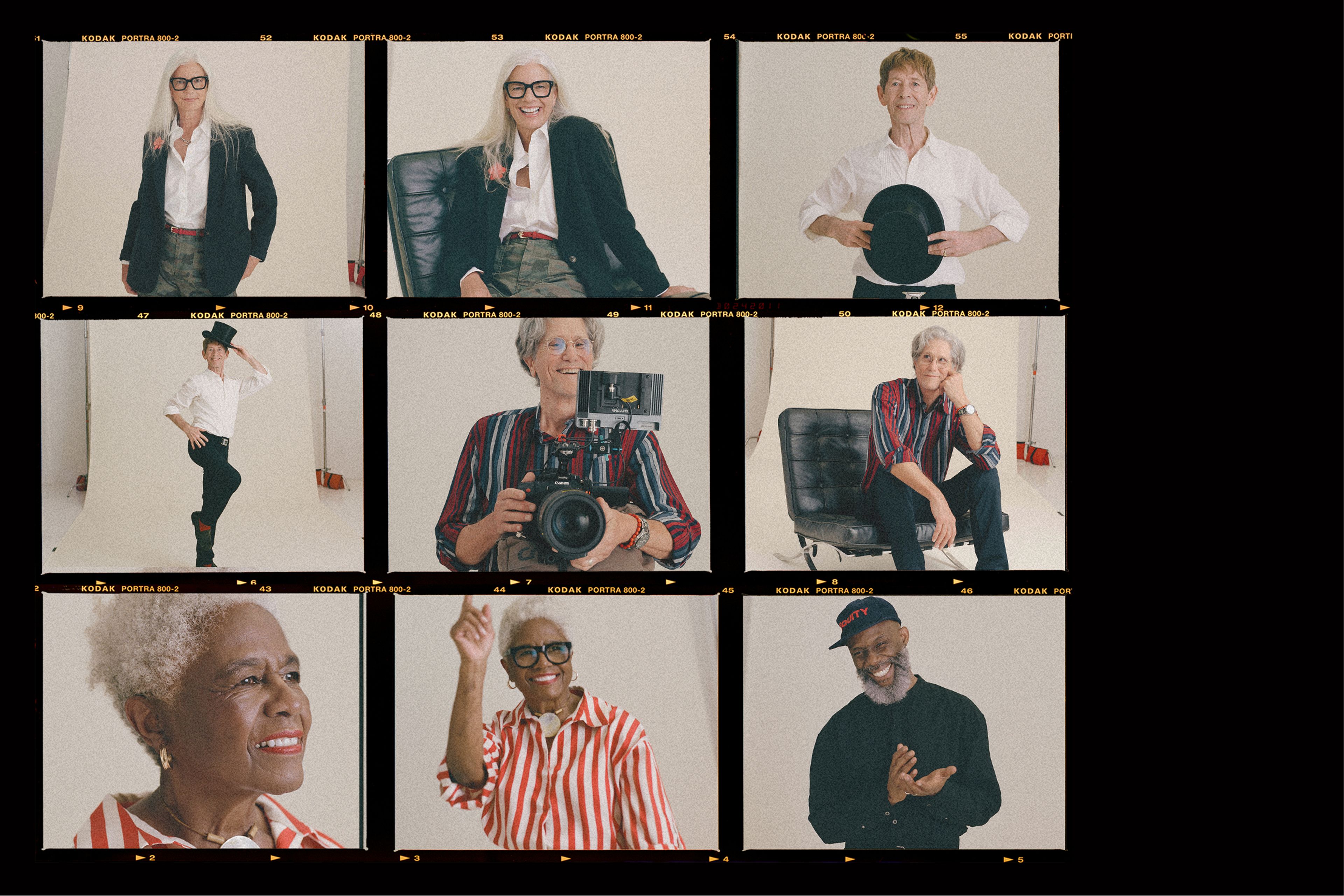
What to know
Libby, 64, has taken a walk every single morning for 15 years, far enough to circle the earth twice, referring to it as "an act of fidelity to myself."
Carolyn signed with a modeling agency at 72, two years after turning 70 and realizing the world had quietly written her off.
Jaymz, 58, exercises 365 days a year and files his life the way he files his records: by era and by feeling, never alphabetically.
Tim, 73, gave up performing but never gave up dancing; he adjusted how he does it instead of whether he does it.
Rufus, 73, braced for aging to arrive as a crisis and found opportunity instead: "Longevity is today. Today is your best day, right now."
We’ve all been handed a similar narrative of aging. But aging is anything but uniform. It’s a rich mosaic of experience, wisdom, and freedom.
Long Story Short is a Timeline series about people redefining aging, capturing these unique lives and delivering them in a capsule.
For our first installment, we met five individuals who are living how they want and defying expectations of their eras. They’re not trying to be young. They’re too busy being precisely the age they are.
There’s no single way to age, only your way, on your timeline.
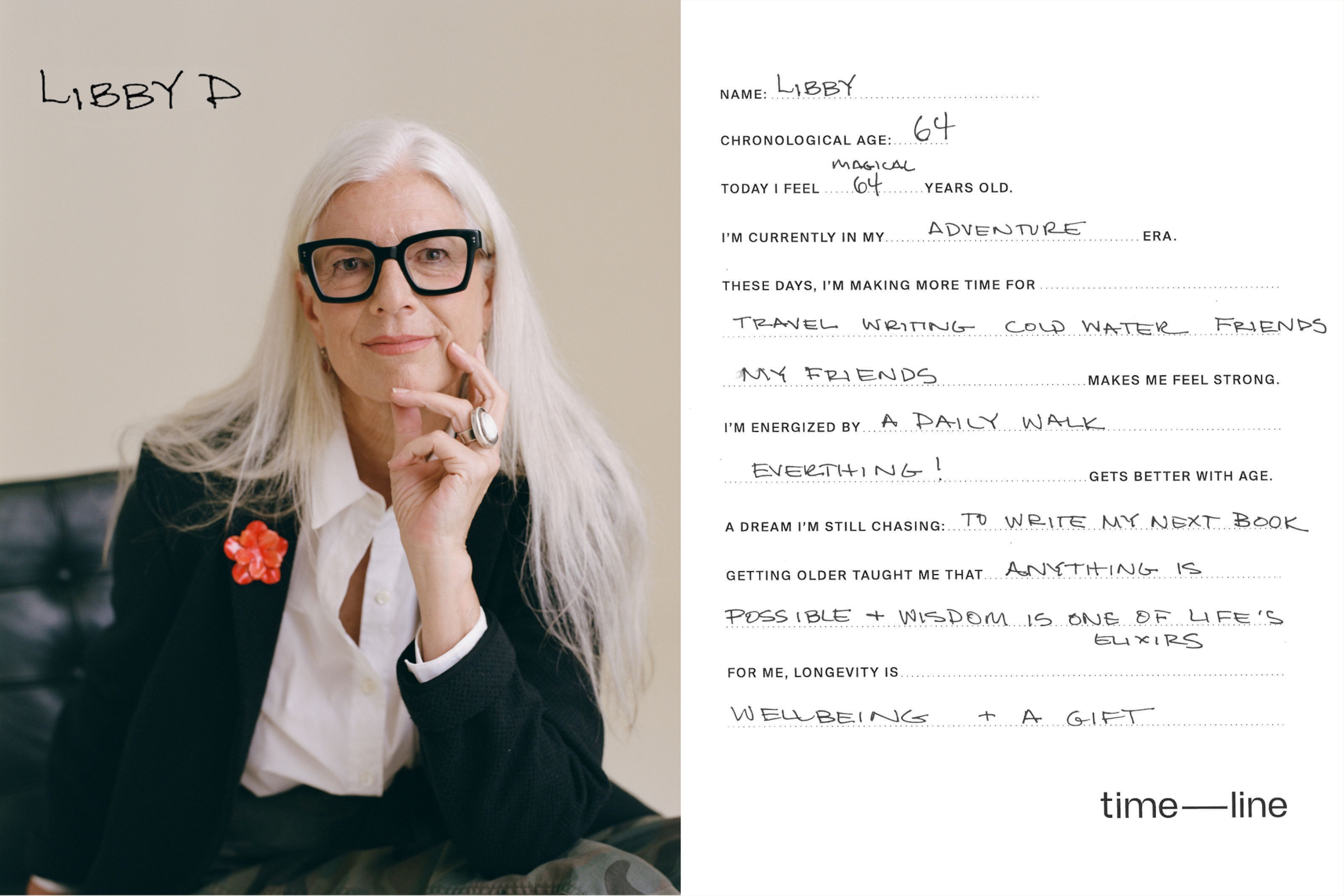
Libby, 64: Believe in Magic
When Libby was 13, growing up in New England, she read West with the Night, the memoir of Beryl Markham, a young woman who flew solo across Africa, and thought: that's what I would like to do.
Then she did what the world expected, focusing on career and family.
She became aware of her own aging the year she outlived her father. "As soon as I became a year older than my dad, who died at a young age, I realized what a profound privilege it was to age."
It started with a walk every single morning: five to 10 miles, in every imaginable weather, for 15 years. "In that course of time, I've circumnavigated the earth two times," she says. "Walking every single day was an act of fidelity to myself. To break that would have felt like I was being unfaithful to that intention." Libby started with a one-month experiment, "and I haven't stopped."
Decades later, at 64, those 13-year-old passions resurfaced. Libby has spent the last five years living nomadically. She came to our shoot straight from a fly-fishing trip in Alaska, where she'd taken a small plane around Denali that landed on a glacier. Beryl would be proud.
The walk taught Libby what a practice can do. So six years ago she went looking for another one, and found it somewhere considerably colder. Libby and a crew of women she calls the Mermaids carry their ice saws and sledgehammers out onto frozen lakes, cut a hole, and get down in. Libby knows cold plunging has become a hack. Hers isn't. "We can't help but come out of the water and look at each other and just be in love with each other, because you just did that and it was really hard."
That instinct, to test what she's been told — including about herself — runs through everything.
Ask her what's surprised her about getting older, and she doesn't hesitate. "I think aging is sparkly, it's magical, it's absolutely thrilling. I love it."
Which is exactly why the list keeps getting longer rather than shorter. She's working on her pilot's license. She got her first tattoo at 60. She has at least one more book in her.
Long story short, aging courageously might make you believe in magic.
View the full interview here.
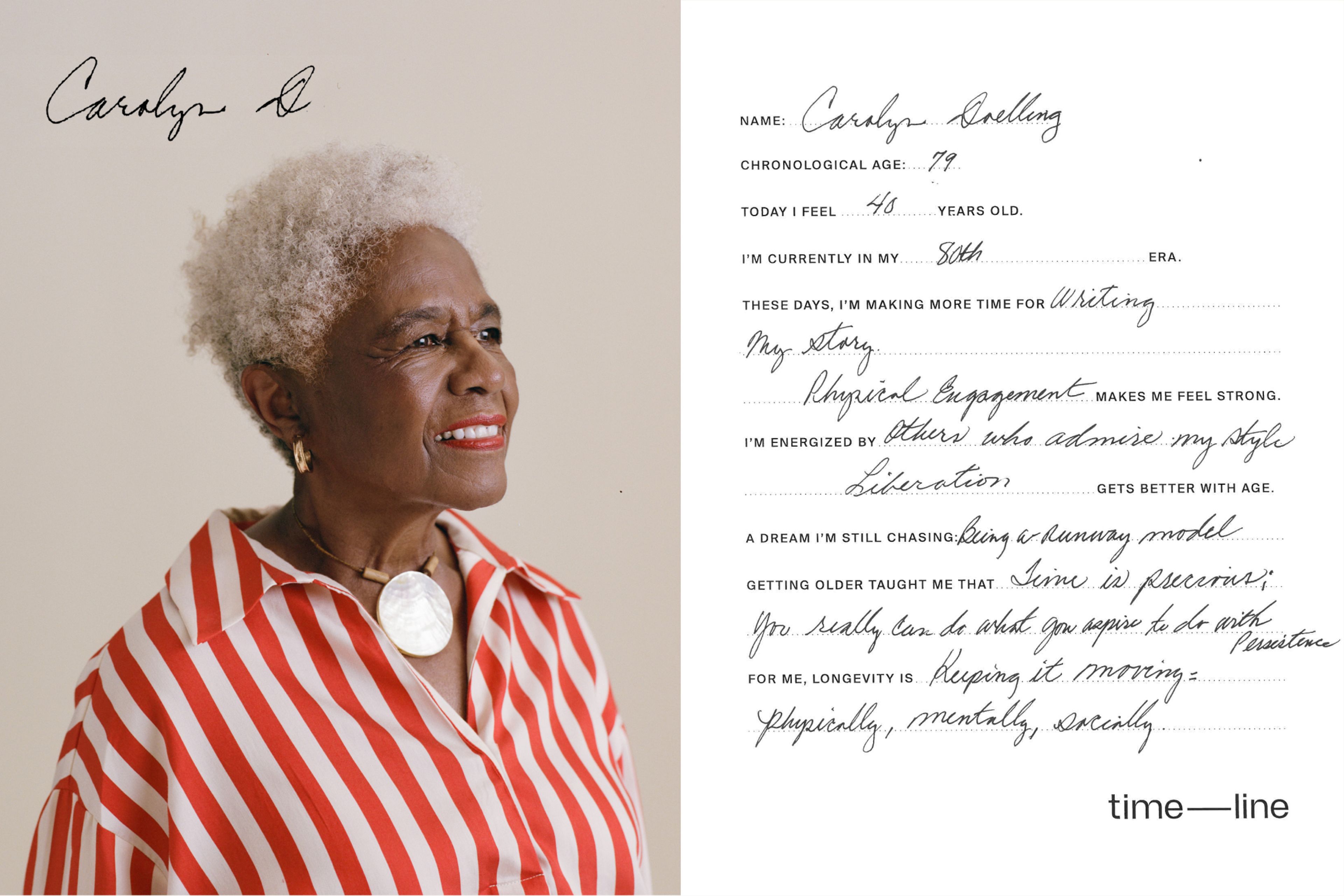
Carolyn, 79: Be Seen
Carolyn followed the rule book throughout middle age. She grew up in the South, worked in civil rights, then went into marketing. She raised two kids, bought the house, and retired on schedule at 70 with the standard vision of what came next.
It took almost no time to discover the vision was insufficient. "I had turned 70, and it seems that from everybody else's point of view, I was done."
Carolyn recognized the shape of it immediately, because she'd seen it before. "I came to this seeing an injustice: that if you're 70 years old, there are certain rules made for you, certain things you can or cannot do. When I was growing up in the South, there were rules that, for me, I could and could not do." Righting wrongs has been the organizing principle of her life. So she treated invisibility as a problem to be solved rather than a condition to be accepted.
Carolyn started with color. On a train, she noticed everyone in black, gray, and beige, and noticed that a single red sweater made a person impossible to miss. So she started dressing loud on purpose, and found that strangers in the grocery store began talking to her. "It was a way to actually engage with other people, she says."
Emboldened, Carolyn went further. She talked a local boutique owner into letting her model for the shop's Instagram. The photos worked, not only with women her age, but with thirty-year-olds. At 72, she started modeling professionally. She's still chasing runway.
"I've actually had people tell me that I dress young," she says. "I interpret it to mean that I dress with style." What she wants people to take from her is not the wardrobe but the message behind it: "Even if you're 60, 70, 80, you still have the power to change people's expectations of you."
"I have to be careful not to become more of a spectator than a producer." Her next reinvention is already named: she's writing her family's story, which she says reads like a history book.
View the full interview here.
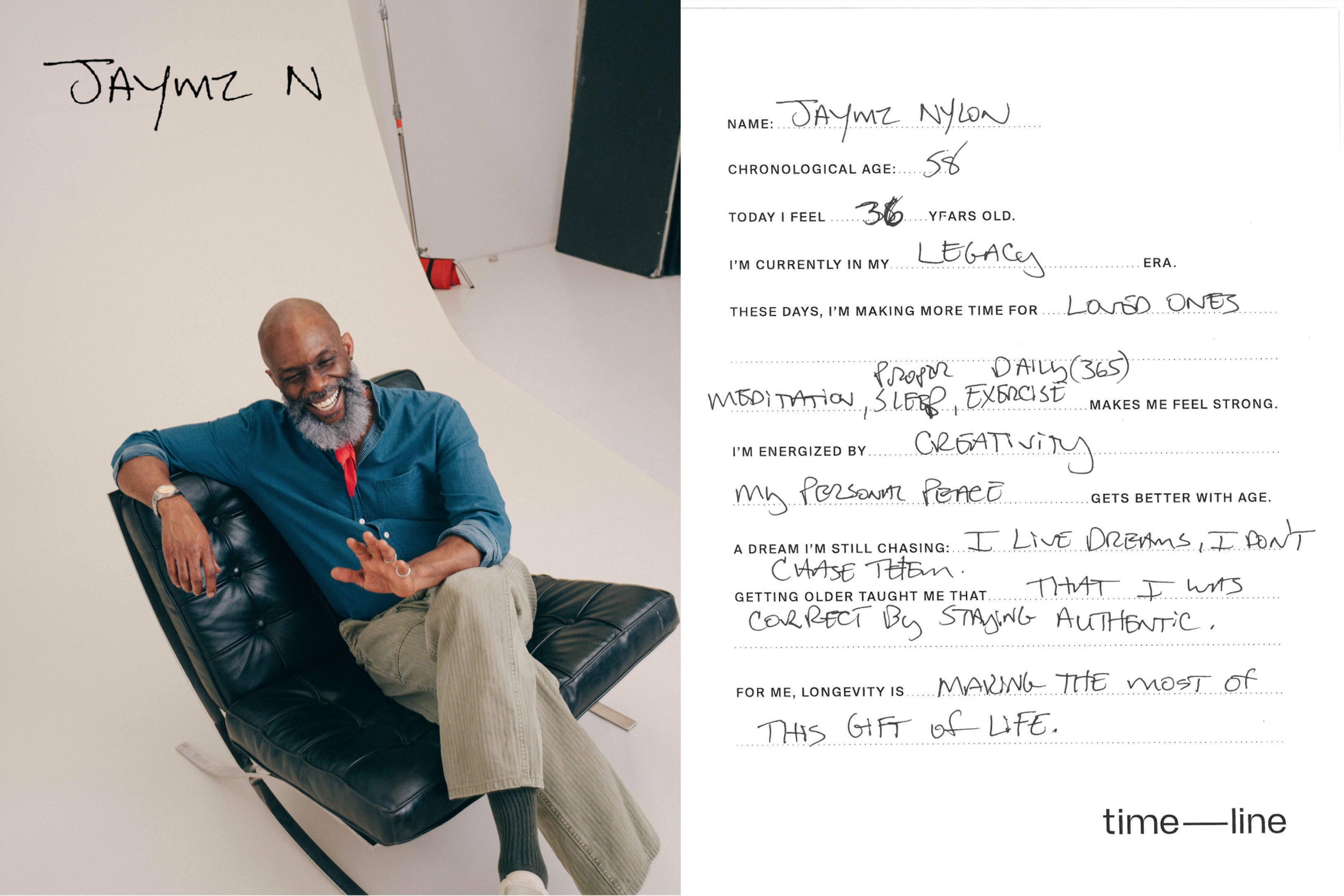
Jaymz, 58: Stay Present
Jaymz is 58 and says he feels 36. He has been, in rough order: a flight attendant, a DJ, a house music producer, a label owner running warehouse parties, a denim merchandiser, a Fifth Avenue retail manager, a co-founder of a pet brand with his wife, a dealer in watches and cars and art, and, starting about five years ago, unplanned, in his late fifties, a working model.
"I didn't wake up one day going, oh, I want to be a male model," he says. "The universe gave me this opportunity, and I took it and haven't looked back." He books frequently, in part because his age is an asset.
He remembers the first time he noticed he was aging: on the F train from Brooklyn, when a teenager called him sir. "I became a sir at almost 40, and I kind of didn't look back." Since then, he mostly declines to think about it. "We're all gonna get old at some point. We're just gonna arrive at different times. Why do I have to focus on that?"
What he focuses on instead is maintenance and making things. He exercises 365 days a year, and says he doesn't even like exercising, which is why he keeps five different routines on hand so he can never talk himself out of all of them. He eats well, sleeps a lot, dances, and cites laughter as a secret ingredient. His most creative hours are 2 a.m. to 6 a.m., when nobody needs anything from him.
"Longevity, to me, is not wasting the gift of life."
View the full interview here.
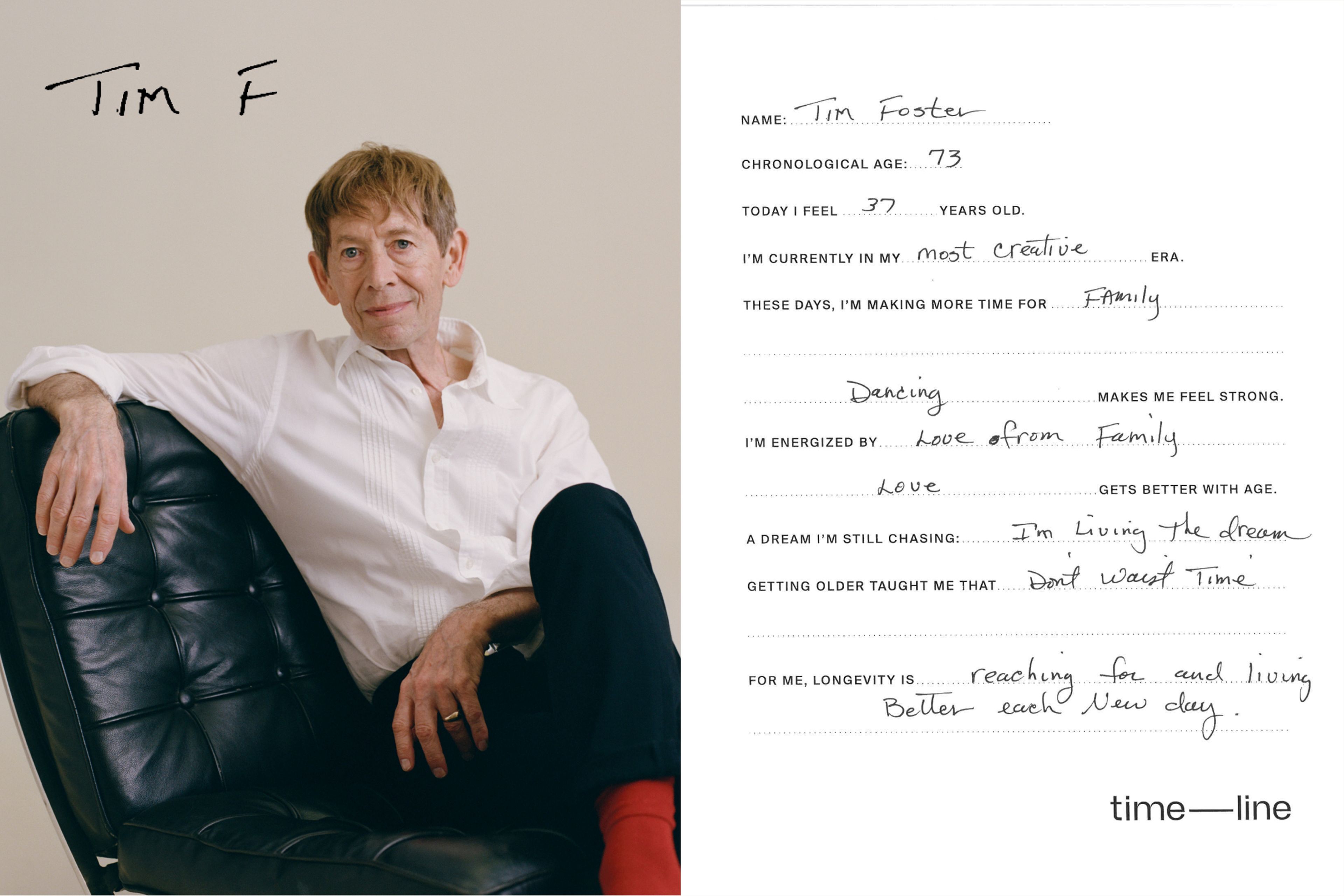
Tim, 73: Keep Dancing
Tim is 73. "I feel like I’m 37,” he says. "I just switched the numbers around."
Tim grew up in a house full of music; his father played in a country-western swing band. He came to New York, auditioned relentlessly, got his Equity card, spent 11 years at the New York City Opera, and filled the off-seasons with musical theater and national tours.
The turn came when his wife, Nikki, a powerhouse dancer who had trained him, was diagnosed with cancer. He needed to be home. So he stepped backstage into the wardrobe department of the theater he already knew, and stayed. For the last 15 years he has painted pointe shoes for New York City Ballet, mixing acrylics by hand to match every costume and every skin tone, working on four-hour turnarounds before curtain.
He has adapted, repeatedly, without conceding. Cancer in his leg led to a period of rebuilding. "Recovery time is longer as you get older. That's it. You just adjust. You learn how to work more efficiently." What he refuses is the framing. "If you put up barriers and say, oh, I can't do that anymore, well, then you won't do it anymore."
He still dances, at home, in the park when the musicians are out, without the slightest self-consciousness. "I am not afraid to just start dancing, and people love it. It makes people smile. It's just who I am."
And he has no patience for expectations. "Life tells you which box you're in. At 30 you should have accomplished this. At 40 you should have your house, your children. Who's saying that? I don't want those boxes. I want to open my arms, and just like, I'm ready. What's next?"
"You can't wait for it. It's now. Like they say, this is not a dress rehearsal. This is life."
View the full interview here.
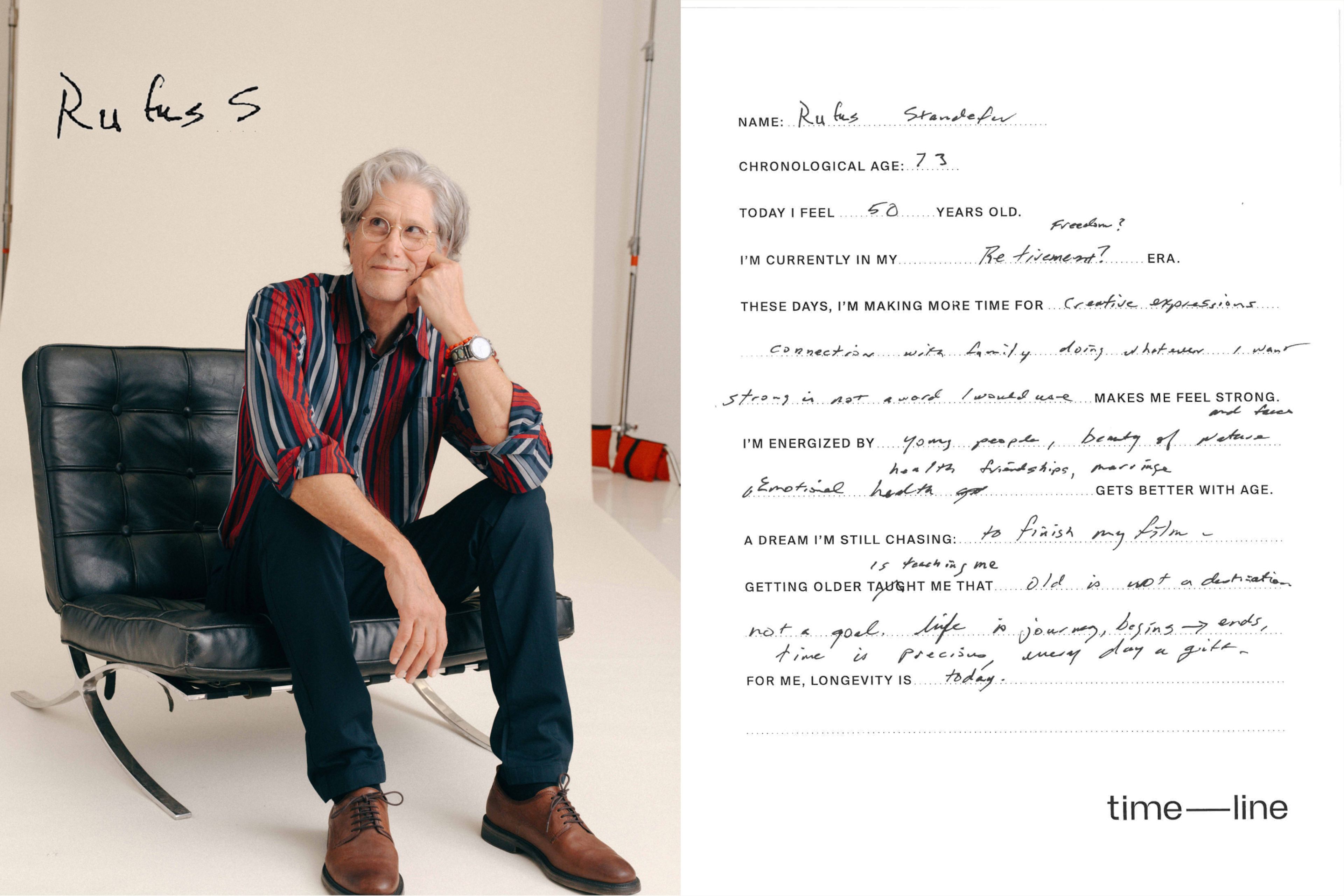
Rufus, 73: Trust the Process
When we met Rufus, he had two months left of 73 and reports that he feels fine, actually, better than fine, though he declines to name a number. "I think I look younger than I am. But I must be my age. The evidence says that."
Rufus grew up in a place where filmmaking wasn't something people did. Then a friend took him to see The 400 Blows in college, and that was that. He moved to New York in the seventies, worked as a gaffer for a decade, became a director of photography, and shot all over the world.
It was a glorious way to spend a career, and a punishing one: 200 nights a year in hotel rooms, and a body treated largely as equipment. He wound the work down when he wanted a family, and he's clear-eyed about what it cost him along the way. Rufus broke his neck on the job and carried a 70-pound camera on it for years afterward.
At 29, he came back from a fishing trip in Patagonia deathly ill, then spent the recovery on his parents' porch in North Carolina, too weak to cross a room, watching birds. "I went, oh my God, it's so beautiful, I'm alive. And I went, this is what it's like to be really old. But it wasn't bad. It was wonderful." He was in his twenties, and he'd just been handed a preview.
Now the pain is diminished, and the deadlines are gone, and he says something that surprised him more than it surprises anyone else: "I feel younger today than I did 20 years ago." Part of it is freedom. The kids are out in the world doing creative work of their own; his daughter, now a film director, is the one who made him audition for this series. "You go, well, what am I going to do with myself? And you realize it's not a crisis. It's opportunity. I was expecting the crisis. I was not expecting the opportunity."
His hobbies all run on the same fuel: bread with wild yeast, a garden he walks in barefoot, fishing he's honest about being bad at. What they buy him is attention. He describes a wading bird standing so still it vanishes into the sky, then striking. "Fishing gives you the opportunity to notice and to be right in this particular moment."
"Getting older gives you patience. It slows you down a little bit. Then you get the reward from the patience. Noticing things. You look, and you go, there's some weeds, look at those flowers, look at those bees. All of a sudden there's a universe that opens up to you."
Ask him about longevity, and he won't take the bait about living forever. "Longevity is today. Today is your best day, right now."
View the full interview here.
What Five People Agree On
They don't share a diet, a discipline, or a philosophy. Libby walks; Jaymz makes music at odd hours; Carolyn kickboxes; Tim dances; Rufus gardens. But underneath the differences is the same structure: freedom without mental boundary, an appetite for whatever's next, and a flat refusal to accept somebody else's timeline.
Authors
Freelance writer

·
Nutrition·
Fake Urolithin A Supplements: How to Spot the Real Thing
·
Nutrition·
Studies·
What Centenarians Reveal About Longevity and Immune Health

·
Nutrition·
Studies·