The Science Behind Why Pet Owners Tend to Live Longer
Owning a dog can help you exercise more, reduce your heart disease risk, and may help you live longer. Learn about the longevity benefits of pets.

What to know
Dog owners have a 20 percent reduced risk of early death, and a 23 percent reduced risk of death from cardiovascular disease.
Dog owners are four times more likely to meet recommended weekly activity guidelines.
Dog and cat owners both experience slower cognitive decline than people without pets.
Dog owners are at reduced risk for stroke and diabetes.
If your best friend barks, you may live longer. Multiple studies have shown that dog owners are at a lower risk of early death than their “pupless” peers. Read on to learn more about the health benefits of owning a dog, cat, fish, and other pets.
The Link Between Pet Ownership and Mortality
The risk reduction is massive: In a 2017 study that examined 3.4 million people in Sweden over a 12-year period,[1] scientists found that dog owners were at a 23 percent reduced risk of death from cardiovascular disease, and 20 percent less likely to die overall compared to those without dogs. For most of these benefits, the older the participants were, the more they benefited. Similar results have been found in studies in the U.S.[2], U.K.[3], Japan[4], and Australia[5].
While these studies are observational, the Swedish study adjusted for influential factors like wealth and age. Even with socioeconomics and demographics factored in, dog ownership still carried notable benefits.
Dog ownership and heart health are only part of the canine-healthspan connection, with the health benefits of owning a dog extending to your mind, mood, and more. And if you’re a cat person, don’t feel left out. Depending on your age and life situation, parenting other kinds of pets may help with mental health, loneliness, relaxation, and cognition.
Does Owning a Dog Have Health Benefits?
Yes, but that may not come as a surprise. Studies have shown that people expect that getting a dog will help their health. For example, a study of more than 3,000 Australians found that 89 percent of respondents felt getting a dog would make them happier, 74 percent expected reduced stress, and 89 percent expected to walk more.[6]
That last point is key to reaping the longevity benefits of pet parenthood. Most of the human health benefits rely not just on owning a dog, but walking and exercising your dog. Unfortunately, studies find that only about 60 percent of owners regularly walk their dogs.[7]
What Are The Health Benefits of Owning a Dog?

People with dogs walk more, and in some cases, a lot more. In a 2019 study, U.K. scientists found that dog owners were 4 times more likely to meet the physical activity guidelines of 150 minutes per week than those without a dog.[8] And in a research review of 29 different studies, dog owners reported 52 more minutes of physical activity and 18 more minutes of walking per week than non-dog owners.[9]
Scientists believe this increase in physical activity may explain much of the connection between dogs and longevity.
That’s because walking can add up to better cardiovascular fitness and a longer life. Research has shown an inverse relationship between cardio fitness and all-cause mortality, meaning that as fitness goes up, the risk of early death goes down. Hitting the recommended 150 minutes per week of physical activity reduces your risk of early death by 20 percent.[10]
There is a caveat, however. One study found that dog owners participated in more non-dog-related physical activity than non-dog owners, so it may be that people who own dogs are already more predisposed to being active.[11]

Spending more time in green and blue spaces has been shown to help people feel more relaxed, improve their immune and endocrine function, and may even help migraine sufferers have fewer headaches.
And research suggests that dogs help us do this. In 2019, investigators showed that more than 3,500 European dog owners were more than twice as likely to spend 4 or more hours in nature per month than people without dogs.[12]
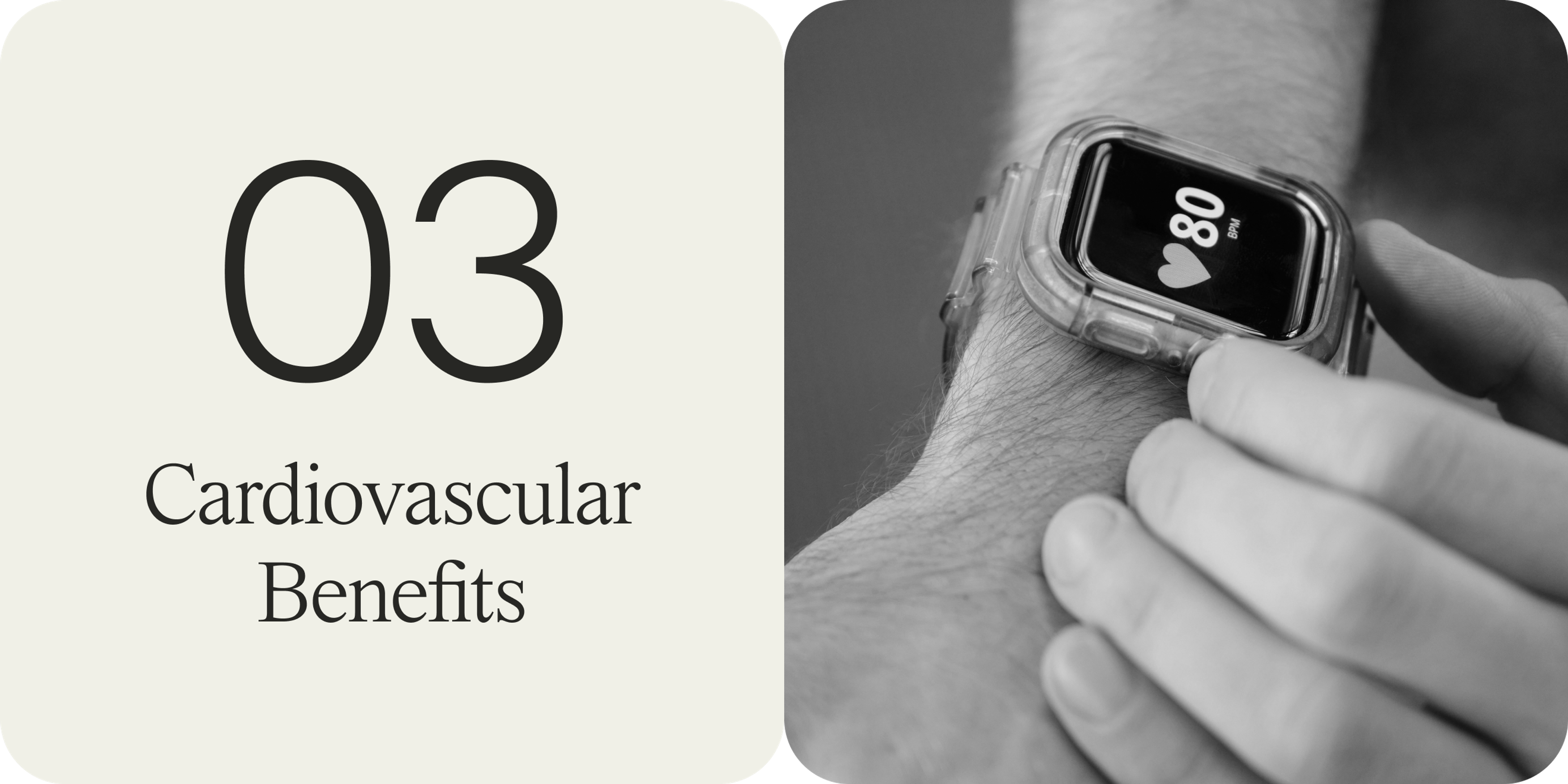
Pet ownership may also help with how your cardiovascular system responds to stressful events.[13] In a study published in the journal Hypertension, scientists prescribed two groups of people with a beta blocker, a blood pressure-lowering medication. Half of the participants were assigned to get a pet, choosing either a dog or a cat, while the other half remained pet-less.
When these groups were exposed to stressors, both pet groups had smaller spikes in blood pressure in response to the stress than those who only had the BP-lowering meds and no pet.
Another study of more than 3,000 U.S. military veterans found that dog ownership was associated with lower rates of heart disease, stroke, and diabetes, as well as lower cholesterol levels.[14]

Your furry friend may also benefit your brain and cognition. Researchers analyzing data from more than 10,000 adults found that pet owners experienced a slower decline in several aspects of cognition.[15]
The study also compared dog and cat owners to each other. Those with cats experienced less decline in verbal functioning, while dog owners experienced less decline in immediate recall.

People with dogs tend to have higher self-esteem[16], which is associated with better mental health and well-being, including improved stress management and increased ability to deal with pressure.[17]
Beyond self-esteem, the mental health benefits of owning a dog are mixed and depend on your age, gender, and life situation. Older people who are bereaved may experience less depression if they’ve got a pet, but the results aren’t as strong for younger groups of people.[18]
Young adult women who live alone feel less lonely when they’ve got a pet[19], and for older adults living in community settings, dogs may improve anxiety levels.[20] These benefits may stem from the physical contact between pets and their owners, which can increase oxytocin and reduce cortisol in both.[21]
Do Cats and Other Pets Have Health Benefits?
Longevity benefits are not just for dog owners. Occasional studies have found a reduction in mortality for cat owners as well. In one study, for example, cat owners had lower risks of cardiovascular mortality, especially stroke, than dog owners.[22] But larger research reviews haven’t found a connection between the ownership of cats, birds, fish, or other non-dog pets with improved mortality.[23]
Cats Can Lower Blood Pressure and Heart Rate
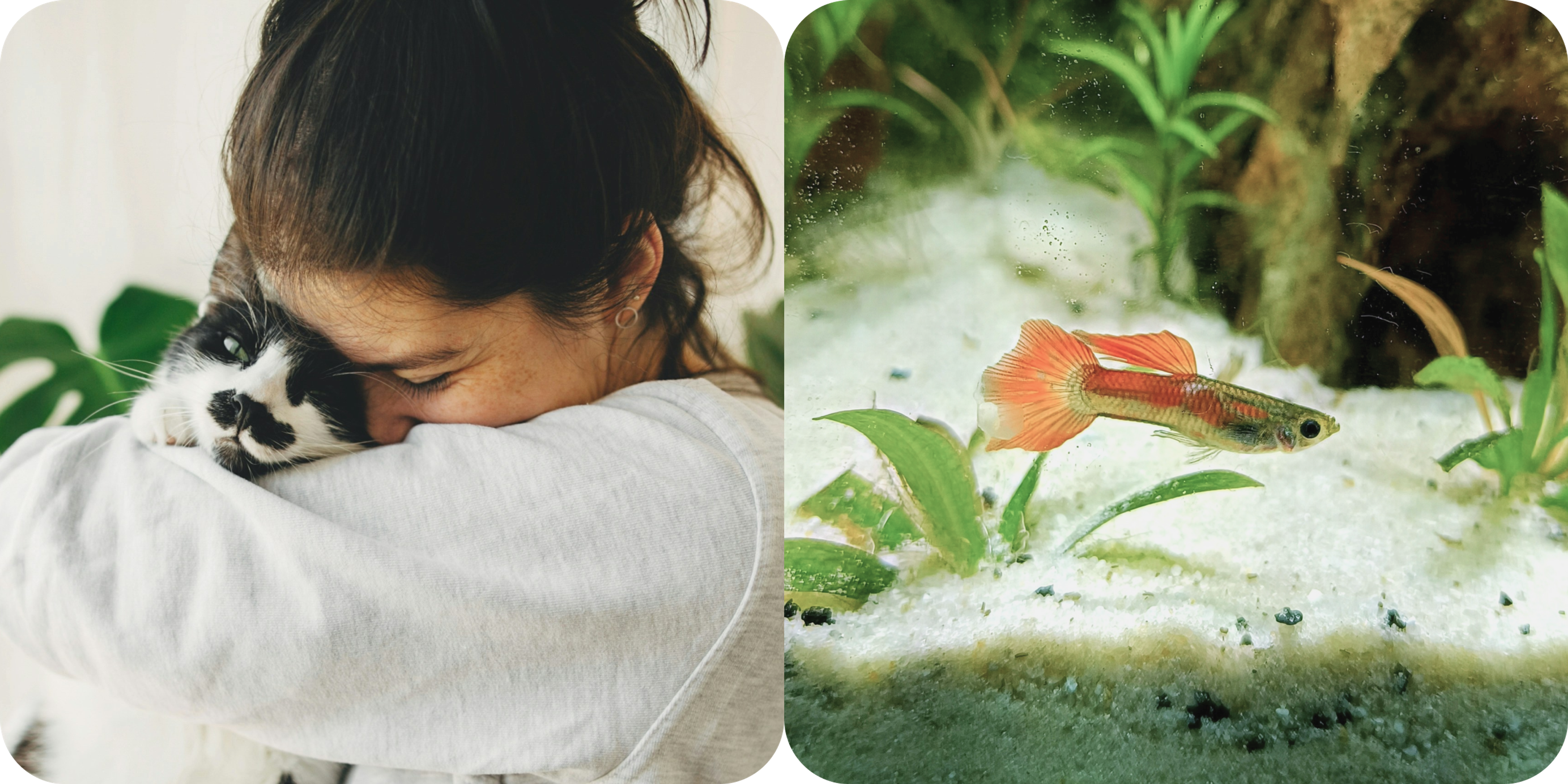
Just 10 minutes of interacting with a cat can reduce heart rate and blood pressure. And the longer you’ve had your feline, the more pronounced the benefit may be. Owners who’ve been with their cat for more than two years tend to experience greater benefits.[24]
Owning Fish Can Help You Relax
Many people describe the gentle, repetitive motions of fish as calming and say that tending to an aquarium adds a small but meaningful moment of mindfulness to their day. Some self-reported research confirms this, highlighting how owning a pet fish can help people unwind. While this evidence is qualitative, meaning it is based on people’s personal descriptions rather than numerical measurements, it still offers useful insight into the subtle ways animals can influence our mood.[25]
Caretaking Any Type of Pet May Help with Depression
They don’t even need to be cuddly. An interesting study found that older adults living in an elder community showed significant improvements on the “Geriatric Depression Scale” after 8 weeks of caring for caged crickets.[26]
Should I Get a Pet for Longevity?
While owning a pet won’t replace a healthy diet, regular exercise, or healthy sleep, it can be a potent plus to a healthy lifestyle.
But experts agree. Don’t get a dog if it’s just for the health benefits. The American Heart Association says that “pet adoption, rescue, or purchase should not be done for the primary purpose of reducing cardiovascular disease risk.[27]
Owning a pet is a big commitment that goes far beyond the potential health benefits. Animals rely on their owners for time, attention, and consistent care, which can be emotionally and financially demanding. Before bringing a pet home, consider your lifestyle, resources, and ability to provide a loving, stable environment.
That said, if the timing feels right and you’re ready to take on the responsibility, welcoming a pet into your life can be one of the most rewarding decisions you make — offering companionship, joy, and, as research shows, real benefits for both your physical and mental health.
Authors

Written by
Health & Fitness Writer

Reviewed by
Director Science Communications
References
- ↑
Mubanga M, Byberg L, Nowak C, et al. Dog ownership and the risk of cardiovascular disease and death - a nationwide cohort study. Sci Rep. 2017;7(1):15821. Published 2017 Nov 17. doi:10.1038/s41598-017-16118-6
- ↑
Ogechi I, Snook K, Davis BM, Hansen AR, Liu F, Zhang J. Pet Ownership and the Risk of Dying from Cardiovascular Disease Among Adults Without Major Chronic Medical Conditions. High Blood Press Cardiovasc Prev. 2016;23(3):245-253. doi:10.1007/s40292-016-0156-1
- ↑
Ding D, Bauman AE, Sherrington C, McGreevy PD, Edwards KM, Stamatakis E. Dog Ownership and Mortality in England: A Pooled Analysis of Six Population-based Cohorts. Am J Prev Med. 2018;54(2):289-293. doi:10.1016/j.amepre.2017.09.012
- ↑
Taniguchi Y, Seino S, Headey B, et al. Evidence that dog ownership protects against the onset of disability in an older community-dwelling Japanese population. PLoS One. 2022;17(2):e0263791. Published 2022 Feb 23. doi:10.1371/journal.pone.0263791
- ↑
Taniguchi Y, Ikeuchi T, Yong J. Dog, cat, bird, fish, and other pet ownership and mortality: Evidence from the HILDA cohort. PLoS One. 2024;19(8):e0305546. Published 2024 Aug 14. doi:10.1371/journal.pone.0305546
- ↑
Powell L, Chia D, McGreevy P, et al. Expectations for dog ownership: Perceived physical, mental and psychosocial health consequences among prospective adopters. PLoS One. 2018;13(7):e0200276. Published 2018 Jul 6. doi:10.1371/journal.pone.0200276
- ↑
Christian HE, Westgarth C, Bauman A, et al. Dog ownership and physical activity: a review of the evidence. J Phys Act Health. 2013;10(5):750-759. doi:10.1123/jpah.10.5.750
- ↑
Westgarth, C., Christley, R.M., Jewell, C. et al. Dog owners are more likely to meet physical activity guidelines than people without a dog: An investigation of the association between dog ownership and physical activity levels in a UK community. Sci Rep 9, 5704 (2019). https://doi.org/10.1038/s41598-019-41254-6 (https://www.google.com/url?q=https://doi.org/10.1038/s41598-019-41254-6&sa=D&source=docs&ust=1767631784769761&usg=AOvVaw1PkYMQ_XB5491xrxEIjchu)
- ↑
Christian HE, Westgarth C, Bauman A, et al. Dog ownership and physical activity: a review of the evidence. J Phys Act Health. 2013;10(5):750-759. doi:10.1123/jpah.10.5.750
- ↑
Lee DH, Rezende LFM, Joh HK, et al. Long-Term Leisure-Time Physical Activity Intensity and All-Cause and Cause-Specific Mortality: A Prospective Cohort of US Adults. Circulation. 2022;146(7):523-534. doi:10.1161/CIRCULATIONAHA.121.058162
- ↑
Zablan K, Melvin G, Hayley A. Dog ownership, physical activity, loneliness and mental health: a comparison of older adult and younger adult companion animal owners. BMC Psychol. 2024;12(1):618. Published 2024 Nov 1. doi:10.1186/s40359-024-02104-x
- ↑
Zijlema WL, Christian H, Triguero-Mas M, et al. Dog ownership, the natural outdoor environment and health: a cross-sectional study. BMJ Open. 2019;9(5):e023000. Published 2019 May 27. doi:10.1136/bmjopen-2018-023000
- ↑
Allen K, Shykoff BE, Izzo JL Jr. Pet ownership, but not ace inhibitor therapy, blunts home blood pressure responses to mental stress. Hypertension. 2001;38(4):815-820.
- ↑
Woodward SH, Baldassarri SR, Pietrzak RH. Dog ownership may promote cardiometabolic health in U.S. military veterans. Sci Rep. 2023;13(1):11075. Published 2023 Jul 8. doi:10.1038/s41598-023-38038-4
- ↑
Rostekova A, Lampraki C, Maurer J, Meier C, Wieczorek M, Ihle A. Longitudinal relationships between pet ownership and cognitive functioning in later adulthood across pet types and individuals' ages. Sci Rep. 2025;15(1):19066. Published 2025 May 30. doi:10.1038/s41598-025-03727-9
- ↑
Schulz C, König HH, Hajek A. Differences in Self-Esteem Between Cat Owners, Dog Owners, and Individuals Without Pets. Front Vet Sci. 2020;7:552. Published 2020 Sep 2. doi:10.3389/fvets.2020.00552
- ↑
Orth U, Robins RW. Is high self-esteem beneficial? Revisiting a classic question. Am Psychol. 2022;77(1):5-17. doi:10.1037/amp0000922
- ↑
Garrity, T. F., Stallones, L. F., Marx, M. B., & Johnson, T. P. (1989). Pet Ownership and Attachment as Supportive Factors in the Health of the Elderly. Anthrozoös, 3(1), 35–44. https://doi.org/10.2752/089279390787057829 (https://www.google.com/url?q=https://doi.org/10.2752/089279390787057829&sa=D&source=docs&ust=1767631784774700&usg=AOvVaw16s5FRUKevC_6vdx9XAjLl)
- ↑
Zasloff RL, Kidd AH. Loneliness and pet ownership among single women. Psychol Rep. 1994;75(2):747-752. doi:10.2466/pr0.1994.75.2.747
- ↑
Zasloff RL, Kidd AH. Loneliness and pet ownership among single women. Psychol Rep. 1994;75(2):747-752. doi:10.2466/pr0.1994.75.2.747
- ↑
Petersson, M., Uvnäs-Moberg, K., Nilsson, A., Gustafson, L. L., Hydbring-Sandberg, E., & Handlin, L. (2017). Oxytocin and Cortisol Levels in Dog Owners and Their Dogs Are Associated with Behavioral Patterns: An Exploratory Study. Frontiers in psychology, 8, 1796. https://doi.org/10.3389/fpsyg.2017.01796 (https://www.google.com/url?q=https://doi.org/10.3389/fpsyg.2017.01796&sa=D&source=docs&ust=1767631784776625&usg=AOvVaw3Nq6jT59SWmXx3iUSDrB6V)
- ↑
Ogechi I, Snook K, Davis BM, Hansen AR, Liu F, Zhang J. Pet Ownership and the Risk of Dying from Cardiovascular Disease Among Adults Without Major Chronic Medical Conditions. High Blood Press Cardiovasc Prev. 2016;23(3):245-253. doi:10.1007/s40292-016-0156-1
- ↑
Taniguchi Y, Ikeuchi T, Yong J. Dog, cat, bird, fish, and other pet ownership and mortality: Evidence from the HILDA cohort. PLoS One. 2024;19(8):e0305546. Published 2024 Aug 14. doi:10.1371/journal.pone.0305546
- ↑
Dinis, Filipa. (2016). Does cat attachment have an effect on human health? A comparison between owners and volunteers. Pet behaviour Science. Volume 1. 1-12. 10.21071/pbs.v0i1.3986.
- ↑
Clements H, Valentin S, Jenkins N, Rankin J, Baker JS, Gee N, Snellgrove D, Sloman K. The effects of interacting with fish in aquariums on human health and well-being: A systematic review. PLoS One. 2019 Jul 29;14(7):e0220524. doi: 10.1371/journal.pone.0220524. PMID: 31356652; PMCID: PMC6663029.
- ↑
Ko HJ, Youn CH, Kim SH, Kim SY. Effect of Pet Insects on the Psychological Health of Community-Dwelling Elderly People: A Single-Blinded, Randomized, Controlled Trial. Gerontology. 2016;62(2):200-209. doi:10.1159/000439129
- ↑
Levine GN, Allen K, Braun LT, et al. Pet ownership and cardiovascular risk: a scientific statement from the American Heart Association. Circulation. 2013;127(23):2353-2363. doi:10.1161/CIR.0b013e31829201e1


·
Nutrition·
Fake Urolithin A Supplements: How to Spot the Real Thing
·
Nutrition·
Studies·