PQQ Benefits For Health - Exploring the Available Evidence
Learn the ins and outs of PQQ, an antioxidant said to positively affect brain health, boost energy, and reduce inflammation.
What to know
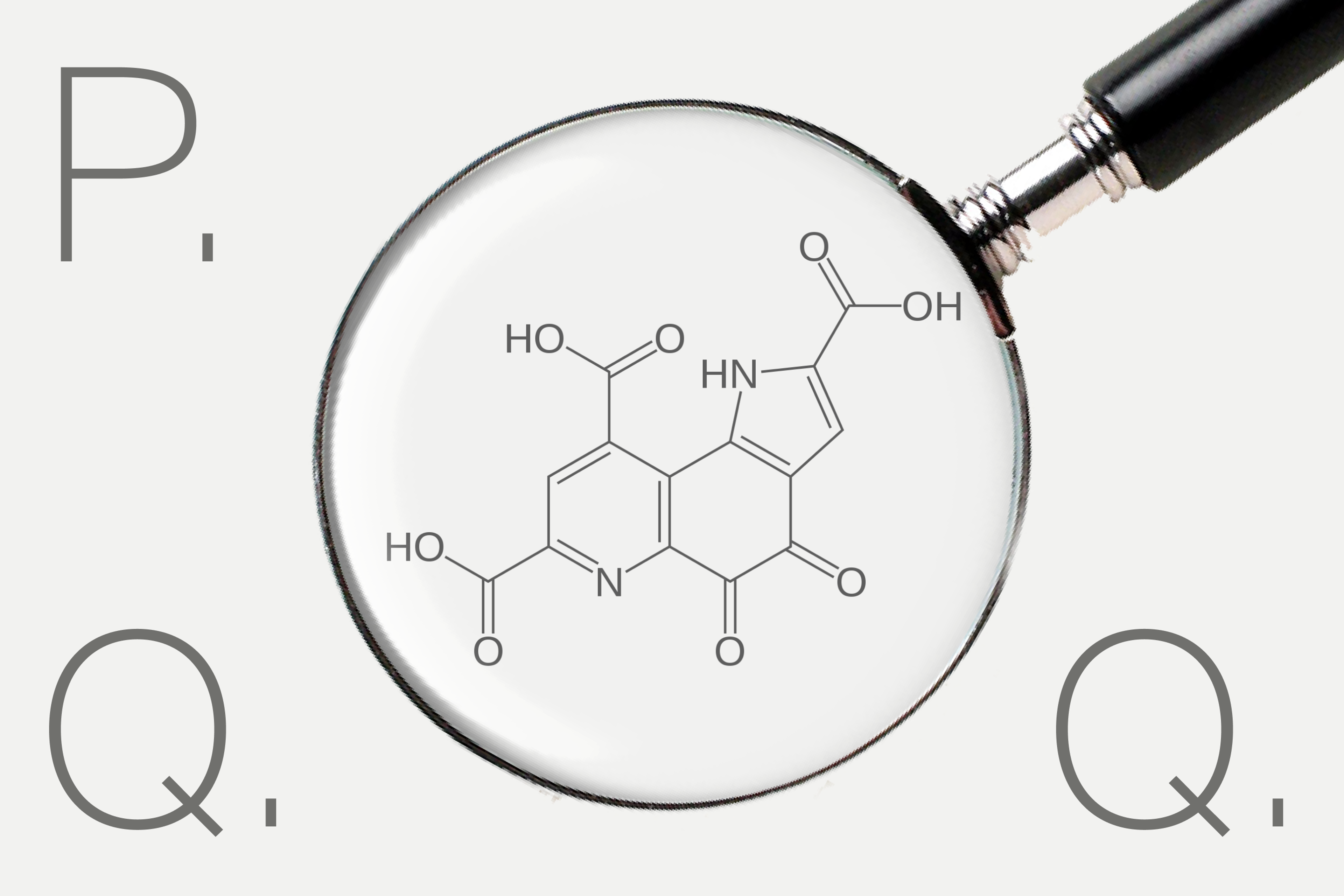
PQQ (pyrroloquinoline quinone) is an antioxidant compound found in soil and various plant foods with potential benefits for mitochondrial health, energy production, inflammation, and cognition.
Research suggests PQQ may provide these benefits via its influence on mitochondrial health. However, studies are limited mostly to test tube or animal research studies.
PQQ supplements may be considered if you don’t eat enough PQQ in food, but an optimal dosage has not been identified.
Compared to other longevity supplements like CoQ10 and Urolithin A in Mitopure, CoQ10 boasts more human research, but Urolithin A is backed by the most studies in terms of longevity support.
PPQ has the potential to support longevity, but more human research is needed to confirm the extent of its benefits, how it works, and possible risks.
In the ever-evolving world of longevity supplements, PQQ is one compound on the radar of many. PQQ, or pyrroloquinoline quinone, is a vitamin-like antioxidant compound naturally found in soil and various plant foods garnering attention for its potential role in mitochondrial health and energy production, inflammation, and cognition.
Given the role of mitochondrial health in longevity, you may be curious if you should add PQQ to your longevity supplement stack and if vitamin-like benefits can be seen from taking PQQ supplements and foods.
Read on to learn more about PQQ, whether you should take a PQQ supplement, and how it compares to other healthspan-promoting ingredients like Mitopure.
About PQQ
PQQ, also known as methoxatin, is a naturally occurring vitamin-like compound in the soil and various plant foods. It is said to work most similarly to vitamin C, but it is a much more powerful antioxidant.[1]
Research has shown that diets low in PQQ produce a vitamin-like deficiency that appears to improve with adding PQQ back into the diet.
PQQ is considered a longevity nutrient, but it is also taken for its nootropic or brain-boosting effects.
PQQ Potential Benefits For Health
A few potential PQQ benefits for health have been investigated, including its potential to promote energy production, longevity, and cognitive health. Its role in energy and longevity is attributed to its influence on mitochondrial health.
It's important to note that most of the studies on PQQ have been done in animal and cell models, and there is still much to learn about its impact on human health.
As a comparison, other nutrients like Urolithin A have clearly demonstrated human benefits in clinical trials.
Mitochondrial health
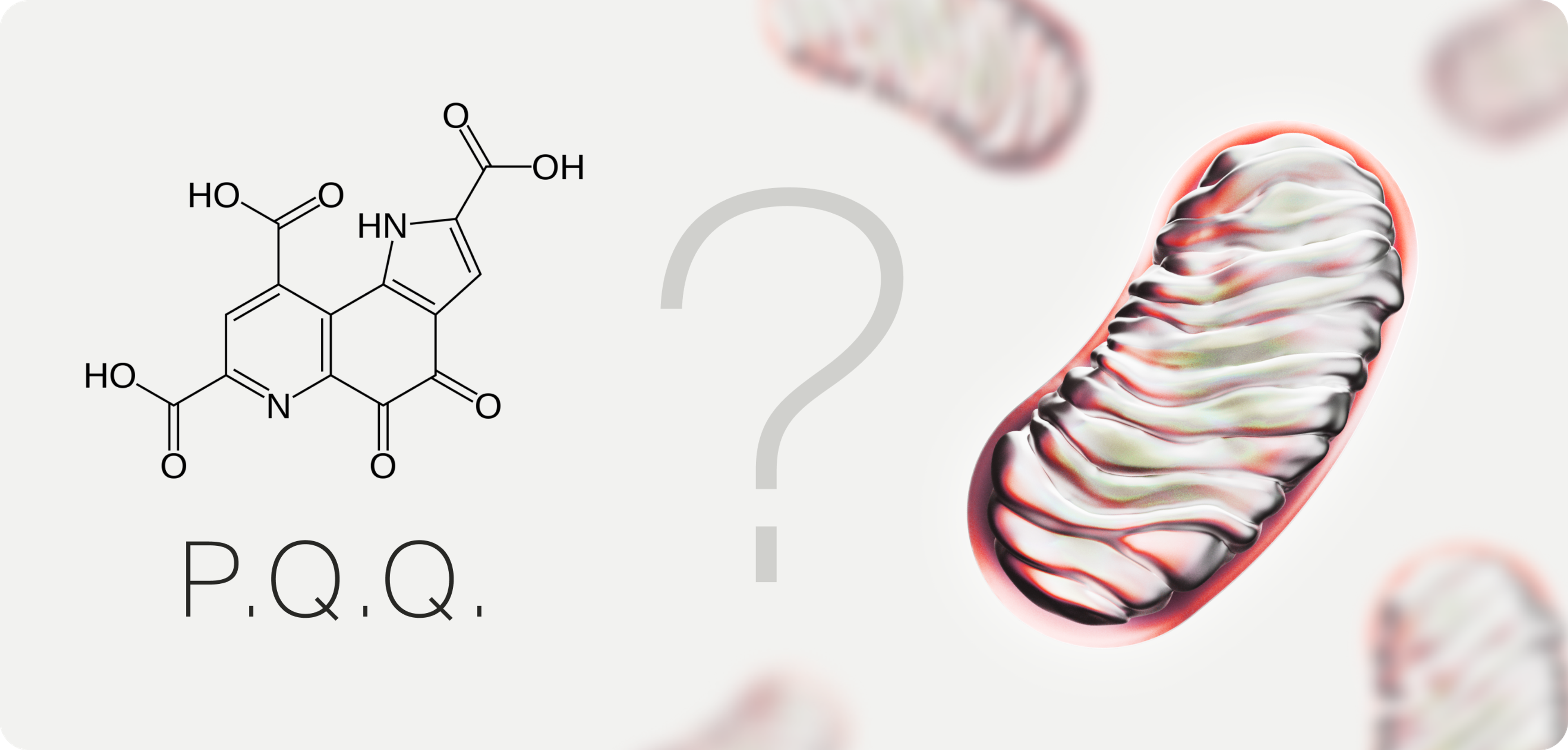
The health of our mitochondria is imperative for daily energy production, our ability to utilize nutrients from our food, and for healthy aging. If we don't do anything to slow it down, our mitochondria will start to decline in number and function as we age.
In addition to the evidence-based mitocuetical Urolithin A found in Mitopure®, PQQ is another molecule used to address aging-related mitochondrial damage. Via its antioxidant capabilities, PQQ appears to neutralize harmful free radicals, unstable molecules that can build up and contribute to early aging and disease.
Test tube and animal studies have indicated PQQ increases mitochondrial biogenesis (creation of new mitochondria). [2]However, human research on mitochondrial nutrition, PQQ, and mitochondrial health, in general, is very limited.
Due to the limited studies, it is difficult to say how powerful an effect it may have on humans or how it may work to provide these potential benefits.
Cognitive Health
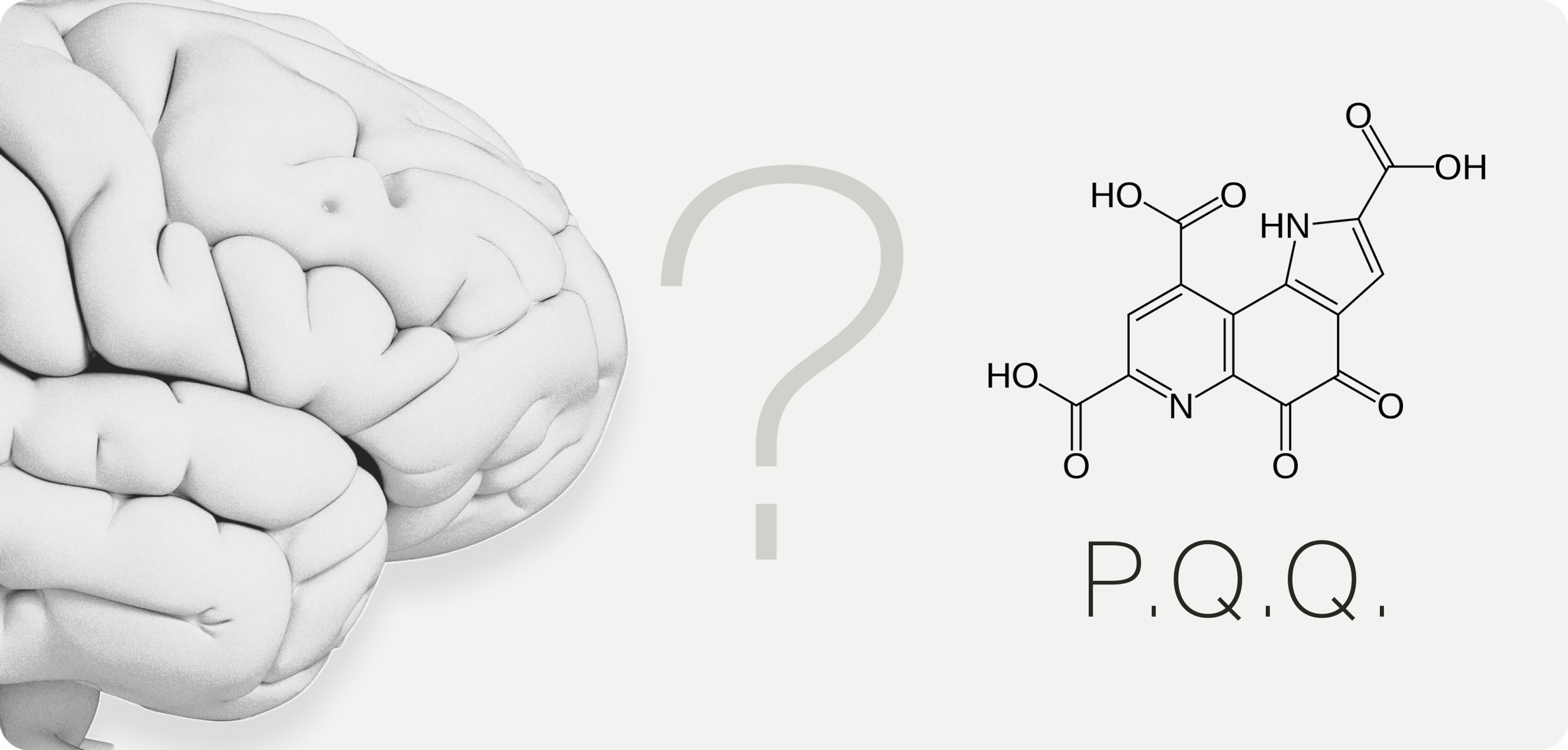
Cognitive health and memory are other emerging areas of PQQ research, especially given that cognitive dysfunction appears to be increasing worldwide. Early research in humans suggests that PQQ may help promote cognition by protecting nerve cells, [3]increasing blood flow to the brain, and activating mitochondria.[4]
One recent human study involved 66 people ages 20-65, where half took a PQQ supplement, and half took a placebo. Those taking PQQ displayed improved measures of complex and verbal memory after 12 weeks compared to placebo[5].
The researchers concluded PQQ may hold promise in supporting cognitive function in the aging population who feel they are becoming more forgetful. Still, most studies on PQQ and cognition are test tube or animal studies, and more human research is still needed.
PQQ-rich Diet
Since PQQ is found in soil, there are a variety of PQQ food sources from plants, including:[6]
- Green tea
- Papaya
- Kiwi
- Bananas
- Fermented soybeans
- Spinach
- Green pepper
- Parsley
- Celery
Even though PQQ antioxidant functions make it act similarly to a vitamin, it is not technically classified as a vitamin. Therefore, there is no recommended dietary allowance (RDA) that specifies how much we need each day.
Since PQQ in food is widespread, it is thought that most people can get enough of it with a varied diet. Also, PQQ supplement benefits are still not fully understood.
Should You Take PQQ Supplements?
Since PQQ is readily available in food, taking a PQQ supplement is likely unnecessary unless your diet is lacking in PQQ-rich foods.
There is no set PPQ dosage for supplementation; however, the available research points to the benefits of taking PQQ in doses from 5-20 mg a day.
PQQ side effects and dosage
Due to limited research, there are not many known PQQ side effects at this time. The only side effect seen so far is that PQQ may pose a risk of kidney damage in rats at very high doses of 500-1000 mg per kilogram.[7]
Alternative Longevity Supplements: Urolithin A’s Proven Benefits
PQQ supplements research on mitochondrial function in humans is still lacking, driving people to seek out molecules that have clinically validated results.
Urolithin A, the active ingredient in Mitopure®, impacts cellular energy at its core by supporting a cell recycling process called mitophagy. Clinical trials have proven its ability to upregulate this mitochondrial quality control mechanism[8]. This ensures that defective and aging mitochondria are recycled and renewed, improving their performance and, ultimately, our energy levels.
Mitopure Softgels
4.5 (4684) · 95% recommend
The simplest form of Mitopure
The importance of mitophagy
Researchers are uncovering more about the role mitophagy plays in healthy aging. This understanding points to the necessity of targeting mitophagy as a foundational strategy for promoting mitochondrial health.
Urolithin A emerges as a key player in this realm, with its proven ability to enhance mitophagy. By supporting the selective recycling of mitochondria, Urolithin A ensures that cells retain their energy-producing efficiency and resilience against age-related decline. This approach not only underscores the importance of mitochondrial health in the broader context of aging but also positions Urolithin A as an essential component in the pursuit of longevity and vitality.
Mitopure’s proven benefits
Over 300 preclinical and clinical trials have attested to Urolithin A’s safety and health benefits.
Mitopure is the first clincally validated Urolithin A supplment. Here’s what the science shows:
- Significant improvement in mitochondrial renewal[9]
- 12% improvement in muscle strength after 16 weeks[10]
- Provides 6 times more Urolithin A than diet alone[11]

Should You Take a Urolithin A Supplement?
Unlike PQQ, Urolithin A is not as readily available in the diet. Urolithin A is derived from pomegranates, raspberries, strawberries, almonds, and walnuts. However, approximately 60% of people lack the right gut bacteria to produce Urolithin A from dietary sources.[12]
Because of this, direct supplementation of Urolithin A is recommended as the best way to obtain your daily dose.
What About CoQ10?
CoQ10 stands for coenzyme Q10 and is also called “ubiquinone” due to its ubiquitous nature. It is present in almost every cell in the human body and plays a role in mitochondrial health.
People often question the role of PQQ and CoQ10 in cellular health and longevity, and while both can act as powerful antioxidants, neither has been shown to stimulate mitophagy in humans.
Final Words
In the landscape of longevity supplements, PQQ may play a role in promoting healthspan, energy production, and cognitive health. However, most studies are limited to test tube or animal research, where the same benefits may not apply to humans.
In addition to PQQ, there are many other longevity nutrients out there, but only one that targets mitochondrial recycling - Urolithin A.
Learn more about Urolithin A’s benefits and how taking Mitopure, a direct dose of Urolithin A, can fit into your healthy aging regimen.
Remember above all else, always consult your medical provider before starting a new supplement regimen.
Authors

Dietitian-Nutritionist, and Health Content Writer

Reviewed by
Director Science Communications
References
- ↑
WebMD Editorial. What to Know About PQQ Supplements. WebMD. Accessed April 11, 2024. https://www.webmd.com/vitamins-and-supplements/what-to-know-about-pqq-supplements
- ↑
Saihara K, Kamikubo R, Ikemoto K, Uchida K, Akagawa M. Pyrroloquinoline Quinone, a Redox-Active o-Quinone, Stimulates Mitochondrial Biogenesis by Activating the SIRT1/PGC-1α Signaling Pathway. Biochemistry. 2017 Dec 19;56(50):6615-6625. doi: 10.1021/acs.biochem.7b01185. Epub 2017 Dec 6. PMID: 29185343.
- ↑
Shiojima Y, Takahashi M, Takahashi R, Moriyama H, Bagchi D, Bagchi M, Akanuma M. Effect of Dietary Pyrroloquinoline Quinone Disodium Salt on Cognitive Function in Healthy Volunteers: A Randomized, Double-Blind, Placebo-Controlled, Parallel-Group Study. J Am Nutr Assoc. 2022 Nov-Dec;41(8):796-809. doi:10.1080/07315724.2021.1962770. Epub 2021 Aug 20. Erratum in: J Am Nutr Assoc. 2022 Aug 2;:1. PMID: 34415830.
- ↑
Guan S, Xu J, Guo Y, Ge D, Liu T, Ma X, Cui Z. Pyrroloquinoline quinone against glutamate-induced neurotoxicity in cultured neural stem and progenitor cells. Int J Dev Neurosci. 2015 May;42:37-45. doi: 10.1016/j.ijdevneu.2015.02.008. Epub 2015 Feb 19. PMID: 25702528.
- ↑
Tamakoshi M, Suzuki T, Nishihara E, Nakamura S, Ikemoto K. Pyrroloquinoline quinone disodium salt improves brain function in both younger and older adults. Food Funct. 2023 Mar 6;14(5):2496-2501. doi: 10.1039/d2fo01515c. PMID: 36807425.
- ↑
Kumazawa, T et al. “Levels of pyrroloquinoline quinone in various foods.” The Biochemical journal vol. 307 ( Pt 2),Pt 2 (1995): 331-3. doi:10.1042/bj3070331
- ↑
Nakano M, Takahashi H, Koura S, Chung C, Tafazoli S, Roberts A. Acute and subchronic toxicity studies of pyrroloquinoline quinone (PQQ) disodium salt (BioPQQ™) in rats. Regul Toxicol Pharmacol. 2014 Oct;70(1):107-21. doi: 10.1016/j.yrtph.2014.06.024. Epub 2014 Jul 1. PMID: 24995591.
- ↑
D'Amico D, Andreux PA, Valdés P, Singh A, Rinsch C, Auwerx J. Impact of the Natural Compound Urolithin A on Health, Disease, and Aging. Trends Mol Med. 2021 Jul;27(7):687-699. doi: 10.1016/j.molmed.2021.04.009. Epub 2021 May 21. PMID: 34030963.
- ↑
Andreux, P.A., Blanco-Bose, W., Ryu, D. et al. The mitophagy activator urolithin A is safe and induces a molecular signature of improved mitochondrial and cellular health in humans. Nat Metab 1, 595–603 (2019). https://doi.org/10.1038/s42255-019-0073-4
- ↑
Singh A, D'Amico D, Andreux PA, et al. Urolithin A improves muscle strength, exercise performance, and biomarkers of mitochondrial health in a randomized trial in middle-aged adults. Cell Rep Med. 2022;3(5):100633. doi:10.1016/j.xcrm.2022.100633
- ↑
Singh A, D'Amico D, Andreux PA, Dunngalvin G, Kern T, Blanco-Bose W, Auwerx J, Aebischer P, Rinsch C. Direct supplementation with Urolithin A overcomes limitations of dietary exposure and gut microbiome variability in healthy adults to achieve consistent levels across the population. Eur J Clin Nutr. 2022 Feb;76(2):297-308. doi: 10.1038/s41430-021-00950-1. Epub 2021 Jun 11. PMID: 34117375; PMCID: PMC8821002.
- ↑
Singh A, D'Amico D, Andreux PA, Dunngalvin G, Kern T, Blanco-Bose W, Auwerx J, Aebischer P, Rinsch C. Direct supplementation with Urolithin A overcomes limitations of dietary exposure and gut microbiome variability in healthy adults to achieve consistent levels across the population. Eur J Clin Nutr. 2022 Feb;76(2):297-308. doi: 10.1038/s41430-021-00950-1. Epub 2021 Jun 11. PMID: 34117375; PMCID: PMC8821002.