Age-Related Muscle Loss: How to Stay Strong as You Age
Age-related muscle loss is a natural process. Learn how nutrition, exercise, and supplements can preserve the health of your muscles as you age.

What to know
Muscle mass declines roughly 3-8% per decade after age 30, with steeper losses after age 60.
The most modifiable accelerators are physical inactivity, low protein intake, hormonal shifts, and declining mitochondrial quality.
A combination of resistance training, adequate protein, and supportive nutrients (e.g., Mitopure®) can support aging muscles.
Mitochondrial health sits at the center of muscle aging and is one of the few drivers that can now be directly addressed at the cellular level with Mitopure.
Body composition (muscle mass, not just weight) is the more meaningful marker for tracking healthy aging.
Age-related muscle loss, or sarcopenia, is the progressive decline in muscle mass, strength, and function that begins in your 30s and accelerates after 60, raising the risk of falls, lost independence, and chronic disease. Its most modifiable drivers are physical inactivity, low protein intake, hormonal shifts, and declining mitochondrial quality — and every one of them responds to intervention at any age. Mitopure is the only Urolithin A supplement supported by multiple placebo-controlled human clinical trials, with a ~12% improvement in hamstring muscle strength versus placebo shown in middle-aged adults.[1]

What Are The Consequences of Age-Related Muscle Loss?
Studies suggest that muscle mass declines by 3-8% each decade after age 30.[2] Muscle strength typically declines 20-40% by age 70. The loss in strength is even steeper than the loss in mass, meaning aging muscle gets weaker faster than it gets smaller.[3]
The downstream consequences are significant. Age-related muscle loss, or sarcopenia, is independently associated with:
- A higher risk of falls and fractures, with sarcopenic older adults showing roughly 60-90% higher odds of falling and fracturing than non-sarcopenic peers.[4]
- Loss of independence in daily activities like climbing stairs, getting out of chairs, or carrying groceries.[5]
- Depression, fear of falling, and malnutrition, all of which reduce quality of life.[6]
- A higher risk of chronic disease and all-cause mortality.[7]
What Causes Muscle Loss With Age?
Beyond advancing age itself, several modifiable factors drive sarcopenia: reduced physical activity, inadequate protein intake, mitochondrial dysfunction, and hormonal change.
Reduced physical activity contributes to muscle loss
The phrase "use it or lose it" is biologically literal for muscle. Without regular weight training exercises, the body shifts toward net protein breakdown, and being sedentary blunts the muscle’s ability to respond to protein in our diet.[8]
Yet most adults aren’t moving enough. According to the latest CDC data, only 22.5% of U.S. adults met federal guidelines for both aerobic and muscle-strengthening activity in 2022.[9]
Joint pain, chronic conditions, time constraints, and fatigue all increase the likelihood of sedentary behavior with age. The result is a compounding cycle: less activity → faster muscle loss → more weakness → even less activity.
Inadequate protein intake contributes to sarcopenia
Protein supplies the amino acid building blocks for muscle, and older adults need more of it than younger adults, not less. The RDA is 0.8 g/kg/day; however, the consensus across major scientific groups (including the PROT-AGE Study Group and the ESPEN Expert Group) is at least 1.0-1.2 g/kg/day for healthy older adults, and 1.2-1.5 g/kg/day for those with chronic illness or who are physically active.[10]
This higher requirement exists because older muscles need a bigger nutritional stimulus to trigger the same muscle protein synthesis response as younger muscles. This anabolic resistance is worsened by inactivity, excess body fat, and inflammation.[11]
Mitochondrial dysfunction contributes to sarcopenia
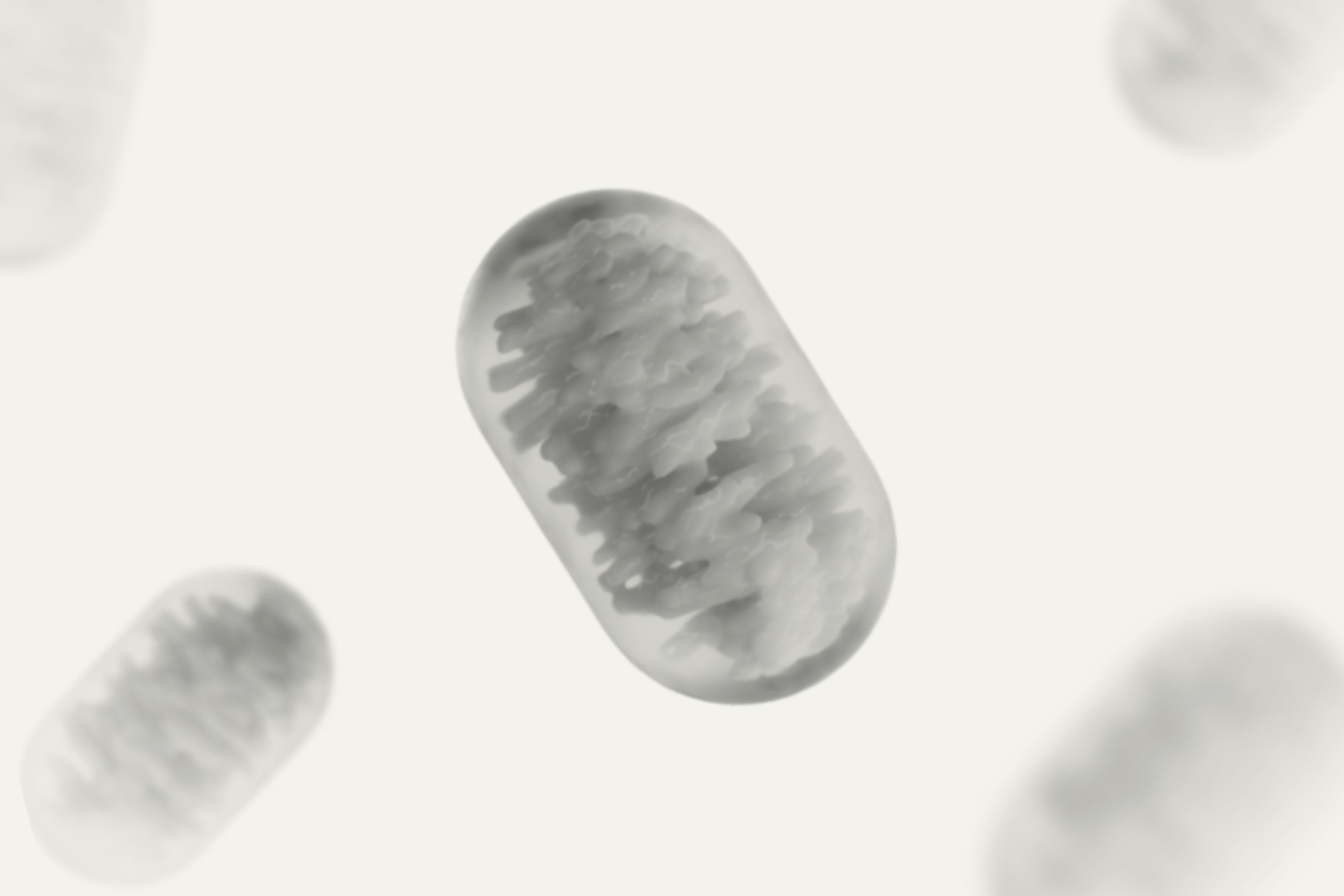
Mitochondria are the energy generators inside each muscle cell, and their health declines with age. In pre-frail older adults, mitochondrial dysfunction is now considered a central driver of sarcopenia.[12]
The decline isn’t only about wear and tear. Interrelated quality-control processes break down with age:
- Mitophagy: the cell’s selective recycling of damaged mitochondria becomes less efficient, allowing dysfunctional mitochondria to accumulate.[13]
- Mitochondrial biogenesis: the production of new mitochondria slows, reducing the cell’s ability to replenish its energy supply.[14]
The good news is that mitochondrial quality control can be targeted directly through both exercise and emerging nutritional strategies (more on this below).
Hormonal changes contribute to sarcopenia
Hormones that build and support muscle like testosterone, estrogen, growth hormone (GH), and insulin-like growth factor-1 (IGF-1), all decline with age. So does vitamin D, which functions as a hormone, along with thyroid hormones in some individuals.[15]
Testosterone levels in men fall roughly 1% per year starting around age 30, and the loss correlates with declines in muscle mass and strength.[16] Read more about andropause and testosterone decline here. In women, the drop in estrogen at menopause accelerates muscle loss and impairs muscle recovery, in part because estrogen directly supports skeletal muscle mitochondrial function.[17]
At the same time, hormones that break down muscle increase. Cortisol, the body’s main stress hormone, tends to rise with age and chronic stress, accelerating muscle breakdown.[18]
Increased insulin resistance also contributes to sarcopenia. This occurs when the body’s cells become less responsive to insulin, the hormone that regulates blood sugar levels. Skeletal muscle is the main target for insulin, so it is not surprising that there is a relationship between aging muscle and the body’s sensitivity to this key metabolic hormone.[19]
Increased insulin resistance contributes to sarcopenia, while sarcopenia itself can further worsen insulin resistance. Because skeletal muscle is the body’s primary insulin-sensitive tissue, age-related declines in muscle mass and quality are closely linked to impaired glucose metabolism.

How to Prevent Age-Related Muscle Loss?
The encouraging side of the story: muscle is one of the most adaptable tissues in the body. Even in frail older adults, resistance training can restore protein synthesis rates to levels seen in younger people.[20]
Here are science-backed strategies to help prevent muscle loss and support muscle health and longevity.
Nutrition
Eating a balanced diet rich in protein, omega-3 anti-inflammatory fats, and vitamin D can build and strengthen muscles.
Protein is arguably the most important nutrient for muscle health. Aim for at least 1.0-1.2 g/kg/day for healthy older adults, and 1.2-1.5 g/kg/day of protein a day for those with chronic illness or who are physically active. Good sources include lean meats like chicken and turkey, fish, eggs, dairy products like Greek yogurt and cottage cheese, and plant-based options like legumes, tofu, and edamame.
Research suggests that omega-3 fatty acids, anti-inflammatory fats found in fatty fish like salmon, as well as in walnuts and chia seeds, may help support muscle health. In particular, studies indicate that supplementing with 2 grams of omega-3s per day may help enhance muscle growth, strength, and performance in older adults.[21]
While vitamin D is often thought of as a nutrient that supports bone health, research suggests it also plays a critical role in muscle health. Data show that people deficient in vitamin D are at higher risk of developing sarcopenia and that people who supplement with vitamin D have a lower risk of falls and better muscle strength.[22]
Prioritize eating these muscle-building foods with meals to ensure you get enough in at the end of the day.
Exercise
Exercise is a necessary complement to a nutritious diet. Combining aerobic and strength training exercises protects muscles, bones, and joints and contributes to healthier muscles as you age.[23]
Strength training, in particular, plays a crucial role in preserving muscle mass, improving strength, and enhancing metabolic health. It stimulates muscle protein synthesis, helping to counteract age-related muscle loss (sarcopenia) while also improving insulin sensitivity and reducing inflammation.[24] While evidence supports strength training once per week, the Physical Activity Guidelines recommend strength training twice per week.[25]
These exercises help support energy production in the mitochondria. Performing these exercises regularly while eating enough protein can promote muscle performance and overall longevity.
While strength training is particularly beneficial in reducing muscle loss with age, the best exercise is one you enjoy so you’ll keep coming back for more.
Can Dietary Supplements Help with Muscle Health?
Supplements aren’t a replacement for diet and training, but a few have strong evidence for supporting muscle health in aging.
Can I Supplement Mitopure® to Strengthen Muscle?
Mitopure is the only Urolithin A supplement supported by multiple placebo-controlled human clinical trials and validated through third-party testing. In peer-reviewed randomized controlled trials, Mitopure improved biomarkers of mitochondrial health and measures of muscle performance in older and middle-aged adults:
- Mitopure activates mitophagy and induces a molecular signature of improved mitochondrial and cellular health in humans.[26]
- Mitopure increased muscle endurance by 17% within 2 months at 1,000 mg/day without any changes in exercise routine or diet.***[27]
- Mitopure increased muscle strength by ~12% over 4 months at 500 mg/day in middle-aged adults, with no changes in exercise routine or diet.*[28]
By revitalizing mitochondria, Mitopure helps preserve muscle health.
***Our clinical studies showed that sedentary adults aged 65-90 improved muscle endurance, measured as leg and hand repetitions to fatigue, after daily supplementation with 1,000 mg Mitopure®.
Mitopure Softgels
4.5 (4666) · 95% recommend
The simplest form of Mitopure
Other supplements that may help address age-related muscle decline include omega-3 fatty acids, vitamin D, and creatine.
No matter your age, it’s never too early or too late to make muscle health a priority. Speak to your doctor, local gym, or exercise physiologist and ask to have your body composition, which includes your muscle mass, measured and analyzed. Knowledge is power and is the first step to understanding the best ways to improve your health and longevity.
If you’re unsure where to start, pick one muscle-promoting lifestyle change that feels easiest to ease into, such as diet, exercise, or trying muscle health-supporting supplements like Mitopure. Just one small step compounds into big results over time.

Frequently Asked Questions
At what age does muscle loss start?
Muscle mass begins declining by roughly 3-8% per decade after age 30, with steeper losses after 60.[29] Strength declines even faster than mass, dropping 20-40% by age 70.[30] This is why maintaining muscle earlier is easier than trying to rebuild it later.
How much protein do older adults need to prevent muscle loss?
Healthy older adults need at least 1.0-1.2 g of protein per kg of body weight per day — more than the 0.8 g/kg RDA — and 1.2-1.5 g/kg/day if physically active or managing chronic illness.[31] Older muscle is anabolically resistant, meaning it needs a larger protein stimulus to trigger the same muscle protein synthesis as younger muscle. Spreading protein across meals helps meet the daily target.
Can you rebuild muscle after 60?
Yes — muscle remains one of the most adaptable tissues in the body, and resistance training can restore protein synthesis rates in frail older adults to levels seen in younger people.[32] Combining strength training at least twice per week with adequate protein is the most effective approach. Mitopure can complement this by targeting the mitochondrial decline that training and diet alone do not fully address.
Does Urolithin A really work for muscle strength?
In a randomized, placebo-controlled trial, Urolithin A (Mitopure) significantly improved hamstring muscle strength by ~12% versus placebo at 500 mg/day over 4 months in middle-aged adults.[33] Improvements in some other strength and performance measures in the same trial were positive but did not reach statistical significance. Urolithin A works by activating mitophagy, improving the quality of the mitochondria that power muscle cells.
Authors

Written by
Dietitian-Nutritionist, and Health Content Writer

Reviewed by
Director Science Communications
References
- ↑
Singh, A., D’Amico, D., Andreux, P. A., Fouassier, A. M., Blanco-Bose, W., Evans, M., Aebischer, P., Auwerx, J., & Rinsch, C. (2022). Urolithin A improves muscle strength, exercise performance, and biomarkers of mitochondrial health in a randomized trial in middle-aged adults. Cell Reports Medicine, 3(5), 100633. https://doi.org/10.1016/j.xcrm.2022.100633
- ↑
Volpi, E., Nazemi, R., & Fujita, S. (2004). Muscle tissue changes with aging. Current Opinion in Clinical Nutrition and Metabolic Care, 7(4), 405-410. https://doi.org/10.1097/01.mco.0000134362.76653.b2
- ↑
Berger, M. J., & Doherty, T. J. (2010). Sarcopenia: prevalence, mechanisms, and functional consequences. Interdisciplinary Topics in Gerontology, 37, 94-114. https://doi.org/10.1159/000319997
- ↑
Yeung, S. S. Y., Reijnierse, E. M., Pham, V. K., Trappenburg, M. C., Lim, W. K., Meskers, C. G. M., & Maier, A. B. (2019). Sarcopenia and its association with falls and fractures in older adults: A systematic review and meta-analysis. Journal of Cachexia, Sarcopenia and Muscle, 10(3), 485-500. https://doi.org/10.1002/jcsm.12411
- ↑
Wilkinson, D. J., Piasecki, M., & Atherton, P. J. (2018). The age-related loss of skeletal muscle mass and function: Measurement and physiology of muscle fibre atrophy and muscle fibre loss in humans. Ageing Research Reviews, 47, 123-132. https://doi.org/10.1016/j.arr.2018.07.005
- ↑
Kirk, B., Zanker, J., Bani Hassan, E., Bird, S., Brennan-Olsen, S., & Duque, G. (2021). Sarcopenia Definitions and Outcomes Consortium (SDOC) Criteria are Strongly Associated With Malnutrition, Depression, Falls, and Fractures in High-Risk Older Persons. Journal of the American Medical Directors Association, 22(4), 741-745. https://doi.org/10.1016/j.jamda.2020.06.050
- ↑
Wilkinson, D. J., Piasecki, M., & Atherton, P. J. (2018). The age-related loss of skeletal muscle mass and function. Ageing Research Reviews, 47, 123-132. https://doi.org/10.1016/j.arr.2018.07.005
- ↑
Bowden Davies, K. A., Pickles, S., Sprung, V. S., Kemp, G. J., Alam, U., Moore, D. R., Tahrani, A. A., & Cuthbertson, D. J. (2019). Reduced physical activity in young and older adults: metabolic and musculoskeletal implications. Therapeutic Advances in Endocrinology and Metabolism, 10, 2042018819888824. https://doi.org/10.1177/2042018819888824
- ↑
QuickStats: Percentage of Adults Aged ≥25 Years Who Met the 2018 Federal Physical Activity Guidelines... United States, 2022. MMWR Morb Mortal Wkly Rep 2024;73:521. https://doi.org/10.15585/mmwr.mm7322a3
- ↑
Deutz, N. E., Bauer, J. M., Barazzoni, R., Biolo, G., Boirie, Y., Bosy-Westphal, A., Cederholm, T., Cruz-Jentoft, A., Krznaric, Z., Nair, K. S., Singer, P., Teta, D., Tipton, K., & Calder, P. C. (2014). Protein intake and exercise for optimal muscle function with aging: recommendations from the ESPEN Expert Group. Clinical Nutrition, 33(6), 929-936. https://doi.org/10.1016/j.clnu.2014.04.007
- ↑
Bowden Davies, K. A., et al. (2019). Reduced physical activity in young and older adults. Therapeutic Advances in Endocrinology and Metabolism, 10. https://doi.org/10.1177/2042018819888824 ; Smeuninx, B., Mckendry, J., Wilson, D., Martin, U., & Breen, L. (2017). Age-Related Anabolic Resistance of Myofibrillar Protein Synthesis Is Exacerbated in Obese Inactive Individuals. The Journal of Clinical Endocrinology and Metabolism, 102(9), 3535-3545. https://doi.org/10.1210/jc.2017-00869
- ↑
Andreux, P. A., van Diemen, M. P. J., Heezen, M. R., Auwerx, J., Rinsch, C., Groeneveld, G. J., & Singh, A. (2018). Mitochondrial function is impaired in the skeletal muscle of pre-frail elderly. Scientific Reports, 8(1), 8548. https://doi.org/10.1038/s41598-018-26944-x
- ↑
Chistiakov, D. A., Sobenin, I. A., Revin, V. V., Orekhov, A. N., & Bobryshev, Y. V. (2014). Mitochondrial aging and age-related dysfunction of mitochondria. BioMed Research International, 2014, 238463. https://doi.org/10.1155/2014/238463
- ↑
Chistiakov, D. A., et al. (2014). Mitochondrial aging and age-related dysfunction of mitochondria. BioMed Research International, 2014, 238463. https://doi.org/10.1155/2014/238463
- ↑
Gupta, P., & Kumar, S. (2022). Sarcopenia and Endocrine Ageing: Are They Related? Cureus, 14(9), e28787. https://doi.org/10.7759/cureus.28787
- ↑
Huang, L. T., & Wang, J. H. (2021). The Therapeutic Intervention of Sex Steroid Hormones for Sarcopenia. Frontiers in Medicine, 8, 739251. https://doi.org/10.3389/fmed.2021.739251
- ↑
Zhang, C., Feng, X., Zhang, X., Chen, Y., Kong, J., & Lou, Y. (2024). Research progress on the correlation between estrogen and estrogen receptor on postmenopausal sarcopenia. Frontiers in Endocrinology, 15, 1494972. https://doi.org/10.3389/fendo.2024.1494972
- ↑
Yanagita, I., et al. (2019). A High Serum Cortisol/DHEA-S Ratio Is a Risk Factor for Sarcopenia in Elderly Diabetic Patients. Journal of the Endocrine Society, 3(4), 801-813. https://doi.org/10.1210/js.2018-00271
- ↑
Liu, Z. J., & Zhu, C. F. (2023). Causal relationship between insulin resistance and sarcopenia. Diabetology & Metabolic Syndrome, 15, 46. https://doi.org/10.1186/s13098-023-01022-z
- ↑
Schulte, J. N., & Yarasheski, K. E. (2001). Effects of resistance training on the rate of muscle protein synthesis in frail elderly people. International Journal of Sport Nutrition and Exercise Metabolism, 11 Suppl, S111-S118. https://doi.org/10.1123/ijsnem.11.s1.s111
- ↑
Huang, Y. H., Chiu, W. C., Hsu, Y. P., Lo, Y. L., & Wang, Y. H. (2020). Effects of Omega-3 Fatty Acids on Muscle Mass, Muscle Strength and Muscle Performance among the Elderly: A Meta-Analysis. Nutrients, 12(12), 3739. https://doi.org/10.3390/nu12123739
- ↑
Uchitomi, R., Oyabu, M., & Kamei, Y. (2020). Vitamin D and Sarcopenia: Potential of Vitamin D Supplementation in Sarcopenia Prevention and Treatment. Nutrients, 12(10), 3189. https://doi.org/10.3390/nu12103189
- ↑
Beaudart, C., Dawson, A., Shaw, S. C., et al. (2017). Nutrition and physical activity in the prevention and treatment of sarcopenia: systematic review. Osteoporosis International, 28(6), 1817-1833. https://doi.org/10.1007/s00198-017-3980-9
- ↑
Brook, M., Wilkinson, D., Mitchell, W., Lund, J., Phillips, B., Szewczyk, N., Greenhaff, P., Smith, K., & Atherton, P. (2016). Synchronous deficits in cumulative muscle protein synthesis and ribosomal biogenesis underlie age-related anabolic resistance to exercise in humans. The Journal of Physiology, 594, 7399-7417. https://doi.org/10.1113/JP272857
- ↑
DiFrancisco-Donoghue, J., Werner, W., & Douris, P. C. (2007). Comparison of once-weekly and twice-weekly strength training in older adults. British Journal of Sports Medicine, 41(1), 19-22. https://doi.org/10.1136/bjsm.2006.029330
- ↑
Andreux, P. A., Blanco-Bose, W., Ryu, D., Burdet, F., Ibberson, M., Aebischer, P., Auwerx, J., Singh, A., & Rinsch, C. (2019). The mitophagy activator urolithin A is safe and induces a molecular signature of improved mitochondrial and cellular health in humans. Nature Metabolism, 1(6), 595-603. https://doi.org/10.1038/s42255-019-0073-4
- ↑
Liu, S., D’Amico, D., Shankland, E., Bhayana, S., Garcia, J. M., Aebischer, P., Rinsch, C., Singh, A., & Marcinek, D. J. (2022). Effect of Urolithin A Supplementation on Muscle Endurance and Mitochondrial Health in Older Adults: A Randomized Clinical Trial. JAMA Network Open, 5(1), e2144279. https://doi.org/10.1001/jamanetworkopen.2021.44279
- ↑
Singh, A., D’Amico, D., Andreux, P. A., Fouassier, A. M., Blanco-Bose, W., Evans, M., Aebischer, P., Auwerx, J., & Rinsch, C. (2022). Urolithin A improves muscle strength, exercise performance, and biomarkers of mitochondrial health in a randomized trial in middle-aged adults. Cell Reports Medicine, 3(5), 100633. https://doi.org/10.1016/j.xcrm.2022.100633
- ↑
Volpi, E., Nazemi, R., & Fujita, S. (2004). Muscle tissue changes with aging. Current Opinion in Clinical Nutrition and Metabolic Care, 7(4), 405-410. https://doi.org/10.1097/01.mco.0000134362.76653.b2
- ↑
Berger, M. J., & Doherty, T. J. (2010). Sarcopenia: prevalence, mechanisms, and functional consequences. Interdisciplinary Topics in Gerontology, 37, 94-114. https://doi.org/10.1159/000319997
- ↑
Deutz, N. E., Bauer, J. M., Barazzoni, R., Biolo, G., Boirie, Y., Bosy-Westphal, A., Cederholm, T., Cruz-Jentoft, A., Krznaric, Z., Nair, K. S., Singer, P., Teta, D., Tipton, K., & Calder, P. C. (2014). Protein intake and exercise for optimal muscle function with aging: recommendations from the ESPEN Expert Group. Clinical Nutrition, 33(6), 929-936. https://doi.org/10.1016/j.clnu.2014.04.007
- ↑
Schulte, J. N., & Yarasheski, K. E. (2001). Effects of resistance training on the rate of muscle protein synthesis in frail elderly people. International Journal of Sport Nutrition and Exercise Metabolism, 11 Suppl, S111-S118. https://doi.org/10.1123/ijsnem.11.s1.s111
- ↑
Singh, A., D’Amico, D., Andreux, P. A., Fouassier, A. M., Blanco-Bose, W., Evans, M., Aebischer, P., Auwerx, J., & Rinsch, C. (2022). Urolithin A improves muscle strength, exercise performance, and biomarkers of mitochondrial health in a randomized trial in middle-aged adults. Cell Reports Medicine, 3(5), 100633. https://doi.org/10.1016/j.xcrm.2022.100633