Can You Get Enough Urolithin A From Pomegranates?
Most people can't make enough Urolithin A from diet. Here's what clinical research shows, and how Mitopure delivers a consistent daily dose.
What to know
Pomegranate juice doesn't contain Urolithin A itself, only precursor compounds that your gut bacteria must convert.
In a clinical study of 100 healthy adults, about 1 in 3 people had no detectable Urolithin A after drinking pomegranate juice.
One 8-ounce glass of pomegranate juice contains about 31 grams of sugar (USDA FoodData Central).
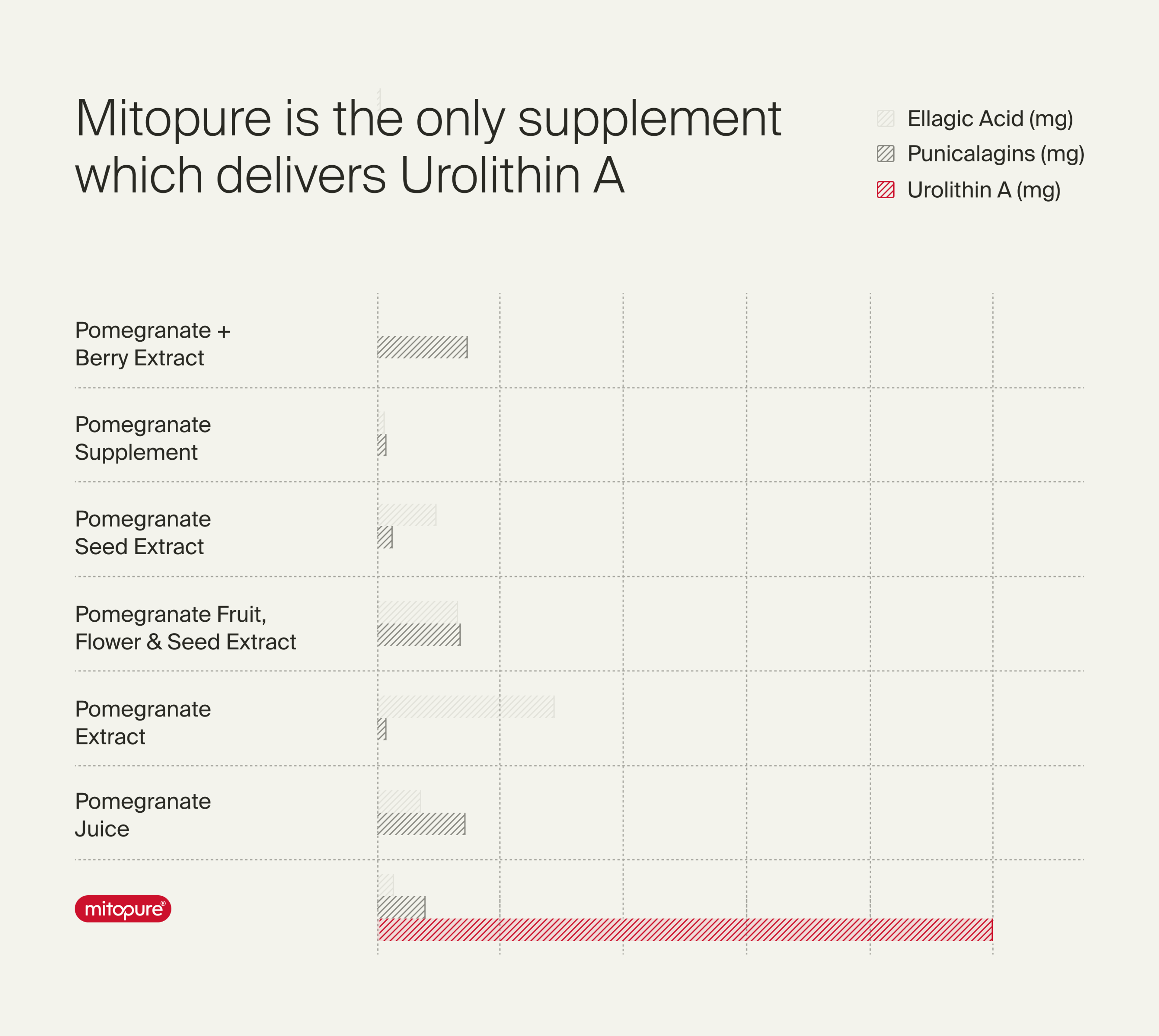
A 500 mg serving of Mitopure delivers at least 6 times higher Urolithin A blood levels than 8 ounces of pomegranate juice**.
In a 4-month randomized, placebo-controlled trial, 500 mg of Mitopure daily increased muscle strength by up to 12% in middle-aged adults*.
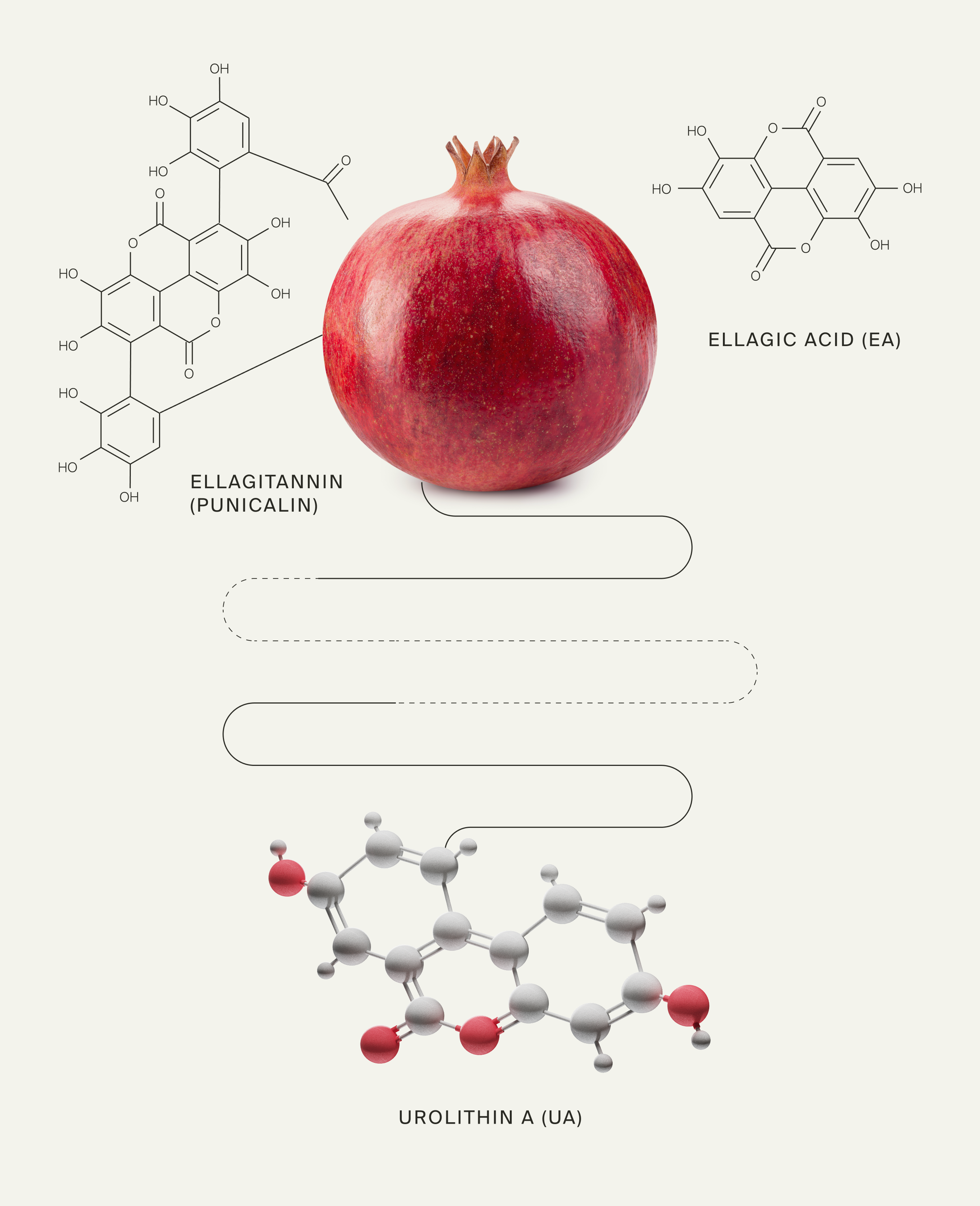
You can only get Urolithin A from pomegranates if your gut bacteria can make it, and most people's can't make much.[1] Pomegranates contain ellagitannins and ellagic acid, plant polyphenols that gut microbes break down into Urolithin A over several steps.[2] The same precursors also show up in walnuts and some berries.[3]
Pomegranates are still worth eating for their vitamins, fiber, and polyphenols. But if Urolithin A is your goal, Mitopure delivers it directly, so you don't depend on your gut microbiome to produce it.
How Does Your Gut Microbiome Turn Food Into Urolithin A?
Your gut microbiome turns food into Urolithin A by metabolizing ellagitannins and ellagic acid. Because every person's microbiome is different, the amount each person makes varies widely.[4]
The trillions of microbes in your gut do much more than help digest food. They shape how you absorb some nutrients. For example, gut bacteria produce short-chain fatty acids that appear to support calcium absorption.[5] They also make helpful compounds of their own from the foods you eat. Urolithin A is one of them: a gut-derived metabolite, often called a postbiotic, that your microbes make from pomegranate, berry, and walnut polyphenols.[6]
What Are the Health Benefits of Pomegranates?
Pomegranates may be one of the healthiest fruits we can consume. They are rich in vitamins K, C, and B6, as well as folate and potassium. They are also high in polyphenols and antioxidants, which can prevent damage to cells caused by free radicals. In fact, pomegranate juice has three times as much antioxidant activity as red wine and green tea,[7] making it one of the richest sources of antioxidants we can consume.

Research on pomegranate spans several areas, though much of it comes from lab and animal studies rather than human trials:
- Blood pressure: Lower systolic and diastolic blood pressure in randomized human trials.[8]
- Antioxidant activity: High antioxidant capacity in lab testing.[9]
- Joint health: Early findings in lab and animal models of joint wear.[10]
- Skin: Early findings on sun-related skin changes, mostly in lab models.[11]
- Antimicrobial activity: Activity against certain bacteria and fungi in lab studies.[12]
What Does Urolithin A Do in the Body?
Urolithin A's main job is stimulating mitophagy, the cellular recycling process that clears out damaged mitochondria so healthy ones can take their place.[13]
Mitochondria are the structures inside your cells that turn food and oxygen into usable energy. Mitochondrial dysfunction is one of the recognized hallmarks of aging.[14] Mitophagy also tends to become less efficient with age, especially in muscle.[15]
Urolithin A's effect on mitophagy was first shown in worms and rodents. Human trials have since found that Urolithin A produces a molecular signature of improved mitochondrial and cellular health.[16] A 2024 systematic review of five human trials concluded that Urolithin A upregulated mitochondrial and autophagy markers and increased muscle strength and endurance, with no safety concerns.[17] Mitopure was the form of Urolithin A used in the trials Timeline ran.
What Are Mitopure's Clinical Benefits for Muscle and Mitochondrial Health?
Mitopure delivers 500 mg of highly pure Urolithin A. Numerous clinical trials have shown Urolithin A's promising health benefits.[18] The mitochondria are the cellular powerhouses of energy creation, and their decline in function is thought to be a key contributor to the aging process. By upregulating mitophagy, the process by which damaged mitochondria are essentially recycled, Urolithin A may be able to target a root cause of age-related decline.
It's no surprise that mitochondria are highly concentrated in metabolically active tissue such as muscles. Muscle loss is a hallmark of aging, and recent research shows that, compared with placebo, supplementation with Urolithin A for four months improved markers of muscular strength in middle-aged adults .*[19]
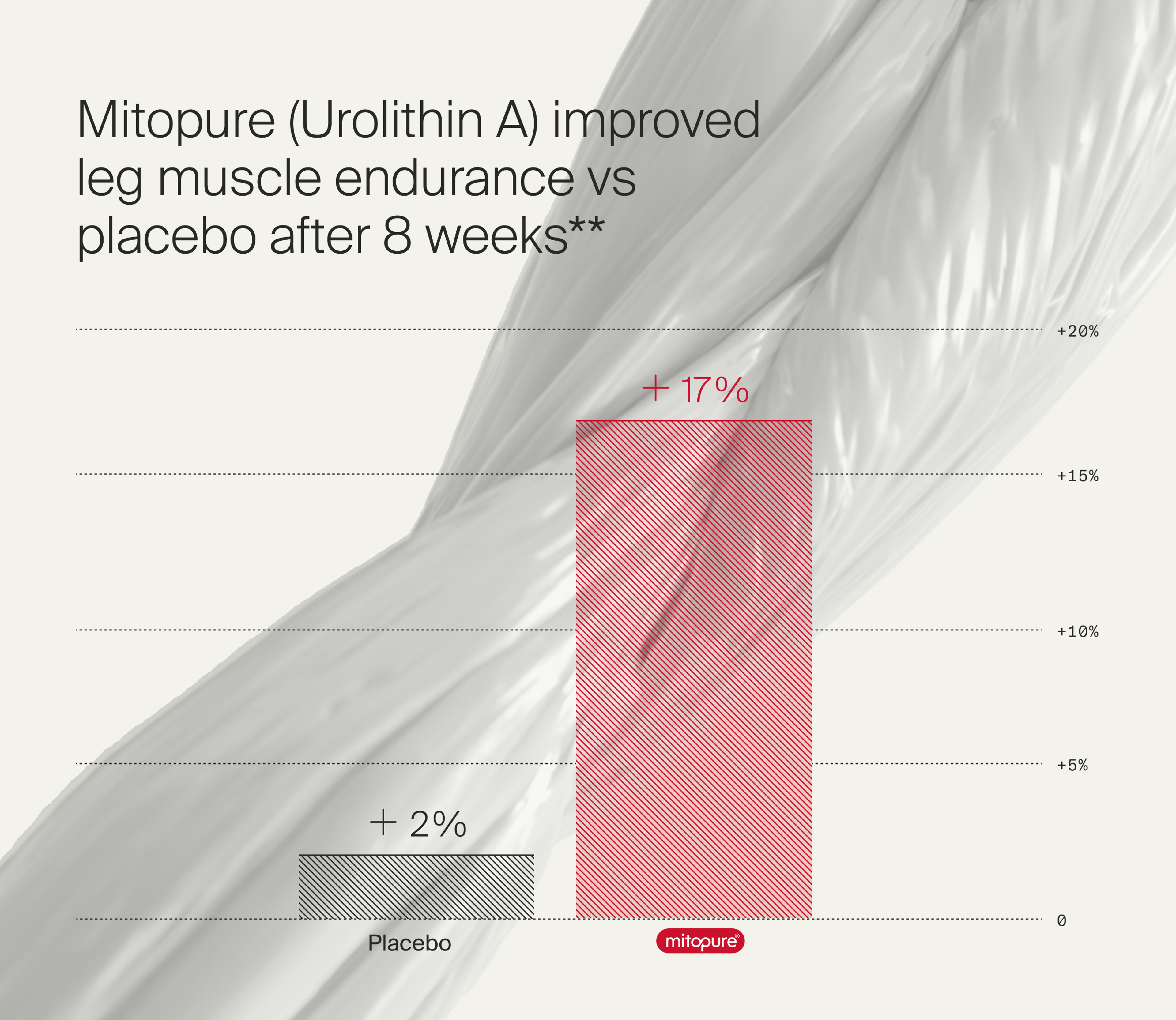
A trial published in Cell Reports showed that daily Mitopure supplementation was a safe and effective way for middle-aged adults to support muscle health.
Over 18 years of research by world-renowned longevity experts led to the development of Mitopure as the only clinically tested Urolithin A supplement. This growing body of science is prompting more study into the benefits of Urolithin A, including investigating its role in reducing age-related immune decline. As highly respected institutions such as the Buck Institute of Aging and UConn Research Lab join the team studying this novel metabolite, there is no doubt that Urolithin A will become a foundational element in promoting longevity and health.
How Much Urolithin A Can You Actually Get From Pomegranates?
Much pomegranate research uses the peel and pith, the parts most people throw away. And the most convenient way to eat more pomegranate, juice, comes with a lot of sugar.[20]
Ellagitannins (ETs) and ellagic acid (EA) are converted by the gut microbiome into Urolithin A. This particular postbiotic has been shown to slow down the aging process by increasing mitophagy and reducing inflammation.[21] With over a decade of research behind this metabolite, people may question if they should consume more of this fruit in their diet. However, the peel makes up roughly a quarter to a third of the fruit's weight and holds much of its punicalagin and ellagic acid.[22]
When it comes to Urolithin A, research has shown that about 66% of adults do not have the balance of microorganisms in their gut to create a therapeutic level of it from dietary sources.[23] The only way to ensure that you are getting a clinically proven dose of Urolithin A is from direct supplementation.
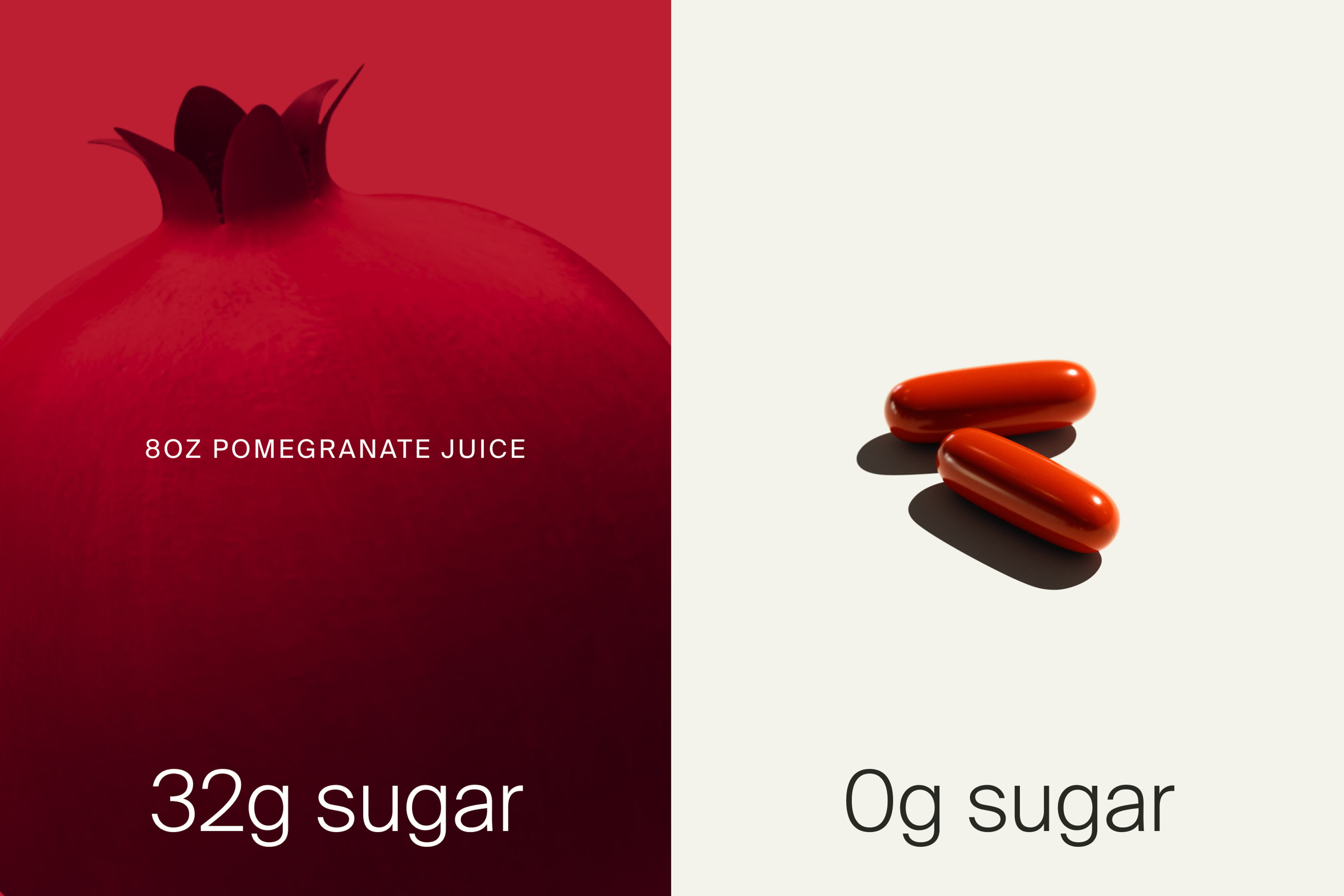
If you are one of the lucky few who can metabolize Urolithin A naturally, you'd have to consume an 8oz glass of pomegranate juice (with its 32g of sugar) to get the same amount of Urolithin A that you could get by taking 2 Mitopure softgels with absolutely no sugar content (and they'd work regardless of your gut microbiome makeup).
Should You Rely on Pomegranates or Mitopure for Urolithin A?
Choose Mitopure if you want a reliable dose of Urolithin A, and keep pomegranates in your diet for everything else they offer. Food alone can't guarantee Urolithin A.[24]
Mitopure closes that gap. A 500 mg serving delivers at least 6 times higher Urolithin A blood levels than 8 ounces of pomegranate juice**,[25] with no sugar and no dependence on your gut microbiome. And because that dose is the same one tested in clinical trials, you know what you're getting.[26]
Frequently Asked Questions
What's the difference between ellagic acid and Urolithin A?
Ellagitannins and ellagic acid are polyphenols found naturally in pomegranates, and Urolithin A is the postbiotic compound your gut bacteria produce from them.[27] Ellagic acid on its own isn't the active compound behind Urolithin A's studied benefits; it has to be metabolized by gut bacteria first, which is why eating ellagic-acid-rich foods doesn't guarantee a therapeutic Urolithin A dose.
Can you eat pomegranates and take Mitopure at the same time?
Yes. Mitopure supplements a compound your body may already be trying to produce from food, so taking it alongside pomegranates causes no interaction. Pomegranates still provide vitamins, fiber, and other polyphenols that Mitopure doesn't deliver, so the two play complementary roles rather than substituting for one another.
Does pomegranate juice contain Urolithin A directly?
No. Pomegranate juice contains ellagitannins and ellagic acid, the precursor compounds, not Urolithin A itself[6]. Your gut microbiome has to convert those precursors into Urolithin A, and that conversion step is exactly where variability between individuals comes in; not every glass of juice becomes usable Urolithin A.
Authors

Written by
Director Science Communications
References
- ↑
Singh, A., D'Amico, D., Andreux, P. A., Dunngalvin, G., Kern, T., Blanco-Bose, W., Auwerx, J., Aebischer, P., & Rinsch, C. (2022). Direct supplementation with Urolithin A overcomes limitations of dietary exposure and gut microbiome variability in healthy adults to achieve consistent levels across the population. European journal of clinical nutrition, 76(2), 297–308. https://doi.org/10.1038/s41430-021-00950-1
- ↑
D'Amico, D., Andreux, P. A., Valdés, P., Singh, A., Rinsch, C., & Auwerx, J. (2021). Impact of the Natural Compound Urolithin A on Health, Disease, and Aging. Trends in molecular medicine, 27(7), 687–699. https://doi.org/10.1016/j.molmed.2021.04.009
- ↑
Tomás-Barberán, F. A., González-Sarrías, A., García-Villalba, R., Núñez-Sánchez, M. A., Selma, M. V., García-Conesa, M. T., & Espín, J. C. (2017). Urolithins, the rescue of "old" metabolites to understand a "new" concept: Metabotypes as a nexus among phenolic metabolism, microbiota dysbiosis, and host health status. Molecular nutrition & food research, 61(1), 10.1002/mnfr.201500901. https://doi.org/10.1002/mnfr.201500901
- ↑
Wang, J., Wu, S., Zhang, Y., Yang, J., & Hu, Z. (2022). Gut microbiota and calcium balance. Frontiers in microbiology, 13, 1033933. https://doi.org/10.3389/fmicb.2022.1033933
- ↑
D'Amico, D., Andreux, P. A., Valdés, P., Singh, A., Rinsch, C., & Auwerx, J. (2021). Impact of the Natural Compound Urolithin A on Health, Disease, and Aging. Trends in molecular medicine, 27(7), 687–699. https://doi.org/10.1016/j.molmed.2021.04.009
- ↑
Gil MI, Tomás-Barberán FA, Hess-Pierce B, Holcroft DM, Kader AA. Antioxidant activity of pomegranate juice and its relationship with phenolic composition and processing. J Agric Food Chem. 2000;48(10):4581-4589. doi:10.1021/jf000404a
- ↑
Bahari, H., Omidian, K., Goudarzi, K., Rafiei, H., Asbaghi, O., Hosseini Kolbadi, K. S., Naderian, M., & Hosseini, A. (2024). The effects of pomegranate consumption on blood pressure in adults: A systematic review and meta-analysis. Phytotherapy research : PTR, 38(5), 2234–2248. https://doi.org/10.1002/ptr.8170
- ↑
Gil, M. I., Tomás-Barberán, F. A., Hess-Pierce, B., Holcroft, D. M., & Kader, A. A. (2000). Antioxidant activity of pomegranate juice and its relationship with phenolic composition and processing. Journal of agricultural and food chemistry, 48(10), 4581–4589. https://doi.org/10.1021/jf000404a
- ↑
Zarfeshany, A., Asgary, S., & Javanmard, S. H. (2014). Potent health effects of pomegranate. Advanced biomedical research, 3, 100. https://doi.org/10.4103/2277-9175.129371
- ↑
Zarfeshany, A., Asgary, S., & Javanmard, S. H. (2014). Potent health effects of pomegranate. Advanced biomedical research, 3, 100. https://doi.org/10.4103/2277-9175.129371
- ↑
Zarfeshany, A., Asgary, S., & Javanmard, S. H. (2014). Potent health effects of pomegranate. Advanced biomedical research, 3, 100. https://doi.org/10.4103/2277-9175.129371
- ↑
D'Amico, D., Andreux, P. A., Valdés, P., Singh, A., Rinsch, C., & Auwerx, J. (2021). Impact of the Natural Compound Urolithin A on Health, Disease, and Aging. Trends in molecular medicine, 27(7), 687–699. https://doi.org/10.1016/j.molmed.2021.04.009
- ↑
López-Otín, C., Blasco, M. A., Partridge, L., Serrano, M., & Kroemer, G. (2023). Hallmarks of aging: An expanding universe. Cell, 186(2), 243–278. https://doi.org/10.1016/j.cell.2022.11.001
- ↑
Leduc-Gaudet, J. P., Hussain, S. N. A., Barreiro, E., & Gouspillou, G. (2021). Mitochondrial Dynamics and Mitophagy in Skeletal Muscle Health and Aging. International journal of molecular sciences, 22(15), 8179. https://doi.org/10.3390/ijms22158179
- ↑
Andreux, P. A., Blanco-Bose, W., Ryu, D., Burdet, F., Ibberson, M., Aebischer, P., Auwerx, J., Singh, A., & Rinsch, C. (2019). The mitophagy activator urolithin A is safe and induces a molecular signature of improved mitochondrial and cellular health in humans. Nature metabolism, 1(6), 595–603. https://doi.org/10.1038/s42255-019-0073-4
- ↑
Kuerec, A. H., Lim, X. K., Khoo, A. L., Sandalova, E., Guan, L., Feng, L., & Maier, A. B. (2024). Targeting aging with urolithin A in humans: A systematic review. Ageing research reviews, 100, 102406. https://doi.org/10.1016/j.arr.2024.102406
- ↑
D'Amico D, Andreux PA, Valdés P, Singh A, Rinsch C, Auwerx J. Trends in Molecular Medicine. 2021;27(7):687-699. doi:10.1016/j.molmed.2021.04.009
- ↑
Singh, A., D'Amico, D., Andreux, P. A., Fouassier, A. M., Blanco-Bose, W., Evans, M., Aebischer, P., Auwerx, J., & Rinsch, C. (2022). Urolithin A improves muscle strength, exercise performance, and biomarkers of mitochondrial health in a randomized trial in middle-aged adults. Cell reports. Medicine, 3(5), 100633. https://doi.org/10.1016/j.xcrm.2022.100633
- ↑
Fahmy, H. A., & Farag, M. A. (2022). Ongoing and potential novel trends of pomegranate fruit peel; a comprehensive review of its health benefits and future perspectives as nutraceutical. Journal of food biochemistry, 46(1), e14024. https://doi.org/10.1111/jfbc.14024
- ↑
D'Amico D, Andreux PA, Valdés P, Singh A, Rinsch C, Auwerx J. Impact of the Natural Compound Urolithin A on Health, Disease, and Aging. Trends in Molecular Medicine. 2021;27(7):687-699. doi:10.1016/j.molmed.2021.04.009
- ↑
Noreen, S., Hashmi, B., Aja, P. M., & Atoki, A. V. (2025). Phytochemicals and pharmacology of pomegranate (Punica granatum L.): nutraceutical benefits and industrial applications: a review. Frontiers in nutrition, 12, 1528897. https://doi.org/10.3389/fnut.2025.1528897
- ↑
Singh A, D'Amico D, Andreux PA, et al. Direct supplementation with Urolithin A overcomes limitations of dietary exposure and gut microbiome variability in healthy adults to achieve consistent levels across the population. Eur J Clin Nutr. Published online June 11, 2021:1-12. doi:10.1038/s41430-021-00950-1
- ↑
Singh, A., D'Amico, D., Andreux, P. A., Dunngalvin, G., Kern, T., Blanco-Bose, W., Auwerx, J., Aebischer, P., & Rinsch, C. (2022). Direct supplementation with Urolithin A overcomes limitations of dietary exposure and gut microbiome variability in healthy adults to achieve consistent levels across the population. European journal of clinical nutrition, 76(2), 297–308. https://doi.org/10.1038/s41430-021-00950-1
- ↑
Singh, A., D'Amico, D., Andreux, P. A., Fouassier, A. M., Blanco-Bose, W., Evans, M., Aebischer, P., Auwerx, J., & Rinsch, C. (2022). Urolithin A improves muscle strength, exercise performance, and biomarkers of mitochondrial health in a randomized trial in middle-aged adults. Cell reports. Medicine, 3(5), 100633. https://doi.org/10.1016/j.xcrm.2022.100633
- ↑
D'Amico D, Andreux PA, Valdés P, Singh A, Rinsch C, Auwerx J. Trends in Molecular Medicine. 2021;27(7):687-699. doi:10.1016/j.molmed.2021.04.009