NMN vs. Urolithin A: What You Need to Know
Learn how Urolithin A compares with NMN and what the latest research on NAD+ means for cellular health and healthy aging.
What to know
Rigorous new human research found whole-blood NAD+ levels don't decline with age, challenging the core premise behind NAD+ supplements, including NMN.
The clinical evidence that NMN and other NAD+ precursors deliver meaningful longevity or muscle benefits remains inconclusive across recent reviews.
NMN is once again lawful as a dietary supplement in the U.S. after the FDA reversed its earlier position in late 2025.
Urolithin A works through a different pathway, mitophagy, demonstrated directly in human trials, that doesn't depend on the NAD+ decline hypothesis.
Mitopure is the only Urolithin A supplement backed by multiple placebo-controlled human clinical trials, clinically studied to increase muscle strength* and support cellular energy, mitochondrial health, and healthy aging.
NMN is a longevity supplement that has gained a lot of popularity among people who are looking to increase their healthspan. Previously, the supplement has made headlines as the FDA looks into its potential use as a drug and had stopped dietary supplement sales.
If you're rethinking your routine and looking for an NMN alternative or NAD+ alternative, Mitopure, a highly pure form of Urolithin A, works through a different, well-documented pathway. Mitopure is clinically backed by multiple placebo-controlled human clinical trials, making it a highly validated mitochondrial health supplement and cellular health supplement.
What is NMN? Nicotinamide Mononucleotide Explained
NMN stands for nicotinamide mononucleotide. It is a naturally occurring molecule that acts as a direct precursor to NAD+, a critical coenzyme necessary for cell function. Like Urolithin A, NMN works at the mitochondrial level, where it drives energy production, protects against DNA damage, and plays a role in cellular balance.[1] But this is where the similarities end.
Studies have shown that NMN supplementation increases NAD+ synthesis in the body, which is associated with improvements in health and the aging process.[2]
Do I Need NMN As I Age?
For years, the case for NMN rested on a simple premise: NAD+, a coenzyme essential for energy metabolism, was thought to decline with age, and "topping it up" with NMN could slow aging. That assumption is now being challenged.
In a 2026 landmark study published in Nature Metabolism, researchers measured whole-blood NAD+ across seven independent human cohorts, using a rigorously validated mass spectrometry method. They found that whole-blood NAD+ levels remained remarkably stable with age and across lifestyle interventions, leading the authors to question the use of blood NAD+ as a biomarker of aging.[3]
In plain terms: the foundational idea that blood NAD+ falls as we get older wasn't supported in this large, carefully controlled analysis.[4]
Do NAD+ Precursors Like NMN Work?
Even setting the biomarker debate aside, the human outcome data for NAD+ precursors (like NMN) is mixed. A 2025 systematic review and meta-analysis of randomized controlled trials found that NMN and NR did not consistently improve skeletal muscle function.[5]
A separate 2026 PRISMA-guided systematic review of 113 preclinical and clinical studies reached a similar bottom line: NAD+ supplements show clear biological activity, but their clinical effectiveness for anti-aging and wellness outcomes remains inconclusive across human studies.[6]
This doesn't mean NAD+ research is finished; it's an active field, and precursors are still being studied for specific conditions.
Is NMN a Supplement or Drug?
Short answer: it’s a supplement.
For a few years, NMN's regulatory status was uncertain. In 2022, the FDA took the position that NMN was excluded from the definition of a dietary supplement because it had been investigated as a drug, and many products were pulled from major retailers as a result.
That has since changed. In letters dated September 29, 2025, and reaffirmed on December 2, 2025, the FDA reversed course and confirmed that NMN is not excluded from the dietary supplement definition, meaning it can be lawfully marketed as a supplement in the U.S. As of 2026, NMN remains available.[7]
NMN vs Urolithin A: How Do They Differ?
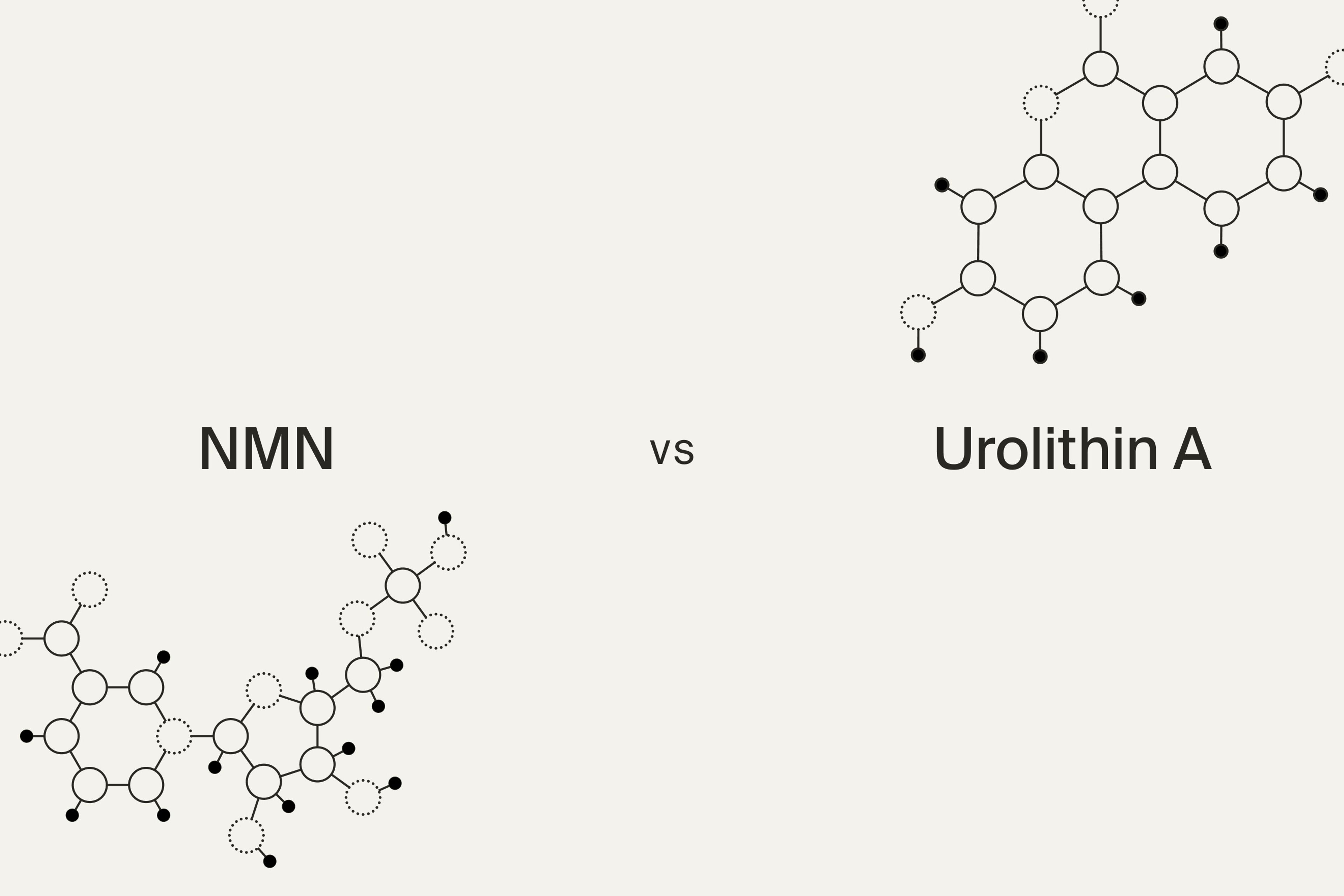
Urolithin A is a gut-derived postbiotic that research shows can support muscle strength*, cellular energy, and mitochondrial health. NAD+ boosters and Urolithin A both relate to mitochondrial function, but they act in fundamentally different ways.
NMN aims to raise NAD+ levels to support mitochondrial energy production. Urolithin A's defining action is different: at the mitochondrial level, it stimulates mitophagy, the cellular recycling process that clears out damaged mitochondria so the cell can replace them with healthier, more efficient ones.[8]
Crucially, Urolithin A's benefits don't depend on the "NAD+ declines with age" premise. It targets well-established hallmarks of aging: mitochondrial decline and a decline in mitochondrial renewal.
And Urolithin A, in the clinically validated form Mitopure®, has functional outcomes like muscle strength in placebo-controlled human trials*.
What are The Benefits of Urolithin A?
In human clinical trials, supplementing with Mitopure has been shown to:
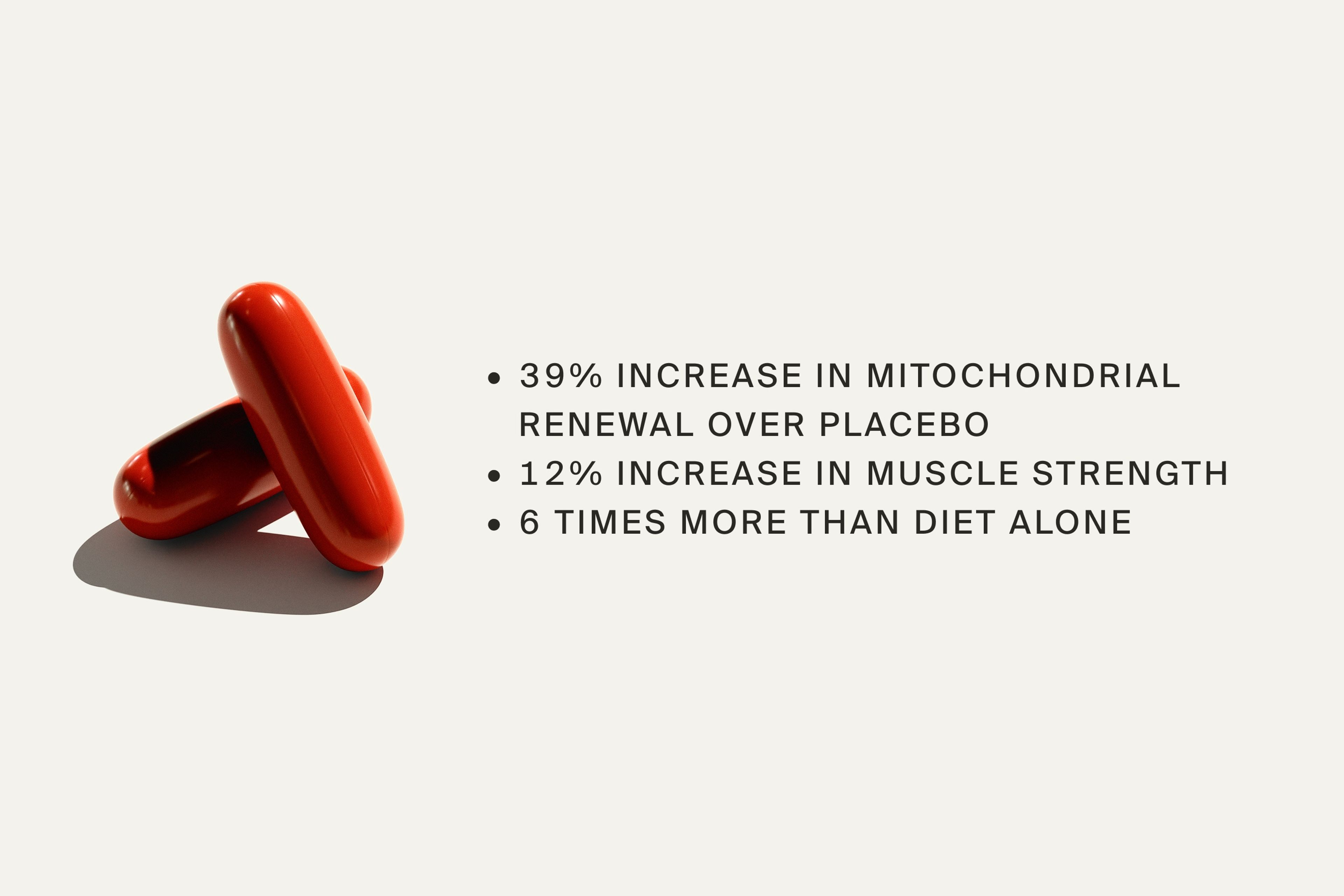
- Increase muscle strength*: in a 4-month randomized, placebo-controlled trial, sedentary middle-aged adults saw improvements of up to ~12% over baseline.[9]
- Support mitochondrial health: reflected as a molecular signature of improved mitochondrial health in muscle and improved markers of mitochondrial health in older adults.[10]
- Stimulate mitophagy: a crucial cellular recycling and renewal process.[11]
Because these effects come from Urolithin A's impact on the mitochondria, they play a meaningful role in how we age.
Why diet alone isn't enough to obtain Urolithin A
You can't eat Urolithin A directly; your gut microbiome makes it from ellagitannins in foods like pomegranates, berries, and walnuts. The catch: only about 4 in 10 people have a microbiome that produces meaningful amounts of it. In a randomized human trial, 500 mg of Mitopure delivered 6x higher Urolithin A levels than a glass of pomegranate juice.[12]**
Mitopure is the only Urolithin A supplement supported by multiple placebo-controlled human clinical trials and validated through third-party testing, with 18+ years of research behind the ingredient.
Is Urolithin A Safe?
Yes. Urolithin A has a favorable safety profile. In the first-in-human trial, it was safe, well-tolerated, and bioavailable in plasma at every dose tested.[13] In every randomized clinical trial across several populations, Mitopure was safe and well-tolerated.
Mitopure also holds FDA GRAS status and is third-party tested, including NSF certification for select formats, independent signals of safety and quality.
In Summary: Should I take NMN or Urolithin A?
The NAD+ precursor story is being rewritten in real time. The premise that blood NAD+ falls with age didn't hold up under rigorous testing, and the human evidence that NAD+ precursors deliver on anti-aging promises remains inconclusive.[14]
For people who want a cellular-health approach grounded in direct human outcomes, Urolithin A offers a clinically studied path that doesn't hinge on the NAD+ decline hypothesis. And Mitopure is the most clinically studied way to get it.
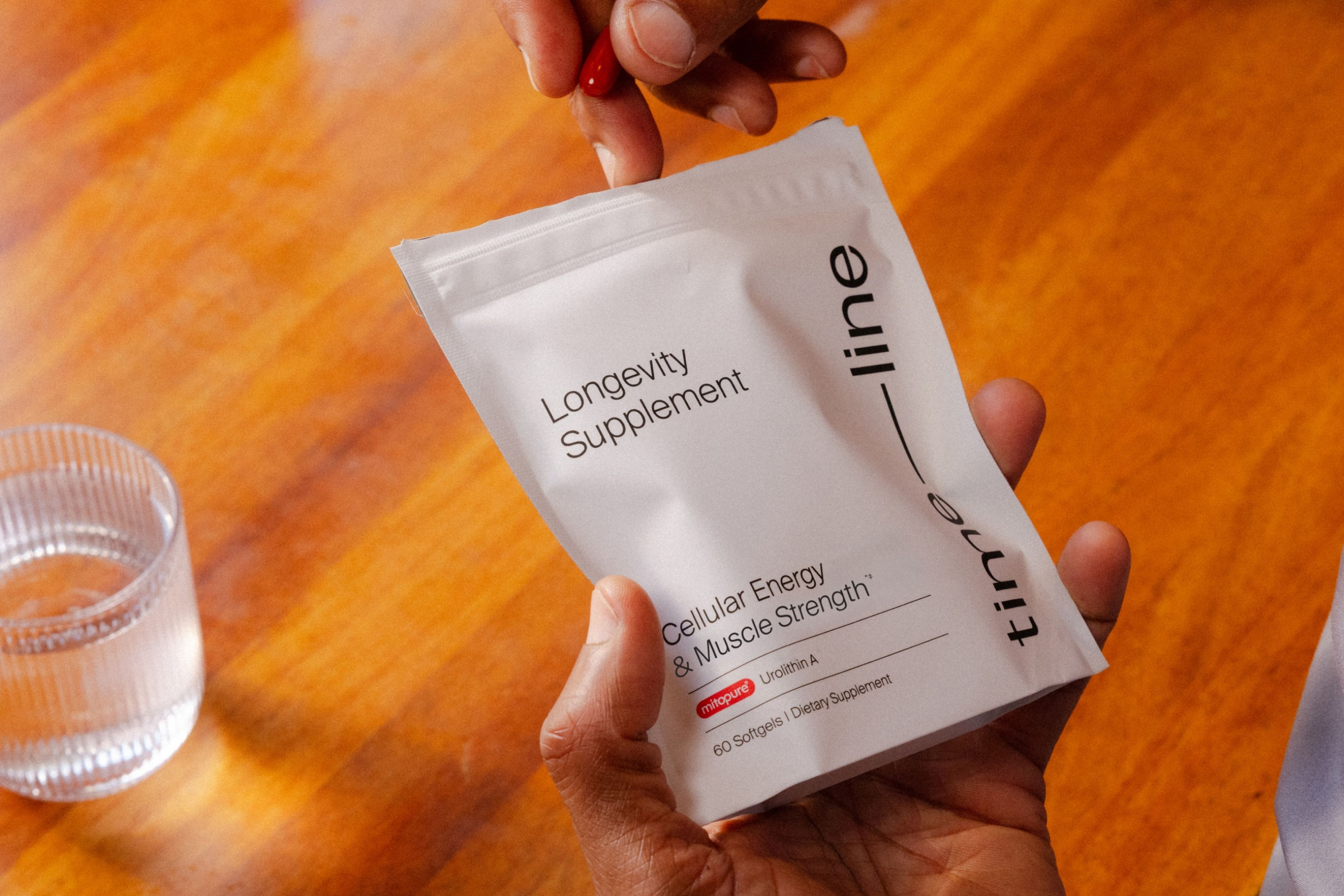
If you are interested in trying Mitopure, head on over to Timeline Nutrition’s store and order some today.
Authors

Written by
Director Science Communications
References
- ↑
Yaku, K., Okabe, K., & Nakagawa, T. (2018). NAD metabolism: Implications in aging and longevity. Ageing research reviews, 47, 1–17. https://doi.org/10.1016/j.arr.2018.05.006
- ↑
Yoshino, J., Baur, J. A., & Imai, S. I. (2018). NAD+ Intermediates: The Biology and Therapeutic Potential of NMN and NR. Cell metabolism, 27(3), 513–528. https://doi.org/10.1016/j.cmet.2017.11.002
- ↑
Trętowicz, M. M., Scantlebery, A. M. L., Schomakers, B. V., Eroğlu, K. D., van Weeghel, M., Spek, V., Vinten, K. T., Legon, L., Coskun, E., Millan-Domingo, F., Olaso-Gonzalez, G., Gomez-Cabrera, M. C., Montoro-García, S., Noguera-Navarro, C., van Kuilenburg, A. B. P., Moco, S., van Hattum, J. C., Jørstad, H. T., Benali, M., van der Helder, J., … Houtkooper, R. H. (2026). Human whole-blood NAD+ levels do not vary with age or lifestyle interventions. Nature metabolism, 10.1038/s42255-026-01537-5. Advance online publication. https://doi.org/10.1038/s42255-026-01537-5
- ↑
Vinten, K. T., Trętowicz, M. M., Coskun, E., van Weeghel, M., Cantó, C., Zapata-Pérez, R., Janssens, G. E., & Houtkooper, R. H. (2025). NAD+ precursor supplementation in human ageing: clinical evidence and challenges. Nature metabolism, 7(10), 1974–1990. https://doi.org/10.1038/s42255-025-01387-7
- ↑
Prokopidis, K., Moriarty, F., Bahat, G., McLean, J., Church, D. D., & Patel, H. P. (2025). The Effect of Nicotinamide Mononucleotide and Riboside on Skeletal Muscle Mass and Function: A Systematic Review and Meta-Analysis. Journal of cachexia, sarcopenia and muscle, 16(3), e13799. https://doi.org/10.1002/jcsm.13799
- ↑
Gallagher, C., & Emmanuel, O. O. (2026). NAD⁺ supplementation for anti-aging and wellness: A PRISMA-guided systematic review of preclinical and clinical evidence. Ageing research reviews, 116, 103057. https://doi.org/10.1016/j.arr.2026.103057
- ↑
U.S. Food and Drug Administration. (2025, December 2). Letter regarding new dietary ingredient notifications for β-nicotinamide mononucleotide (NMN), NDIN 1240 and 1247 [Letter]. Regulations.gov.
- ↑
Andreux, P. A., Blanco-Bose, W., Ryu, D., Burdet, F., Ibberson, M., Aebischer, P., Auwerx, J., Singh, A., & Rinsch, C. (2019). The mitophagy activator urolithin A is safe and induces a molecular signature of improved mitochondrial and cellular health in humans. Nature metabolism, 1(6), 595–603. https://doi.org/10.1038/s42255-019-0073-4
- ↑
Singh, A., D'Amico, D., Andreux, P. A., Fouassier, A. M., Blanco-Bose, W., Evans, M., Aebischer, P., Auwerx, J., & Rinsch, C. (2022). Urolithin A improves muscle strength, exercise performance, and biomarkers of mitochondrial health in a randomized trial in middle-aged adults. Cell reports. Medicine, 3(5), 100633. https://doi.org/10.1016/j.xcrm.2022.100633
- ↑
Andreux, P. A., Blanco-Bose, W., Ryu, D., Burdet, F., Ibberson, M., Aebischer, P., Auwerx, J., Singh, A., & Rinsch, C. (2019). The mitophagy activator urolithin A is safe and induces a molecular signature of improved mitochondrial and cellular health in humans. Nature metabolism, 1(6), 595–603. https://doi.org/10.1038/s42255-019-0073-4 (https://www.google.com/url?q=https://doi.org/10.1038/s42255-019-0073-4&sa=D&source=docs&ust=1783002735388020&usg=AOvVaw05RRPWkkWR_qts1_wc4dYi)
Liu, S., D'Amico, D., Shankland, E., Bhayana, S., Garcia, J. M., Aebischer, P., Rinsch, C., Singh, A., & Marcinek, D. J. (2022). Effect of Urolithin A Supplementation on Muscle Endurance and Mitochondrial Health in Older Adults: A Randomized Clinical Trial. JAMA network open, 5(1), e2144279. https://doi.org/10.1001/jamanetworkopen.2021.44279 (https://www.google.com/url?q=https://doi.org/10.1001/jamanetworkopen.2021.44279&sa=D&source=docs&ust=1783002735388210&usg=AOvVaw0U0omhLRnIZjyDgbQx8PQI) - ↑
Andreux, P. A., Blanco-Bose, W., Ryu, D., Burdet, F., Ibberson, M., Aebischer, P., Auwerx, J., Singh, A., & Rinsch, C. (2019). The mitophagy activator urolithin A is safe and induces a molecular signature of improved mitochondrial and cellular health in humans. Nature metabolism, 1(6), 595–603. https://doi.org/10.1038/s42255-019-0073-4
- ↑
Singh, A., D'Amico, D., Andreux, P. A., Dunngalvin, G., Kern, T., Blanco-Bose, W., Auwerx, J., Aebischer, P., & Rinsch, C. (2022). Direct supplementation with Urolithin A overcomes limitations of dietary exposure and gut microbiome variability in healthy adults to achieve consistent levels across the population. European journal of clinical nutrition, 76(2), 297–308. https://doi.org/10.1038/s41430-021-00950-1
- ↑
Andreux, P. A., Blanco-Bose, W., Ryu, D., Burdet, F., Ibberson, M., Aebischer, P., Auwerx, J., Singh, A., & Rinsch, C. (2019). The mitophagy activator urolithin A is safe and induces a molecular signature of improved mitochondrial and cellular health in humans. Nature metabolism, 1(6), 595–603. https://doi.org/10.1038/s42255-019-0073-4
- ↑
Trętowicz, M. M., Scantlebery, A. M. L., Schomakers, B. V., Eroğlu, K. D., van Weeghel, M., Spek, V., Vinten, K. T., Legon, L., Coskun, E., Millan-Domingo, F., Olaso-Gonzalez, G., Gomez-Cabrera, M. C., Montoro-García, S., Noguera-Navarro, C., van Kuilenburg, A. B. P., Moco, S., van Hattum, J. C., Jørstad, H. T., Benali, M., van der Helder, J., … Houtkooper, R. H. (2026). Human whole-blood NAD+ levels do not vary with age or lifestyle interventions. Nature metabolism, 10.1038/s42255-026-01537-5. Advance online publication. https://doi.org/10.1038/s42255-026-01537-5